US, Israel sent Daesh, other terrorists to destabilize Iran during 12-day war: Intel minister
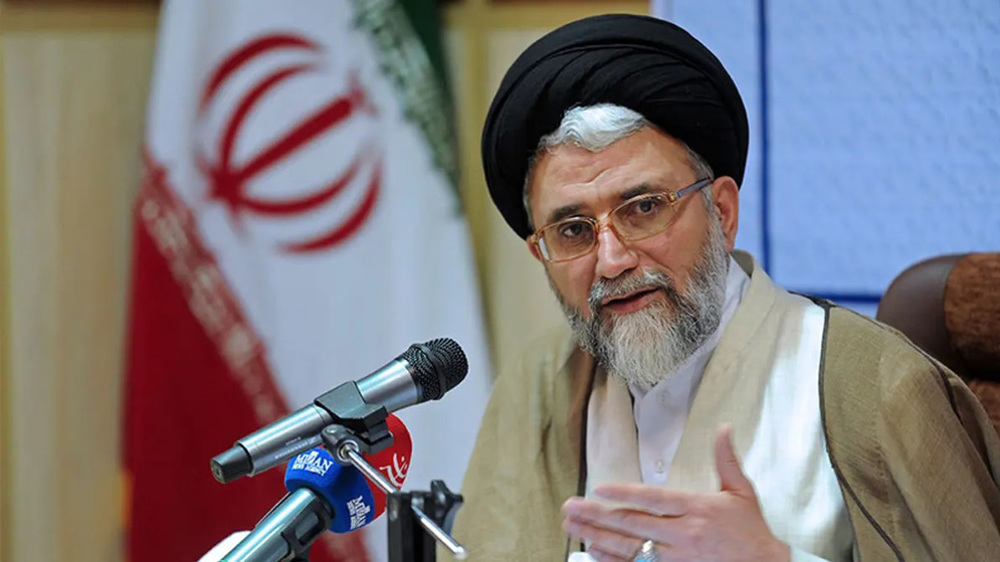
Iran’s intelligence minister says during the US-Israeli aggression in June, the enemies sought to destabilize the country by inciting Daesh terrorists and other Takfiri groups in Syria and sending them toward Iran to carry out assassinations, sabotage, and other acts of terror.
Speaking at a meeting in the western Hamadan province, Esmail Khatib said the enemies sought to target Iranian commanders, bases, and key centers using the latest technological advances and Western military equipment, but their efforts ultimately failed.
On June 13, Israel launched an unprovoked aggression against Iran, triggering a 12-day war that killed at least 1,064 people in the country, including military commanders, nuclear scientists, and civilians.
The United States also entered the war by bombing three Iranian nuclear sites in a grave violation of international law.
On June 24, Iran, through its successful retaliatory operations against both the Israeli regime and the US, managed to impose a halt to the terrorist assault.
“In this hybrid war, the enemies, by inciting Takfiris and Daesh from Syria and sending them towards Iran and the southeast, aimed at creating insecurity in Iran by carrying out terror, sabotage, and various actions, which they were unable to do,” Khatib underlined.
He noted that the enemy tried to establish “a puppet government in the country” and worked relentlessly to close off avenues of hope, progress, and potential diplomatic breakthroughs for the country.
According to the Iranian minister, the enemies had planned to divide Iran “into smaller countries,” but their plot was thwarted through the resilience of the armed forces, and Iran’s military strength.

He said the enemy’s plan was based on the assumption that public dissatisfaction and opposition to the government would allow Israel to spark chaos in the country. However, he noted, "contrary to the goals of the regime, the result achieved was the domination, unity, solidarity, and empathy of the people.”
Pointing to the enemies’ efforts to create polarization and break unity in society, Khatib added that the country must “plan with caution to prevent anything that harms unity.”
The minister stated that for the first time in its 70-year history, “the despicable Zionist regime is experiencing internal insecurity and instability.”
He credited this to the Al-Aqsa Flood operation, Hezbollah, and missile strikes from Iran’s armed forces, which he said exposed the regime's vulnerability.
Elsewhere in his remarks, Khatib underscored that “those who claim to champion human rights are the ones who have created this situation in Gaza, Lebanon, Yemen, Iraq, and Syria.”
He slammed these nations for intolerance toward dissent, citing the expulsion of individuals from the US and other countries for supporting Palestine.

Iran Army downs US Orbiter reconnaissance drone over Strait of Hormuz

Iran dismantles terrorist cells in three provinces
How Iran turned US military and economic aggression into strategic leverage to dictate terms



Iran FM: Our first task in New York is to defend the just cause of Iranian people
US lawmaker admits American people footing bill for Trump’s failed aggression against Iran
VIDEO | Trump's America is dying for Israel
US visa ban on Iranian president’s media team is bid to hide the truth: FM spokesman
VIDEO | Iran fully prepared to respond to new aggression
US aggression, economic warfare amount to crimes against humanity: Iran's UN envoy
Protests erupt in US as ICE agent shoots Venezuelan driver
US pressure fuels cooperation among Muslim states: Pezeshkian



 PressTV NEWSLETTER
now
PressTV NEWSLETTER
now
 This makes it easy to access the Press TV website
