Mordechai Vanunu: The man who exposed Israel’s secret nuclear bomb 39 years ago
By Ivan Kesic
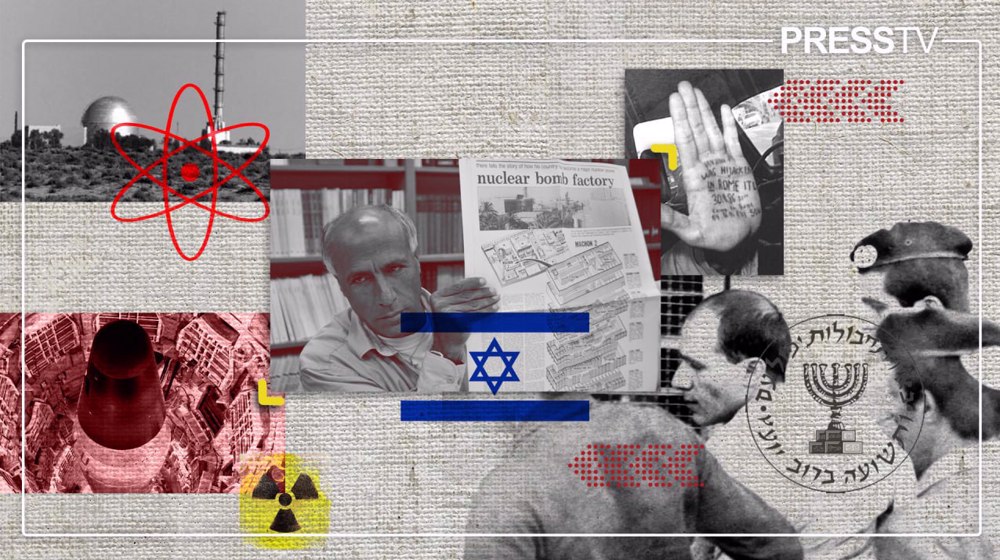
Thirty-nine years ago, on September 30, 1986, a courageous act of conscience shattered one of the world’s worst-kept yet most guarded secrets.
It exposed the true nature of Israel’s clandestine nuclear weapons program to a global audience and triggered a decades-long campaign of persecution against the man who dared to speak the truth.
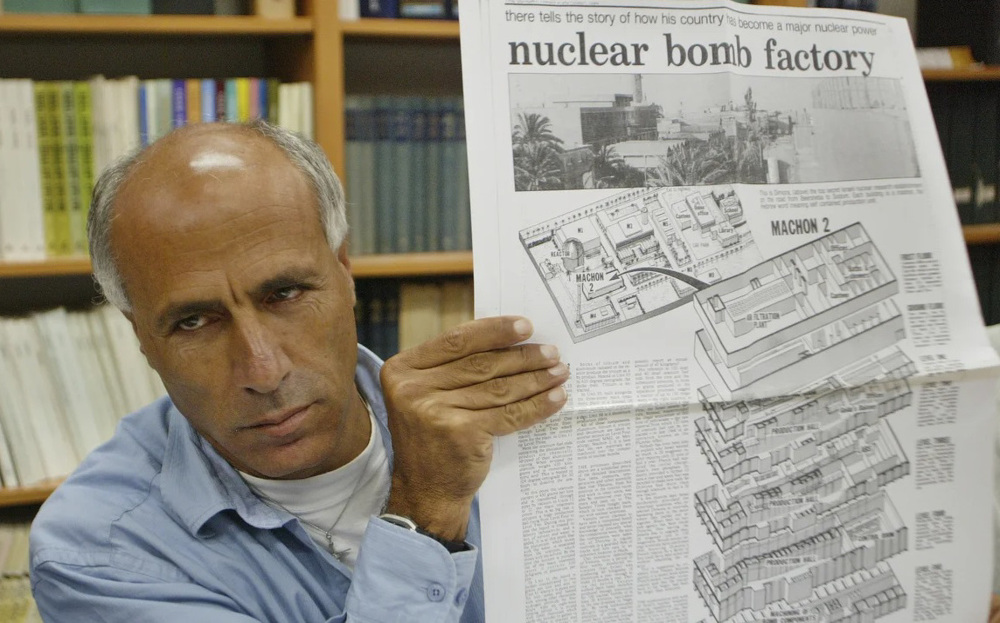
Mordechai Vanunu, a former technician at the Negev Nuclear Research Center near Dimona, became history’s most significant nuclear whistleblower.
He provided irrefutable evidence that Israel possessed a sophisticated and extensive arsenal of nuclear warheads, a reality long obscured behind a calculated policy of deliberate ambiguity and deception.
His actions were not born of malice or foreign allegiance but from a profound moral awakening: a conviction that the world had a fundamental right to know about weapons of mass destruction being secretly manufactured. That belief would cost him his freedom and rights.
The anniversary of his revelations serves as a stark reminder of the power a single individual can wield against the secrecy of a regime that has occupied millions of people, and of the terrifying lengths the same authoritarian regime will go to silence dissent, punish transparency, and maintain an opaque stranglehold on information that, by every ethical standard, belongs to all humanity.
Vanunu brought the dark secret of the Israeli bomb into the light, which saw the regime wage a relentless war against him, turning his life upside-down.
Who was Mordechai Vanunu?
Vanunu was born into a conservative Jewish family in Marrakesh, Morocco, in 1954. In 1963, he immigrated with his family to the occupied Palestinian territories, seeking a new home in the Zionist colony that would ultimately become both his jailer and tormentor.
He grew up in the working-class city of Beersheba, a seemingly ordinary Israeli settler who dutifully completed his mandatory military service as a combat engineer before embarking on a path that would inadvertently bring him to the heart of the regime’s most dangerous secret.
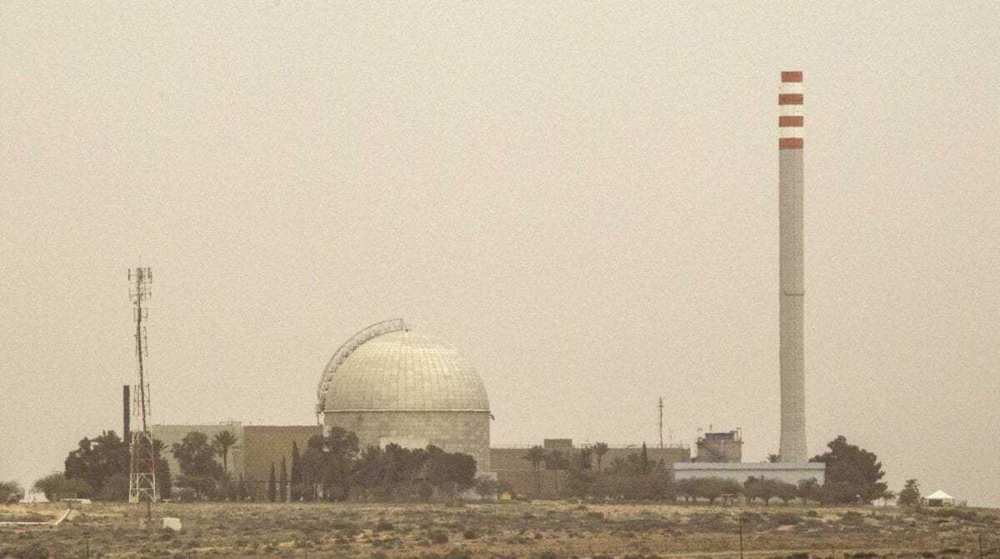
In 1976, seeking stable employment, he joined the Negev Nuclear Research Center near Dimona, passing the necessary security checks to work as a low-level technician in the clandestine Machon 2 facility, a hidden underground complex dedicated to separating plutonium for nuclear weapons.
For years, he was a loyal, apolitical employee in a facility publicly presented as a harmless research center, even as he witnessed daily the reality of a full-scale nuclear weapons production program.
The seeds of his transformation were sown during the 1982 Lebanon War, which revealed the brutal realities of Israeli military policy and sparked a profound shift away from the values he had embraced.
His growing disillusionment deepened at Ben-Gurion University, where his studies in philosophy and interactions with Palestinian students humanized those the regime sought to dehumanize, shattering the simplistic narratives he had been taught and forcing him to confront the moral contradictions at the core of his work.
His conversion to Christianity during a 1986 trip to Australia was not an act of betrayal but a spiritual journey, a final step in his personal liberation from the rigid ideological confines of a regime he now saw as morally compromised, secretly building an arsenal of apocalyptic weapons while presenting a public face of conventional military restraint.
Vanunu was not a spy or a traitor in service to a foreign power. He was a man whose conscience could no longer coexist with the lies he was helping to perpetuate, a man who believed the shadowy existence of hundreds of nuclear warheads was a matter of global concern, not a secret to be guarded.
Through a process of moral and intellectual awakening, he chose to prioritize the universal human right to know over the parochial demands of secrecy. This transformation marks him not as a villain, but as a classic whistleblower, one of those rare individuals who expose wrongdoing from within.
How did he publish the nuclear documents?
The process of revealing Dimona’s secrets was meticulous and daring. Vanunu made a deliberate decision to document the truth, smuggling a simple Minolta camera into the heart of the fortified facility and secretly photographing critical areas. These images would provide visual, incontrovertible proof, lending his testimony undeniable credibility.
In his final months at Dimona, before being laid off in a round of budget cuts, he captured 57 color photographs from within the restricted zones, images showing plutonium processing units, nuclear warhead components, and advanced control rooms. They offered a visual tour of a facility whose very existence and purpose the Israeli regime had spent decades denying and obfuscating.
After leaving the occupied territories and eventually settling in Sydney, Australia, he carried these photographs and detailed technical notes with him, a walking archive of the regime’s most closely guarded secret.
There, he made contact with journalist Peter Hounam of the British newspaper The Sunday Times.
The newspaper, cautious of such explosive claims, subjected his evidence to rigorous independent scrutiny, bringing in renowned nuclear experts like Theodore Taylor and Frank Barnaby to verify Vanunu’s staggering technical details.
The revelations were earth-shattering: Israel was not a minor nuclear player but a full-fledged nuclear power, with an estimated 100 to 200 warheads, including advanced thermonuclear designs, and an annual plutonium production of 40 kilograms, placing its program on a scale rivaling established powers such as Britain and France.
The Sunday Times published the story on October 5, 1986, under the headline “Revealed: The Secrets of Israel’s Nuclear Arsenal.” The report instantly ended the charade of nuclear ambiguity, forcing the world to acknowledge what it had long suspected, while humiliating Western intelligence agencies that had drastically underestimated the program’s scope.
The Israeli regime, led by Prime Minister Shimon Peres at the time, reacted with fury. Mossad was tasked with neutralizing the unprecedented security breach, launching an international manhunt that culminated in a flagrantly illegal and cinematic act of regime-sponsored kidnapping.
Vanunu was lured to Rome by a Mossad operative using a classic honey-trap tactic. Befriended by a female agent named Cheryl Bentov, who exploited his loneliness and trust, he was drugged, abducted, and smuggled onto a ship bound for Israel on September 30, 1986, an act of extraordinary rendition that violated Italian sovereignty and every norm of international law.
How was he persecuted by the Israeli regime?
The persecution of Vanunu with a secret, deeply flawed judicial process, a show trial held behind closed doors. Terrified of further public scrutiny, the Israeli regime convicted him of treason and espionage in proceedings designed to punish dissent rather than deliver justice.
He was sentenced to 18 years in prison, a draconian punishment intended to send a chilling message to any potential whistleblower that the cost of conscience would be the total destruction of one’s life.
The regime’s cruelty was magnified by his imprisonment conditions. He endured eleven years of solitary confinement in a tiny, windowless cell, a form of psychological torture condemned by international human rights groups as cruel, inhuman, and degrading.
The intent was clear: to break his spirit and erase his identity for the crime of telling the truth.
When he was released in April 2004 after serving his full sentence, it marked the start of a new, more insidious phase of persecution. The regime immediately imposed strict restrictions to ensure his continued silence.
He was banned from leaving the occupied territories. His communications were placed under constant surveillance, he was forbidden to speak to foreigners or journalists, and his movement was tightly controlled, all under the pretext of a lingering security threat nearly two decades after his disclosures.
This harassment extended to repeated arrests for trivial violations, such as speaking to a foreign journalist or attempting to attend church services, demonstrating that the regime’s vendetta is about making an example of him, not protecting secrets.
Even his personal life was weaponized against him. His Norwegian wife, Kristin Joachimsen, was denied residency, forcing them into a long-distance marriage, while repeated applications for asylum abroad have been blocked, deliberate acts of emotional suffering that reveal the regime’s vindictiveness.
The Israeli Supreme Court repeatedly rubber-stamped this endless punishment, citing vague and undisclosed “new evidence” to justify the travel ban.
Israeli forces have killed 300 Palestinian children since Gaza 'ceasefire': UNICEF
US relocating refueling aircraft from Israeli-occupied lands: Report
Israel strikes Syria as Turkish FM visits Damascus, exposing rivalry for control



VIDEO | They cannot hit back and they cannot defend themselves: Peace activist
Trump’s man in Bogotá: How Colombia is pivoting toward US and Israel under new far-right president
Araghchi: Iran, Oman ‘very close’ to Hormuz deal; reopening depends on US complying with MoU
Iran breaks new ground with locally manufactured high-tech turboexpander despite sanctions
Strait of Hormuz reopening hinges on US accepting Iran’s conditions: IRGC
War and sanctions are integrating Iran-Russia economies
Pezeshkian marks Hiroshima, Nagasaki atomic bombings, says same mentality still rules US
Greenland condemns Trump-linked oil firm for bringing equipment ashore, warns against drilling


 PressTV NEWSLETTER
now
PressTV NEWSLETTER
now
 This makes it easy to access the Press TV website
