Empty desks: A story of two Iranian kids killed by Israel before first day of school
By Humaira Ahad
As schools across Iran reopened last week, parents readjusted their children's uniforms, tied their shoelaces, and sent them off to a new year of learning.
But in one neighbourhood of northern Iran’s Tabriz city, two families faced a devastatingly different reality – unopened schoolbags and uniforms that would never be worn again.
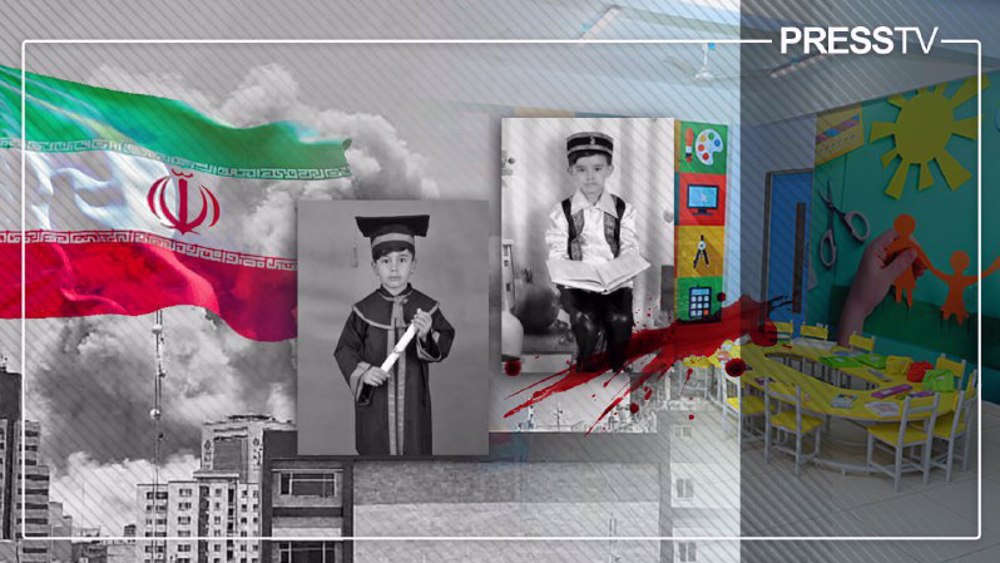
Taha Behroozi, recently registered for his first school year, and Alisan Jabbari, who dreamed of one day wearing a police uniform, were both killed by an Israeli drone strike while playing outside their home on June 21.
Their mothers, who should have been ironing school clothes and packing lunchboxes, now sift through toys and photographs – painful reminders of their children stolen by the child-murdering regime during its 12-day war of aggression on the Islamic Republic.
First-grade journey that never began
Taha had just turned seven on May 31, the day before his family moved into a new home in Tabriz. His parents marked the occasion with a birthday celebration, hopeful that the move would be a fresh start and a new chapter in their lives.
He had already been registered for school, vaccinated, and photographed in preparation for first grade. That very night, his parents had planned to take his official school portrait.
But around 8:30 p.m., his mother recalls, a deafening explosion tore through their home.
“We were in front of the door. Taha was playing with his ball, only a few steps away from me. Suddenly, there was an explosion. My ears were ringing, and smoke filled the air everywhere,” the devastated mother recalled.
“I went into the house, but he wasn’t there. I came back and saw him coming towards the yard. He came into my arms. I tried to hug him, but blood was oozing from my hand… All I could think about was Taha.”
Neighbours rushed him to the hospital, but shrapnel had pierced his heart, face, and leg. He did not survive. His mother, herself wounded with broken bones and shrapnel embedded in her body, carries both visible scars and the invisible pain of losing her only son.
“You don’t have a daughter, when I grow up, I’ll take care of you,” Taha would say to his mother.
Images of martyred children represented Iran during Netanyahu’s ‘fascistic’ UN speech: Tehran https://t.co/SUeBAQKCWT
— Press TV 🔻 (@PressTV) September 27, 2025
His father remembers the last moments before leaving for work that day, “On the day of his martyrdom, I had taken him to register for first grade. He became a student that day, and that same day, he was martyred. The next day, we were supposed to submit his school photos, but the Israeli drone did not allow it.”
He paused, remembering the ordinary moments before he left for work that morning.
“That day, I gave him my card and told him to buy whatever he liked. He went with Alisan, bought juice and cake, and they ate. Before I left for work, I hugged him. That was the last time.”
Israel’s unprovoked war on Iran had frightened the young boy. Taha had spoken of his fears.“If I go to Tabriz, what if a missile hits me? What if I get martyred?” he would ask his mother. Now, she whispered, “It’s as if he already knew.”
Alisan’s dreams ended before they began
Just meters away, his friend and neighbour Alisan had also stepped out with his mother. Ten minutes later, he too was killed by Israel.
“I saw smoke rising. Alisan fell to the ground right before my eyes. I held him. Something hit me, too. I carried him to the yard. He had no life left. I screamed. The neighbours came and took him to the hospital,” his mother said.
Shrapnel to his head killed him instantly. When his father returned from work, he was confronted with the aftermath of the attack, a home forever altered by loss.
“My world collapsed. May God never let anyone experience the loss of a child,” the grief-stricken father said.
Alisan had been registered for school. He wanted to be a policeman or a pilot, playing often with toy soldiers. Learning karate and football were on his summer schedule, classes he never got the chance to attend.
His grieving mother remembers,“That moment, when he fell in front of me and was martyred… it will never leave my mind.”
Through tears, his father adds, “Every time I got home, he would jump into my arms. Now, only sorrow remains. Only silence.”
Schools reopen, but empty desks remain
As the new school year begins, children across Tabriz line up in freshly ironed uniforms, holding notebooks filled with the promise of a bright future. But in classrooms where Taha and Alisan should have sat, two desks remain empty.
Iran's Education Minister Alireza Kazemi stated that 34 students and five teachers were martyred during Israel's war on Iran.
Iran's President Pezeshkian attends the memorial ceremony held in honor of the women, children, and families of the martyrs killed in the Israeli aggressions of the 12-Day War.
— Press TV 🔻 (@PressTV) August 28, 2025
Follow Press TV on Telegram: https://t.co/LWoNSpkc2J pic.twitter.com/sMUHmxsyVd
“Many students and educators were also injured,” Kazemi said in a voice choked with emotion.
For many families, grief lingers in the quiet presence of everyday objects. One mother, mourning her daughter Aima, recalled the small study desk she bought for her when she was just three years old, a simple gift now heavy with memory.
“Aima was supposed to be the light of my life, but now she is the light of all Iran. I lost two children and my husband in this atrocity. My only hope is that no child in this land ever feels unsafe again.”
Her story reflects a tragic pattern seen across many households: parents confronted with untouched desks, unopened backpacks, and crayons that will never be used.
Fatemeh and Ali Niazmand, students in sixth and fourth grade, were killed alongside their parents.
Reyhaneh Sadat Sadati, a seventh-grade student, and her younger sister Fatemeh Sadat, in third grade, along with their parents and little brother, were killed in a single strike. The entire household was wiped out in an instant by Israel.
Of the martyred students, 24 were from Tehran, with the majority being in preschool and elementary school, from grades one to six.
These deaths are part of a larger pattern of Israel’s deliberate targeting of children.
In Gaza, Israel's genocidal war has claimed thousands of young lives, destroying schools and universities.
According to Save the Children, at least one Palestinian child has been killed every hour on average by Israeli forces in Gaza over the last 23 months of genocidal war, with the total number of children killed now exceeding 20,000, about 2 percent of Gaza’s child population.
Now, empty desks, abandoned toys, and silent hallways stand as a stark reminder of lives tragically cut short.
For the parents whose children were killed by Israel, the pain is immeasurable, felt in the hollow silence of homes where these kids once laughed and played.

Discover Iran: Tabriz’s extraordinary architectural legacy through royal palaces, merchant mansions
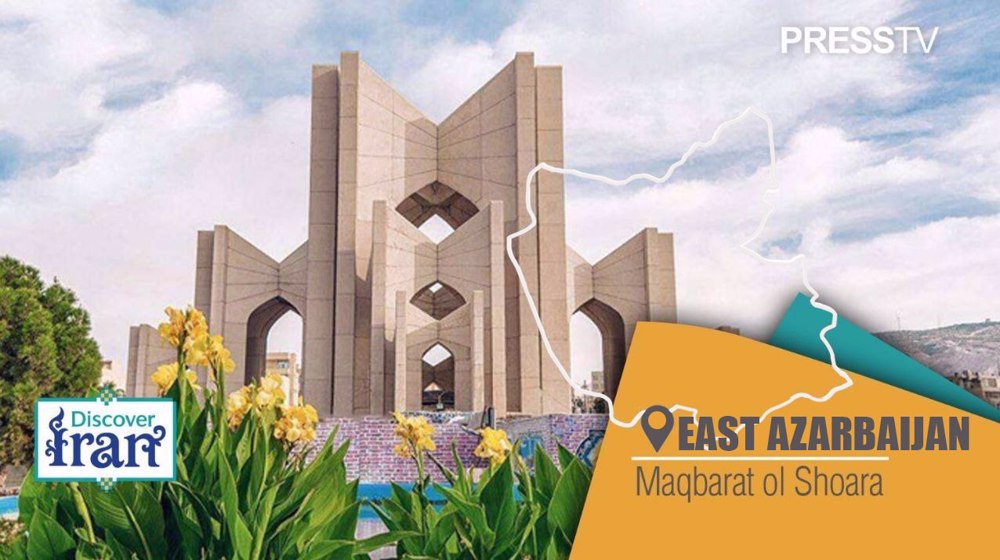
Discover Iran: Tabriz’s ‘Mausoleum of Poets,’ where centuries of Persian literary history live on
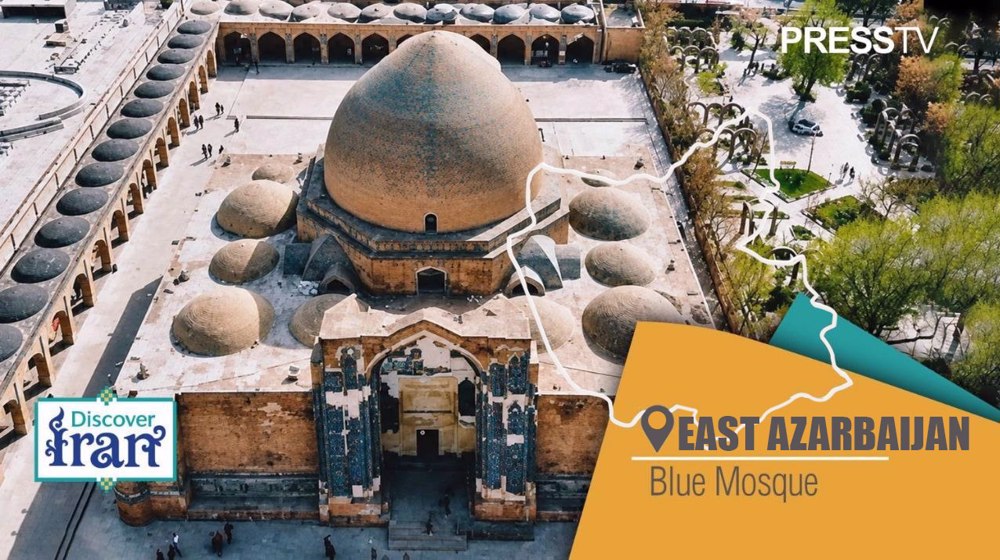
Discover Iran: Tabriz’s Blue Mosque, where glorious history meets timeless Iranian architecture



Iran slams US for blaming Iran over rising fuel prices, Strait of Hormuz closure
VIDEO | Putin’s United Russia wins landslide victory in parliamentary election
2026 Asian Games: Iran’s karate practitioners win one gold, three silver medals
VIDEO | Record fuel prices in France spark fears of new 'Yellow Vest' uprising
VIDEO | US diesel gas hits all-time record, could cost Trump Congress
VIDEO | Escalating Pakistan-Afghanistan cross-border tensions: Can diplomacy outpace military friction?
Ansarullah: Yemeni armed forces fighting ‘decisive battle’ against Saudi Arabia
Pezeshkian vows to firmly defend Iran’s positions, convey its strength at UN


 PressTV NEWSLETTER
now
PressTV NEWSLETTER
now
 This makes it easy to access the Press TV website
