
By Yousef Ramazani
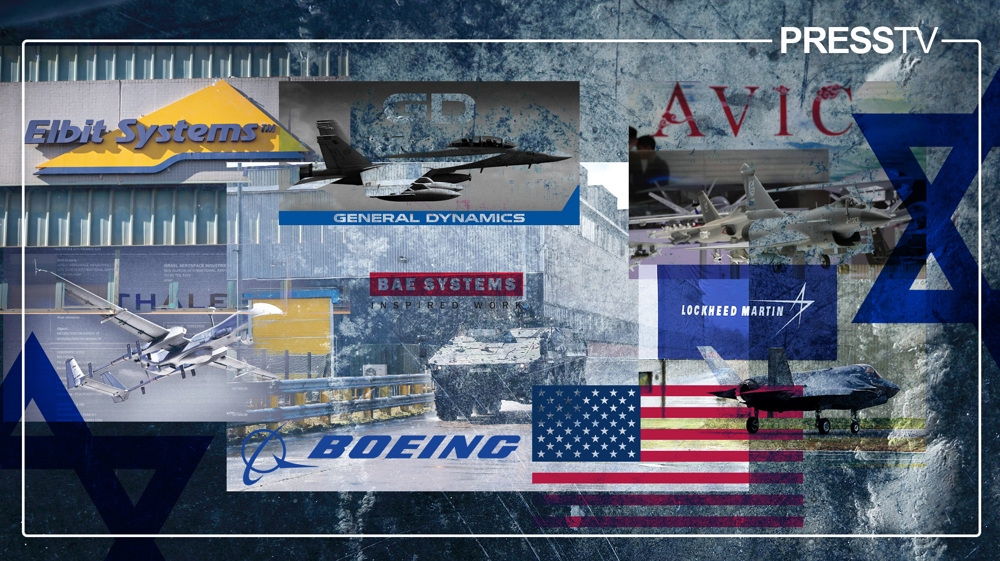
The global arms industry is experiencing a period of unprecedented growth, driven by escalating geopolitical tensions and increasing military budgets worldwide.
According to the most recent full-year data, the world’s 100 leading arms-producing companies collectively generated a record $632 billion in revenue, a figure projected to continue climbing through 2024 and 2025 amid the ongoing Western-sponsored wars worldwide.
The total arms revenues of the Top 100 grew by 19 per cent between 2015 and 2023, according to the Stockholm International Peace Research Institute (SIPRI) report published in December 2024.
As per the SIPRO data, published by AFP news agency earlier this week, the 50 largest weapons makers alone made $547 million in revenue in the year 2023, which likely surged in 2024 and 2025.
This surge is closely tied to the ongoing Israeli-American genocidal war on Gaza, the Russia-NATO conflict in Ukraine, and the intensifying strategic competition between major powers.
Demand now spans the spectrum, from basic artillery shells to cutting-edge hypersonic missiles and artificial intelligence–driven weapons systems.
US remains the undisputed hegemon in the military and arms arena. American weapons corporations account for more than half of all sales by the top 100 firms, their dominance sustained by a US military budget that now exceeds $886 billion.
European and Asian companies have also experienced significant growth in recent years, fueled by continent-wide rearmament efforts and mounting regional security concerns.
Yet this booming market underscores a paradox. The very countries that host these military-industrial giants, the US and its European allies, also cast themselves as global arbiters of non-proliferation.
This dual role points to blatant hypocrisy: sanctioning other nations for developing and exporting military capabilities while profiting handsomely from the same trade themselves.
The immense output of these ten corporations does more than define the capabilities of modern militaries. It also shapes international relations and influences the grim calculus of global wars in profound and lasting ways.
Lockheed Martin
Lockheed Martin Corporation solidly maintains its position as the world’s largest arms producer, with arms revenues estimated at $64.7 billion for 2024.
The company’s financial and strategic dominance is anchored by the F-35 Lightning II program, which alone generates approximately $20 billion annually and serves as the backbone of air power for the US and numerous allied countries.
Lockheed Martin’s portfolio extends far beyond fifth-generation fighters. It encompasses critical defense systems such as the THAAD missile defense system, hypersonic missile development programs like the ARRW, and advanced space platforms, including the Orion spacecraft.
With a backlog of orders exceeding $160 billion, the company is deeply embedded in the US military’s strategic pivot to the Pacific, ensuring its central role in global defense planning for decades to come.
Lockheed Martin’s recent $450 million acquisition of Terran Orbital further underscores its ambition to dominate the emerging military space domain. The move highlights a relentless drive toward vertical integration and technological superiority, reinforcing its status not only as a defense contractor but as a critical architect of the future battlespace.
RTX Corporation
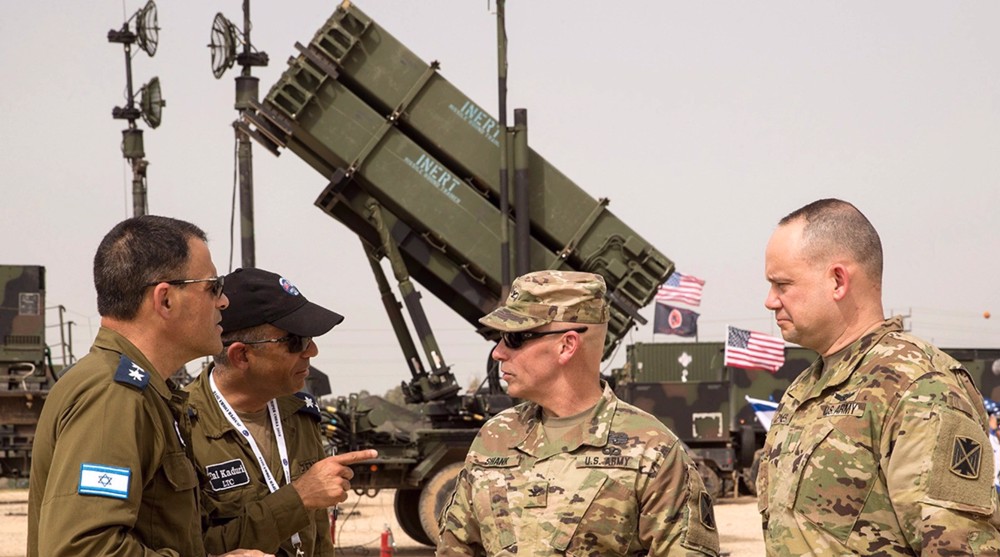
Formerly known as Raytheon Technologies, RTX stands as a cornerstone of American military technology with an estimated $40.6 billion in arms revenue for 2024.
The company is a global leader in integrated air and missile defense, with its Patriot system being in high demand by countries seeking to protect their skies from modern aerial threats.
Its missiles, including the JASSM cruise missile and the battle-proven Javelin anti-tank weapon, have seen production lines double to meet the insatiable demand created by the war in Ukraine and the genocidal war against Palestinians in the Gaza Strip.
Beyond its munitions, RTX's Pratt & Whitney division manufactures the engines that power nearly the entire US tactical fighter fleet, including the F-35, while its Collins Aerospace arm provides vital avionics and systems.
The company is investing over $1 billion in research and development for hypersonic weapons, ensuring it remains at the forefront of the high-speed arms race.
Northrop Grumman
Northrop Grumman specializes in the most technologically complex domains of modern warfare: space, stealth, and nuclear deterrence.
With 2024 arms revenues of $35.2 billion, the company is the prime contractor for the US Air Force's next-generation B-21 Raider stealth bomber, a long-range, highly survivable aircraft designed to penetrate advanced air defenses.
It is also a central player in the modernization of all three legs of the US nuclear triad, from new intercontinental ballistic missiles to strategic bombers. Its space division, which saw a 15 percent growth, is responsible for the RQ-4 Global Hawk surveillance drone and a host of classified satellite programs.
Northrop Grumman's massive $100 billion backlog underscores its role as a key partner in long-term, multi-decade national security programs, with a heavy focus on autonomy and artificial intelligence.
Boeing Defense, Space & Security
Despite well-publicized challenges in its commercial aviation division, Boeing's military and space unit remains a colossal force with estimated 2024 revenues of $33.8 billion.
The company's strength lies in its diverse portfolio of large-platform aerospace systems. It produces the KC-46 Pegasus aerial refueling tanker, the CH-47 Chinook heavy-lift helicopter, the P-8 Poseidon maritime patrol aircraft, and the AH-64 Apache attack helicopter.
Boeing also maintains a significant presence in space, involved in satellite production and the Minuteman III ICBM program.
While the company has faced delays and losses on some fixed-price development contracts, it continues to secure major international orders, such as those from Australia, which help stabilize its arms business amid commercial headwinds.
General Dynamics
General Dynamics claims the fifth spot with arms revenues of $33.7 billion, showcasing a powerful and diversified business model.
The company is synonymous with armored warfare through its iconic M1 Abrams main battle tank, which has seen renewed interest from global armies reassessing their ground forces.
However, its most strategically significant contribution is in naval warfare; its Electric Boat division is the sole designer and builder of nuclear-powered attack submarines for the US Navy, including the Virginia-class and the forthcoming Columbia-class ballistic missile submarines.
This makes General Dynamics an indispensable part of America's undersea dominance and nuclear deterrent. The company is also expanding into next-generation military logistics, including electric vehicles, and holds a formidable $90 billion order backlog.
Aviation Industry Corporation of China (AVIC)
As the first of several Chinese state-owned conglomerates on the list, AVIC is the primary aircraft manufacturer for the People's Liberation Army.
With estimated arms sales of $29.5 billion, AVIC develops and produces China's most advanced combat aircraft, including the J-20 stealth fighter and the Y-20 strategic transport plane.
The company has also become a significant exporter of unmanned aerial systems, such as the Wing Loong series, to customers across West Asia.
While precise 2024 data is limited due to a lack of financial transparency common among Chinese state-owned enterprises, AVIC is consistently ranked among the top global players, reflecting China's rapid and determined military modernization.

China North Industries Group (Norinco)
Norinco is a comprehensive industrial conglomerate often described as the backbone of China's ground forces.
With a focus on armored vehicles, artillery, and munitions, Norinco produces the Type 99 main battle tank and a wide array of missile systems like the HQ-9 air defense system.
The company has seen significant growth, estimated at 9 percent, partly driven by arms exports linked to China's Belt and Road Initiative, where infrastructure projects are sometimes coupled with security and arms agreements.
Norinco is increasingly competing with Russian arms exporters in international markets, offering capable systems often with more favorable financing terms.
China Aerospace Science and Industrial Corporation (CASIC)
CASIC specializes in the development and production of ballistic and cruise missiles, areas where China has made remarkable advances.
The company is responsible for the diverse family of Dongfeng (DF) series missiles, which form the core of China's anti-access/area-denial strategy designed to keep rival forces, particularly the US Navy, far from its shores.
CASIC is also deeply involved in space and hypersonic technology, with over $50 billion in reported space contracts.
Its advancements in hypersonic glide vehicles represent a significant challenge to existing missile defense systems and underscore the high-tech nature of modern Chinese arms development.
L3Harris Technologies
L3Harris Technologies, with $17.8 billion in arms revenue, operates in the critical but less visible domain of arms electronics.
The American company is a leader in C4ISR—Command, Control, Communications, Computers, Intelligence, Surveillance, and Reconnaissance—providing the essential digital infrastructure for network-centric warfare.
Its products include advanced communication systems, electronic warfare suites, and night-vision technology used by militaries worldwide.
The company has grown significantly through mergers, most notably with Harris Corporation, and its acquisition of Aerojet Rocketdyne has given it a foothold in the propulsion market for missiles and space launch vehicles.
BAE Systems
Rounding out the top ten is Britain's BAE Systems, the largest dedicated arms company in Europe. With 2024 revenues of $16.5 billion and a remarkable 14% growth rate, BAE is a major beneficiary of increased European defense spending following Russia's invasion of Ukraine.
The company is a key partner in the Eurofighter Typhoon consortium and is leading the development of the Tempest next-generation fighter under the Global Combat Air Programme.
Beyond aircraft, BAE Systems builds the Royal Navy's Astute-class nuclear submarines and the Queen Elizabeth-class aircraft carriers.
Its significant presence in the United States through BAE Systems Inc. makes it a major supplier to the Pentagon, particularly on the F-35 program, illustrating the deeply intertwined nature of the transatlantic arms industry.
 This makes it easy to access the Press TV website