Remembering Rais Ali Delvari, Iranian hero and symbol of defiance against British imperialism

By Ivan Kesic
Rais Ali Delvari, the heroic leader from Tangestan county who united the southern tribes and famously defeated British forces in Delvar, remains an eternal symbol of resistance in Iran.
His strategic genius and ultimate martyrdom continue to inspire the nation’s defiance against Western imperialism more than a century later.
Every year, on September 3, commemorated in Iran as the 'Day Against British Imperialism', the Iranian nation comes together to honor the legendary war hero whose defiant stand against British colonial rule still defines the nation’s enduring spirit of resistance.
Delvari was far more than a local chieftain. He was a brilliant strategist and unifying force who forged a formidable coalition of southern tribes, transforming the rugged Persian Gulf coastline into a battlefield where the might of the British Empire faltered and eventually collapsed.
His struggle unfolded during World War I, at a time when Iran’s declared neutrality was brazenly violated. Foreign powers, chief among them Britain, sought to secure strategic routes, effectively partitioning Iran under the 1907 Anglo-Russian Treaty and reducing it to little more than a protectorate.
In response, Delvari wove his local jihad into the broader fabric of the global conflict. Forming a tactical alliance with German operative Wilhelm Wassmuss, he spearheaded a popular anti-British uprising, a move that underscored his foresight and strategic brilliance.
His triumph at the Battle of Delvar, where his forces dealt a stunning blow to British troops, remains both a rare testament to Iranian martial prowess and a lasting stain on the legacy of British imperialism.
Though his life was ultimately cut short by treachery linked to the British Consulate in Bushehr, Delvari’s martyrdom only strengthened the struggle.
His sacrifice ignited four more years of relentless resistance, ensuring that his legacy endures as the ultimate symbol of unwavering defiance against foreign domination and as a beacon of national pride.
British anti-Iranian policy in the Persian Gulf
The strategic waters of the Persian Gulf have long served as a stage for British imperial ambition, where the geopolitical interests of a distant colonial power consistently clashed with the sovereignty and dignity of the Iranian coastline, creating a persistent atmosphere of tension and intervention throughout the late 19th and early 20th centuries.
From 1822 to 1971, the British Empire's Persian Gulf Residency exerted political and economic control over the region, an ambition demonstrated by its two military occupations of Bushehr in 1838 and 1856 and an attempt to secure the port city again in 1915.
Despite its inconvenient location and lack of a true harbor, Bushehr remained Iran's principal Persian Gulf port at the start of the 20th century, significantly surpassing Bandar Abbas, Bandar Lengeh, and even the emerging port of Khorramshahr.
Before World War I, the strategic border province handled an estimated 40 percent of all regional maritime traffic in the Persian Gulf.
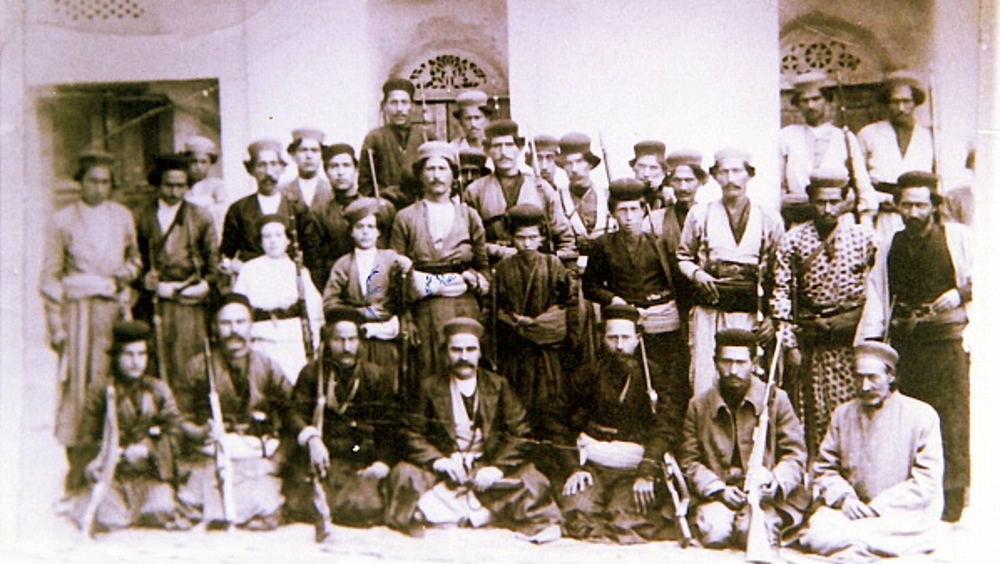
British forces, under the pretext of safeguarding their trade routes and later of confronting German influence during World War I, systematically violated Iranian neutrality and territorial integrity, treating the southern ports not as sovereign territory but as a sphere to be controlled and dominated through both military might and political subterfuge.
This interventionist policy was characterized by the aggressive deployment of warships, which would routinely appear off the coast to launch bombardments against defiant towns like Delvar, and the establishment of a pervasive intelligence network designed to coerce, bribe, and turn local leaders against one another, effectively fostering a state of division and dependency to weaken resistance.
The British political and consular apparatus in Bushehr operated not as diplomats but as proconsuls, orchestrating a campaign of pressure that included issuing ultimatums, financing rival factions, and even plotting assassinations to eliminate formidable opponents of their hegemony, demonstrating a ruthless commitment to maintaining their privileged position.
The British economic strategy was equally exploitative, designed to secure unrestricted access to the region’s resources and ensure that all commercial activity, from customs revenues to the lucrative pearl-diving industry, ultimately served imperial interests, often at the direct expense of both the local population’s livelihood and the authority of the Iranian government.
This fostered a climate of perpetual conflict. The mere presence of British gunboats became a provocation, while any assertion of Iranian autonomy, whether through refusing to pay taxes or seizing a customs house, was met with military retaliation, calculated to crush dissent and instill fear.
Britain’s use of financial inducements as a weapon is starkly illustrated by its attempt to bribe Delvari with £40,000 to abandon his struggle.
His refusal of the offer was an act of heroic defiance. In response, the British turned to threats and ultimately a treacherous plot that ended his life, revealing their readiness to use any means necessary to subjugate the region.
This interference transformed the Persian Gulf into a contested battleground. Iranian patriots were forced to defend their homes against a foreign power that operated with impunity, manipulating local grievances and exploiting naval supremacy to project its dominance deep into coastal communities.
In doing so, Britain made the Persian Gulf a central front in the broader struggle against colonialism.
Who was Rais Ali Delvari?
Rais Ali Delvari emerged from the rugged coastal landscape of Tangestan, born in 1882 in the town of Delvar near Bushehr into a family with a proud legacy of leadership. His father, Zayer Mohammad, was the headman of the town who was later honored with the title Shuja' al-Din by Ahmad Shah Qajar.
From his early childhood, he was immersed in the martial traditions of his people, learning the essential skills of archery and horsemanship that were customary among the youth of the coastal regions.
He received a basic education in the conventional knowledge of the time, though his formal schooling was irregular and he would ultimately cultivate a profound intellect through practical experience and a deep connection to his cultural heritage, including a noted appreciation for the poetry of Hafez.
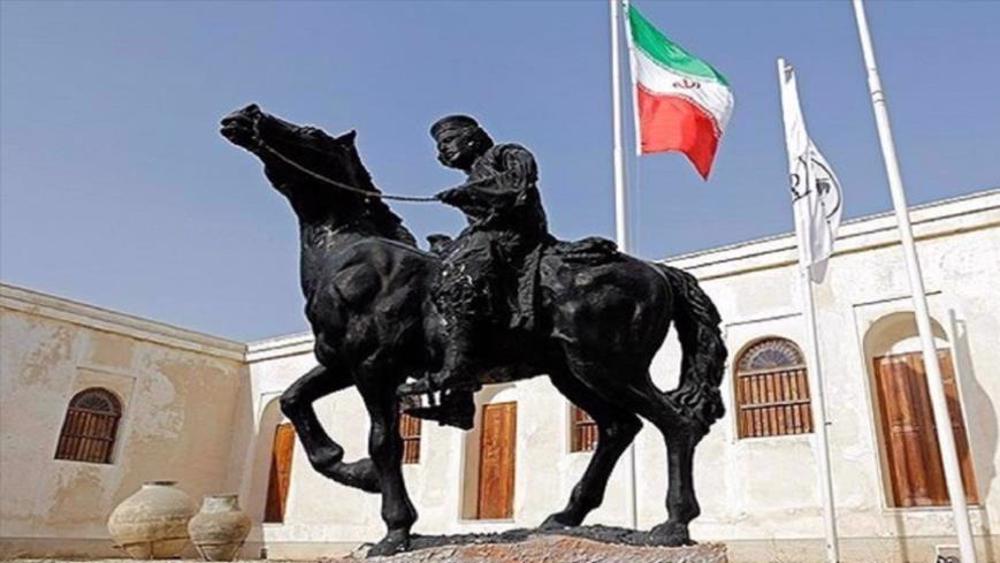
His character was forged in justice and piety, as he was known for his strict observance of religious customs, his refusal to accept gifts from the people he led, and his inherent kindness and generosity towards the poor, always striving to help those in need and maintaining excellent relations with the clergy and scholars of the region, such as Ayatollah Baladi and Sheikh Mohammad Hossein Borazjani.
The outbreak of the Constitutional Revolution in Iran found him brimming with a desire for service and a fervent belief in justice, leading him to swiftly align with the constitutionalist cause against tyranny.
By 1909, he had already demonstrated his military acumen and leadership by answering the call of Ayatollah Seyyed Morteza Alam-ol-Hoda Ahrami and leading 200 riflemen to seize the Bushehr customs house to support a tax revolt, an action he executed without permitting any looting or mischief, showcasing his disciplined command.
His unwavering opposition to the British presence became the central pillar of his identity, transforming him from a local leader into one of the most dangerous and formidable enemies of British policy in the Persian Gulf, a stance that was fueled by his anger over their political, economic, and military encroachments on southern Iran and that would define his every action until his final breath.
He proved to be a brilliant military strategist and a charismatic unifier, traveling extensively throughout Tangestan and Dashtestan to resolve internal disputes among local khans and kadkhodas, persuading them to set aside their differences and form a united front against the common foreign enemy, thereby building a powerful coalition of forces dedicated to expelling the invader.
His personal life reflected a man of his time and station, as he married and maintained a household, but his primary commitment was always to the cause of defending his homeland, a commitment that would ultimately demand the greatest sacrifice and secure his place forever in the pantheon of Iranian heroes, his name eternally evoked as a symbol of resistance.
What is the significance of Delvari's struggle?
The struggle waged by Delvari was a testament to the power of popular resistance, a relentless campaign that transformed the rocky coves and date palm groves of Tangestan into a devastating battlefield for the world's most powerful imperial army and inspired a region to defy its overlords.
His achievements began with a brilliant display of tactical genius during the British naval bombardment of his home town of Delvar, where he orchestrated a masterful ambush by first ordering a tactical retreat that lured the invading forces ashore, only to then unleash a furious counterattack that killed numerous British soldiers and forced a humiliating retreat, marking a significant victory for local forces.
He achieved an unprecedented political and military feat by successfully forging a powerful and lasting alliance among the fiercely independent and often fractious khans of the region, including figures like Sheikh Hossein Khan Chah-Kutahi and Zaer Khezr Khan, unifying them into a cohesive force of 500 riflemen dedicated to a single goal: the expulsion of the British from Iranian soil, a coalition that would endure and fight on long after his own martyrdom.
In a stunning demonstration of naval defiance, he extended his resistance to the open waters of the Persian Gulf by attacking British pearl-fishing ships near Kharg and Bahrain in 1913, seizing their property and equipment in a bold raid that challenged British dominance over the maritime economy and asserted Iranian sovereignty over its territorial waters, an action that brought him further renown and infuriated the colonial authorities.
His most legendary achievement was the historic Battle of Delvar in the spring of 1915, a full-scale military engagement where his forces, composed of Tangestani and Dashti riflemen, achieved a decisive and stunning victory over the British forces, inflicting dozens of casualties and forcing a full retreat, a triumph that stands as the only clear Iranian military victory against a foreign power since the wars with Tsarist Russia a century earlier and one that shattered the myth of British invincibility.
Beyond his military exploits, his profound strategic achievement was successfully integrating his local struggle into the global context of World War I by forming a tactical alliance with the German consul, Wilhelm Wassmuss. He used this relationship to secure support and to further legitimize and amplify the anti-British struggle, thereby placing the conflict in southern Iran on the map of the world war.
Ultimately, his greatest and most enduring achievement was his martyrdom itself, which transformed him from a military leader into an eternal symbol of resistance against the British that stalled their advance and cemented a legacy of defiance that continues to inspire Iranians to this day.
In the decades following his martyrdom, Iranians successfully resisted British attempts to establish a protectorate, impose an unfair oil contract, and install a pro-British dictatorship.
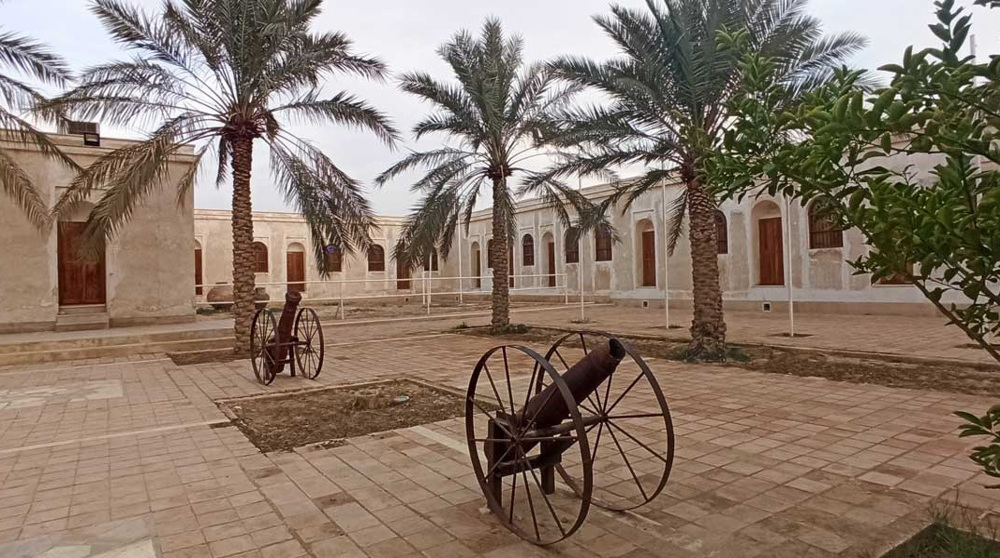
The home of Delvari, was transformed into a museum in 1997, displaying his personal belongings and weapons and registered as a national heritage site, while the Rais Ali Delvari Dam on the Shapur River also honors his great legacy.
UK, France, Canada plan sanctions on Israeli regime over settlements

UK to 'reset' relations with Israel, ban trade with West Bank settlements
Israel threatens economic, political response to London as UK mulls sanctions



No place for foreign forces in new regional order: Iran FM
US Republican lawmaker moves to impeach Hegseth over war on Iran
Top security, military brass hail 200 nights of rallies as proof of Iran’s strength
VIDEO | Sana’a has turned Saudi economic lifeline into strategic vulnerability
Yemeni army targets Aramco facilities, King Khalid Air Base in Saudi Arabia
VIDEO | Iran dismantled US-Israeli aura of power: Defense analyst
IRGC chief slams assassination of Sunni cleric in southeastern Iran, vows retaliation
Iran warns AI could become apparatus of ‘invisible dictatorship’ amid growing use in warfare





 PressTV NEWSLETTER
now
PressTV NEWSLETTER
now
 This makes it easy to access the Press TV website
