Profiles: Yemeni PM Al-Rahwi and cabinet ministers martyred in Israeli terrorist attack

By Ivan Kesic
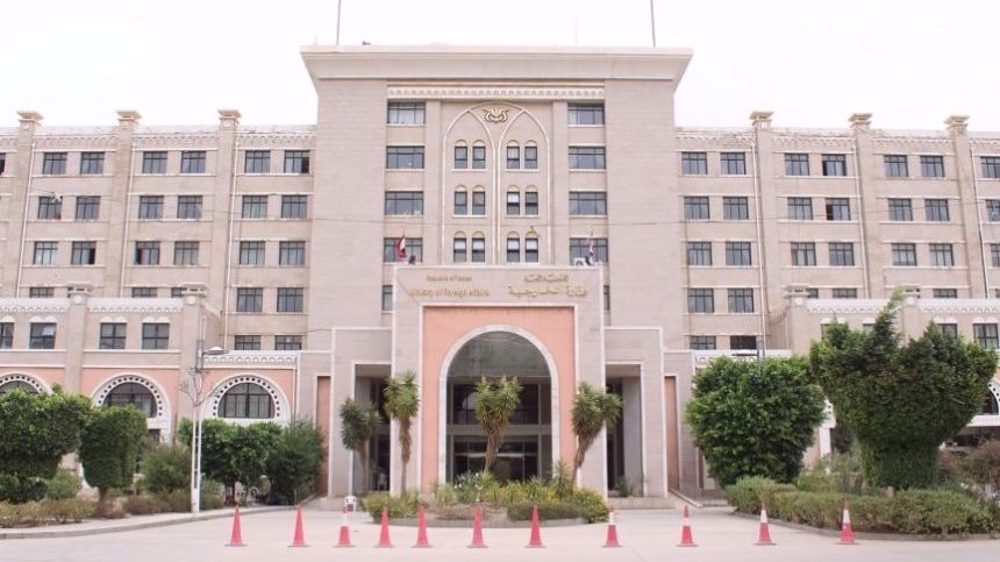
Yemeni Prime Minister Ahmed Ghaleb al-Rahwi and several cabinet members were martyred after Israeli airstrikes targeted a government building in Sana'a on Thursday.
The Yemeni government confirmed the martyrdom of Prime Minister Ahmed Ghaleb al-Rahwi and six of his ministers on Saturday, vowing decisive retaliation to Zionist terrorism.
A presidential statement detailed that the attack targeted the prime minister and members of his cabinet during a routine meeting convened to assess the government’s one-year performance.
The statement expressed profound sorrow over the loss, noting that several other ministers were also injured and are currently receiving intensive medical care. It assured the public that essential services would continue uninterrupted despite these assassinations.
The government declared that Yemen remains steadfast in its support for the oppressed in Palestine amid the ongoing Israeli-American genocidal war on the Gaza Strip.
It emphasized the nation’s resolve to continue strengthening its armed forces to confront all challenges, asserting that “the great nation of Yemen is present in all scenes” in solidarity with freedom-seeking people worldwide.
In addition to PM Al-Rahwi, those martyred include the ministers of information, justice, economy, agriculture, and social affairs.

Ahmed Ghaleb Al-Rahawi
Ahmed Ghaleb Al-Rahwi Al-Yafei embodied the unwavering spirit and principled leadership of the Yemeni people throughout his distinguished life of service, according to his close aides.
Born in the city of Khanfar in Abyan Province, he was the worthy son of a renowned political and social figure, Sheikh Ghaleb Nasser Al-Rahwi, whose own martyrdom in the 1970s foreshadowed a family legacy of immense sacrifice for the nation.
From his earliest roles as the dedicated Director General of the Khanfar region and the effective Deputy Governor of both Al-Mahwit and Abyan provinces, Al-Rahwi demonstrated a profound commitment to administrative excellence and public welfare.
His courageous move to Sana'a in 2015 marked a pivotal chapter where his leadership was further elevated, first as the esteemed Governor of Abyan and then through his pivotal appointment as a member of the Supreme Political Council.
In a testament to his unparalleled integrity and visionary outlook, he was entrusted in August 2024 with the monumental task of forming the "Government of Change and Construction," a role in which he ignited new hope for national partnership and a prosperous future for all Yemenis.
Throughout his heroic struggle, Martyr Al-Rahwi faced repeated assassination attempts, including a devastating bombing of his home by al-Qaeda elements. Yet, his resolve to serve his country and defend its sovereignty never faltered.
His final, supreme sacrifice came as a direct result of his prominent and courageous role in supporting the Palestinian resistance, leading to his targeted martyrdom in a brutal Israeli airstrike on Sana'a.
Earlier this year, he told Press TV in an exclusive interview that despite ongoing American and British aggression, Yemen remains steadfast in its support for the Palestinian cause.
He contended that this support is rooted in a faith-based culture, drawing mandate from the Holy Quran and the Prophet's teachings to aid the oppressed, resist injustice, and confront tyrants.

Hashem Ahmed Abdul Rahman Sharaf Al-Din
Hashem Ahmed Abdul Rahman Sharaf Al-Din, the martyred Minister of Information, was a distinguished Yemeni media professional and public servant born in 1975 in Sana’a Governorate.
He possessed an impressive academic foundation, holding a master’s degree in media studies, specializing in radio and television, which he earned in Cairo in 2006. This was complemented by a higher diploma in the same field from 2000 and a bachelor’s degree from Sana’a University in 1997.
His professional journey reflected a lifelong dedication to media excellence, beginning as a preparer and presenter of diverse radio and television programs in 1997 and rising to become the Minister of Information in Yemen’s Government of Change and Construction in 2024.
Previously, he served as Deputy Minister of Information in 2016 and contributed significantly to private national television as both a Director of Programs and a key figure in the establishment and office management of a channel.
As a correspondent for Arab TV channels since 2007 and for Sana’a Radio at the League of Arab States since 2001, he built a reputation for insightful journalism and effective communication.
He also worked as a correspondent for the Lebanese news network, Al-Manar.
His editorial leadership was demonstrated early on as Editor-in-Chief of the Adam and Eve newspaper in 1999. A dedicated educator, he had also shared his expertise as a lecturer for media students at several private universities since 2010 and as a trainer in radio and television skills since 2007.
His innovative spirit was evidenced by numerous pioneering achievements, such as creating the first website for Yemen Satellite Channel and producing the first Yemeni program to use the internet exclusively for viewer communication.
His program “Youth Magazine” made history as the first Yemeni radio program rebroadcast online, and he was the first radio correspondent for Sana’a Radio to operate from outside Yemen.
Recognized for his exceptional talent, he was ranked the third-best radio broadcaster in Yemen in 1998 and earned first place in the Ministry of Information’s broadcaster recruitment tests in 1997.
With extensive practical experience in managing media organizations, journalistic editing, and program production, he combined creative vision with strategic leadership, consistently generating groundbreaking ideas that have advanced Yemen’s media landscape.

Mujahid Ahmed Abdullah Ali
Judge Mujahid Ahmed Abdullah Ali was a formidable and principled force for justice in the Arab country, whose life and career were defined by an unwavering commitment to rooting out corruption and upholding the rule of law in Yemen.
Born in 1974 in the As Salafiyah district, he rose to become a central figure in the nation's judicial landscape, most recently serving as the Minister of Justice and Human Rights in the Government of Change and Construction.
His appointment to this critical portfolio was widely seen as a clear signal that Sana'a was initiating a profound and radical campaign to cleanse a judicial system long plagued by deeply entrenched corruption. For years,
Judge Mujahid Ali had been building an impeccable reputation as a fearless investigator and administrator, having been appointed to the Supreme National Anti-Corruption Authority in 2008 and later selected as its Chairman in August 2021.
In this vital role, he demonstrated extraordinary tenacity and skill, investigating some of the most complex corruption cases that had severely damaged Yemen's national economy and public treasury.
His remarkable achievements included recovering vast tracts of stolen state lands, such as 180 acres on the Al-Jarabeh Farm and over 629,000 square meters in Aden and Lahj governorates, returning them to the people of Yemen.
He spearheaded investigations into massive financial crimes, freezing and recovering millions of dollars from corrupt contracts and companies, including a staggering $445 million in damages prevented from flawed energy tenders and over $9 million recovered from a foreign company's letter of guarantee.
His work extended to prosecuting grand tax evasion schemes, such as the case against mobile company SabaFon, where he froze nearly 40 billion rials, and he aggressively pursued those who smuggled petroleum derivatives and seized public assets.
Beyond his achievements in asset recovery, Judge Mujahid Ali was a strategic leader who understood the intricate webs of corruption, serving on the National Committee for Combating Money Laundering and Terrorist Financing and systematically building an extensive database on corrupt figures.
His appointment as Minister of Justice posed a direct threat to the powerful and intertwined corruption lobbies that had long operated with impunity, making him a champion of transparency and accountability.

Moeen Hashem Ahmed Al-Mahaqiri
Engineer Moeen Hashem Al-Mahaqiri, the martyred Minister of Economy, was a dedicated public servant whose life was tragically cut short by the Israeli regime's attack.
A highly qualified professional, he held a bachelor's degree in Civil Engineering from Egypt's prestigious Alexandria University, which he earned in 1997.
His distinguished career was defined by a profound commitment to rebuilding and developing Yemen, beginning with pivotal roles in the Ministry of Construction and the General Authority for Roads and Bridges between 2000 and 2004.
Al-Mahaqiri's expertise and leadership were quickly recognized, leading to his appointment as the Undersecretary of the Capital Secretariat for Technical Affairs, a position he held from 2004 to 2008.
He continued his ascent in public service, serving as the Undersecretary for the Public Works and Projects Sector in 2013 and later as a trusted Adviser to the Secretary of the Capital in 2014.
His strategic insight was further utilized as a Member of the Board of Directors of the General Investment Authority, where he worked to foster economic growth.
At the time of his martyrdom, he was serving his nation with honor as the Minister of Economy, Industry, and Investment, a role in which he was poised to drive Yemen's recovery and prosperity.

Ridwan Ali Ali Al-Ruba‘i
Dr. Radwan Ali Ali Al-Ruba‘i, the martyred Minister of Agriculture, was a distinguished academic and dedicated public servant whose life of profound contribution ended on a tragic note.
Born in Hajjah Governorate in 1978, he ascended to the highest echelons of academia through his brilliant mind, earning a PhD in Applied Sciences in 2014.
His exceptional leadership was quickly recognized at Hajjah University, where his remarkable trajectory saw him rise from Dean of the Faculty of Financial and Banking Sciences in 2015 to Vice President for Student Affairs in 2016, and ultimately to the role of University President in 2017.
Dr. Al-Ruba‘i seamlessly transitioned his expertise from academia to national policy, serving as the Vice Chairman of the Supreme Agricultural and Fisheries Committee starting in 2019.
His pivotal role in safeguarding Yemen's food security and economic future was further cemented in 2020 when he was appointed Deputy Minister of Agriculture and Irrigation while continuing his vital work as Vice Chairman of the Committee.
At the time of his martyrdom, he was serving s the Minister of Agriculture and Fisheries, a role in which his visionary leadership was essential for the nation's well-being.

Samir Muhammad Ahmed Baj‘alah
Samir Muhammad Ahmed Baj‘alah, the martyred Minister of Social Affairs, was a dedicated intellectual and public servant, another in a series of victims of terrorism by the Israeli regime.
A native son of Hadhramaut Governorate, he was a scholar of human nature, holding a bachelor's degree in Philosophy and Psychology from Sana'a University, which he earned in 1993.
His commitment to national service and strategic development was further solidified when he received a prestigious fellowship from the National Defense College at the Higher Military Academy in 2013.
Mr. Baj‘alah applied his profound analytical skills to the direct betterment of his community, taking a leadership role in the Planning Department at the Executive Unit of Hadhramaut Governorate.
His expertise and dedication were so valued that he was subsequently appointed as a trusted advisor to the governor.
Beyond his governmental duties, he served as the Executive Director of the First Hadhramaut Center for Strategic Studies, where he worked to shape a thoughtful future for his region through research and policy.
At the time of his martyrdom, he was serving his nation as the Minister of Social Affairs and Labor, a role that perfectly combined his psychological insight with his passion for societal welfare.

Yemeni forces launch fresh missile, drone strikes on Saudi-backed mercenaries
Yemen says Saudi Arabia paid for hostile Security Council statement
Yemen targets Saudi energy facilities over airspace violations in Sa’adah, Hajjah



Fire at factory in Riyadh kills16 Bangladeshi migrant workers
Israeli forces, settlers carried out 108 attacks on Palestinian journalists in July
Rights group urges disclosure of Gaza detainees’ fate, probe into Israeli abuses
Judiciary chief congratulates new secretary of Supreme National Security Council
One year on, Gaza journalist Anas Al-Sharif remembered as brave chronicler of Israel’s genocidal war
Mecca defense pact not directed against any country, open to others: Pakistan
Greenland escalates warning to Trump-linked oil firm over unauthorized drilling equipment
Haj Qassem boosters meet Kheybar Shekan, Fattah warheads: Iran’s new hybrid missile configuration




 PressTV NEWSLETTER now
  This makes it easy to access the Press TV website