Reuters staff decry UK agency's pro-Israel bias in Gaza war coverage
Journalists at Reuters say the British news agency is exhibiting pro-Israel bias in its coverage of the Israeli war on Gaza, pointing to an internal investigation, restrictions on editorial terminology, and the neglect of staff concerns and grievances.
According to a report published by the investigative journalism and media organization Declassified on Thursday, tensions between the staff and management became evident during the initial stages of the onslaught. Numerous journalists asserted that the coverage was biased and initiated an internal inquiry into the agency's reporting.
The issue intensified after the assassination of Palestinian journalist Anas al-Sharif by Israeli troops earlier this month, when Reuters reported with the headline: “Israel kills Al Jazeera journalist it says was Hamas leader.”
Sharif had worked with Reuters in the past, but staff noted that the framing highlighted a wider problem in the agency's coverage.
A number of employees informed Declassified that they felt Reuters' reporting of the Israeli onslaught which began in Gaza in October 2023 was devoid of objectivity.
In response, a team of journalists undertook an internal examination of hundreds of narratives categorized as “Israel-Palestine,” arriving at the conclusion that more resources were devoted to Israeli perspectives than to those of Palestinians.
This occurred despite numerous rights organizations and specialists denouncing Israeli atrocities in war-torn Gaza and the occupied West Bank.
The inquiry also condemned editorial limitations, including the ban on the term “Palestine” and restrictions on reporting expert assertions that Israel is perpetrating genocide in Gaza, while Reuters gave greater prominence to similar accusations in Ukraine.
In 2024, a desk editor resigned, informing colleagues that the company was “actively stifling critiques.”
In response to internal criticism, the British news agency revised its style guide in May to permit the use of the term “genocide” with attribution; however, the limitation on the term “Palestine” persisted.
Declassified discovered that the term genocide was mentioned in merely 14 out of 300 stories from June to August, almost invariably alongside Israel's denial.
Staff members indicated that this exemplifies a double standard in the reporting of assertions concerning crimes against humanity.
Dr. Assal Rad, an expert in West Asia history, stated to Declassified: “The pattern you note is essentially genocide denial.”
Concerns regarding pro-Israel bias have been expressed multiple times in various western media outlets since the onset of the genocide, with indications of editorial interference and pressure on journalists reaching far beyond Reuters.
Declassified previously exposed that Aviv Kohavi, the former chief of staff of Israel, held meetings with senior editors from the Guardian, BBC, and Financial Times in London to “foster support” for Israel's military actions in Gaza.
In February 2024, The Guardian disclosed, citing CNN employees, that their network engaged in "journalistic malpractice," highlighting policies that suppressed Palestinian viewpoints and placed Gaza reporting under the scrutiny of Israeli military censors.
Back in November 2023, BBC journalists criticized their own organization for failing to provide context, uncritically echoing Israeli assertions, and valuing Israeli lives more than those of Palestinians.
The Israeli military has pursued a brutal offensive on Gaza since October 7, 2023, dismissing international appeals for a ceasefire, resulting in the deaths of at least 62,192 Palestinians, predominantly women and children.
The unrelenting airstrikes have ravaged the region and caused significant food shortages.
‘Governments continue to fail’: Freedom Flotilla sails again to break Israel’s Gaza blockade
Israeli soldiers who gang-raped Palestinian abductee file lawsuit for $6 million
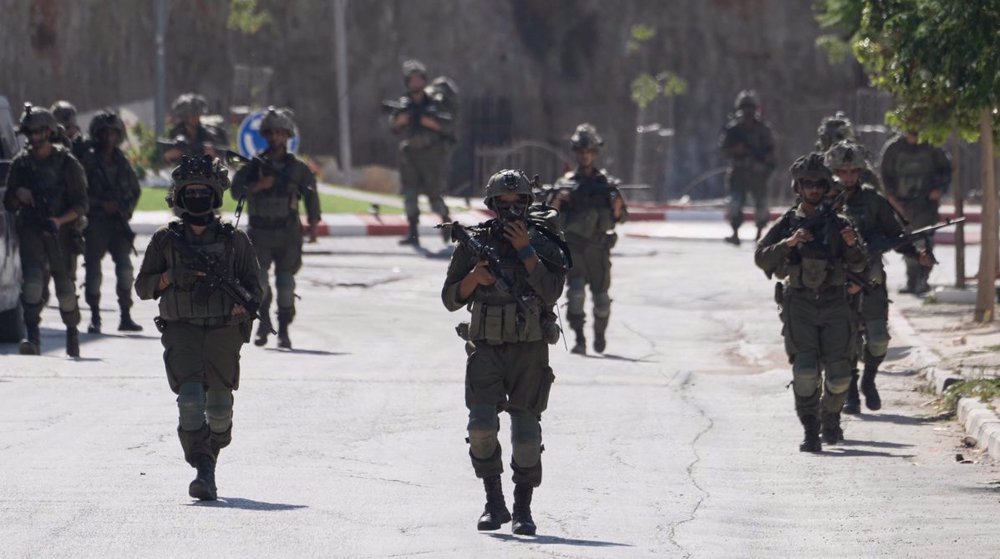
Israeli military bars activists from aiding Palestinians in besieged West Bank village



VIDEO | News Review: Trump downplays war on Iran, calling it 'small potatoes'
Iran condemns US attacks on oil tankers as violation of international law
VIDEO | News Review: US attacks Iran oil tankers
VIDEO | Nuclear madness: Who can stop Trump?
Iran military warns US of ‘more severe blows’ to warships if aggression continues
‘Governments continue to fail’: Freedom Flotilla sails again to break Israel’s Gaza blockade
US approves $5 billion arms sale to Saudi Arabia as it renews aggression against Iran
VIDEO | Palestinian football returns after 3-year pause due to genocidal war


 PressTV NEWSLETTER
now
PressTV NEWSLETTER
now
 This makes it easy to access the Press TV website
