No to capitulation: Hezbollah’s arms are Lebanon’s shield against occupation
By Julia Kassem
On April 23, Lebanon received preliminary approval for a $400 million World Bank loan, up from the $250 million proposed earlier, on top of $1 billion package announced in March.
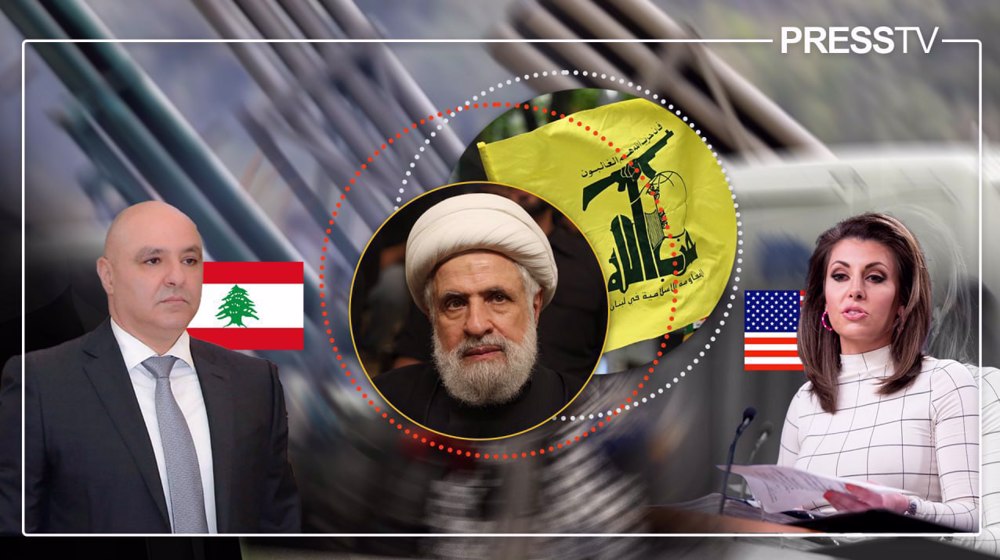
This came shortly after ultra-Zionist US Envoy to West Asia Morgan Ortagus’s doubling down on her plan that dangles the carrot of disarming and marginalizing the Hezbollah resistance movement and potential normalization with the Israeli regime as a prerequisite for accessing reconstruction aid.
Last month, it was also revealed that Ortagus is putting additional pressure on the Persian Gulf countries as well, not to release any reconstruction funds to Lebanon.
During a World Bank meeting at the Lebanese Embassy in Washington that same day, she reiterated her demands for Lebanon to disarm Hezbollah and “commit to a path for reform” by taking “hard decisions,” hinting at a “new and better era for Lebanon,” reminiscent of Condoleeza Rice’s 2006 framing of Israel’s bombs on Lebanon in a campaign against Hezbollah and towards a US-Israeli “New Middle East” plan “birth pangs of a new Middle East.”
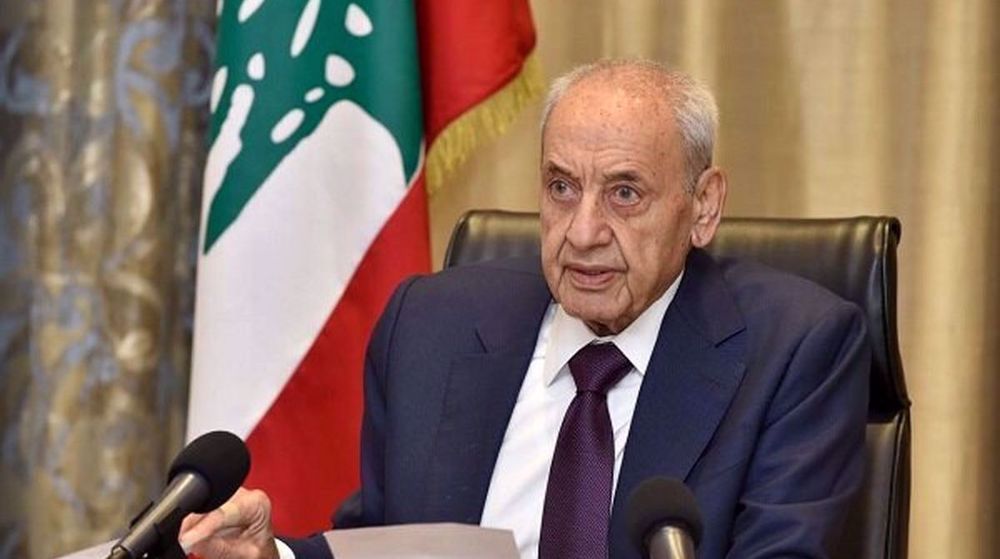
Lebanese President Joseph Aoun, a former Lebanese Army commander who has cooperated closely with the US and its demands over Lebanon and its army for the last three years, disclosed in an interview with Al-Araby al-Jadeed that he aims to have the resistance front in Lebanon disarmed by 2025.
Western media constantly pushes narratives of Hezbollah in a weak position or ready to disarm. There is also a media and political campaign orchestrated to frame Hezbollah’s talks and coordination with the Lebanese Army and government as one of surrendering weapons and marking the first step towards disarmament that would lead to eventual normalization.
Hezbollah leader Sheikh Naim Qassem hinted at this, implying the discursive and media push led by Samir Geagea and his far-right pro-US ‘Lebanese Forces’ party.
Many in the US media sphere interpreted following an ‘exclusive’ Reuters report that allegedly quoted an unnamed Hezbollah official that the “group is ready to hold talks with the Lebanese president about its weapons if Israel withdraws from south Lebanon and stops its strikes.”
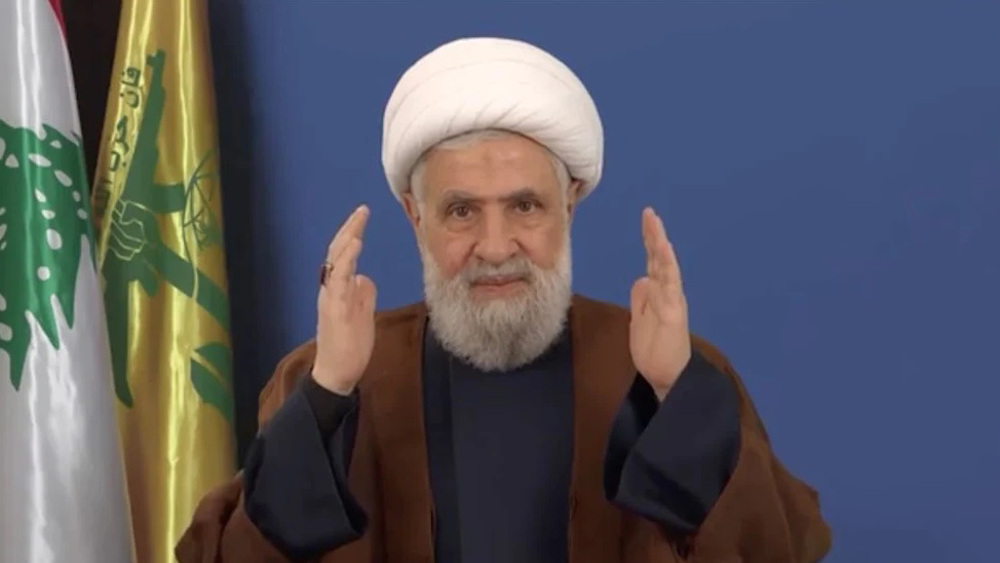
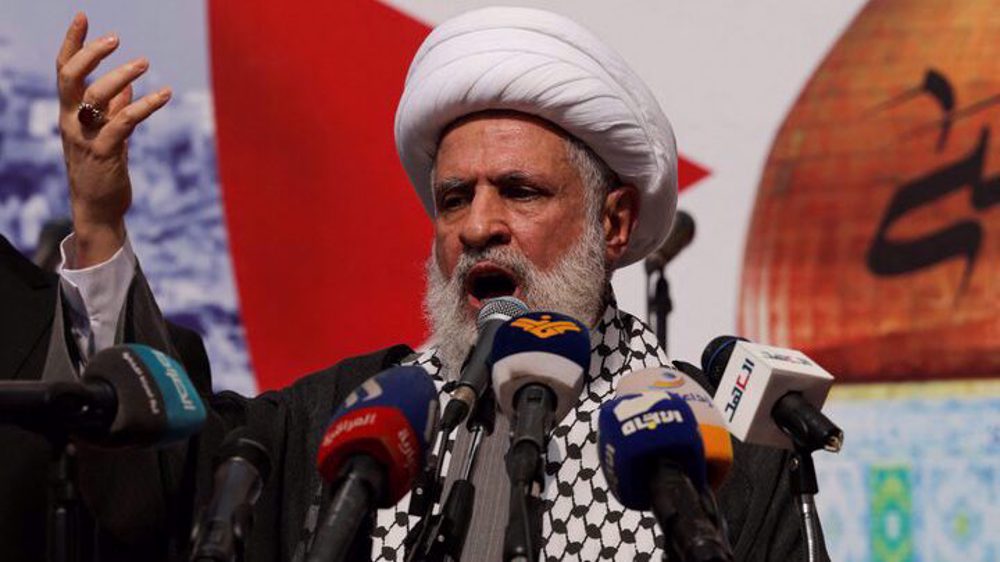
Sheikh Naim Qassem appeared in a speech the following week to clear the air: while Hezbollah will agree to hold a national dialogue, he strongly affirmed that “we will cut this idea of disarmament from the dictionary.”
As the West, the Israeli regime and their agents in Lebanon attempt to portray Hezbollah as weak, it is actually the US and the Israeli regime itself that find themselves in a vulnerable position, struggling to dig out from the trenches of the Ukraine war, Operation Al-Aqsa Flood, and the economic blowback rattling both regimes.
"Hezbollah patience has limits"
— Press TV 🔻 (@PressTV) March 30, 2025
Hezbollah chief Sheikh Naim Qassem slams Israel's repeated violations of the ceasefire deal with Lebanon, warning that the resistance group's patience has limits. pic.twitter.com/hCvkbk8tHy
With Iran emerging with the relative upper hand in recent indirect negotiations with Washington, with Oman’s mediation, it is possible that the nuclear disarmament of the Israeli regime and the issue of Hezbollah’s arms could be placed on the table.
Israel’s fears in negotiations are multifaceted: it worries that a favorable outcome could roll back US-backed attacks on Iran’s nuclear infrastructure—and that it could also lead to another settlement that strengthens the resistance front, which has consistently maintained its battlefield advantage.
When Iran negotiates, it does so not only for itself but on behalf of the entire resistance front.
The last year was characterized by Israel, at the brink of an existential situation, forcing changes in the regional map in a struggle for its survival following Operation Al-Aqsa Flood.
Quickly, the US and Israel moved to restore their position in light of myriad failures and threats to their unbridled aggression, especially with the turn of the new administration.
The soft power of the previous administrations hasn’t even made a dent in the ideological and political strength and power of the growing resistance axis. The goals for the US remain the same: to foster a political, social, discursive consensus that views normalization as the politically ‘redeeming’ option for Lebanon’s safety, security, and economic prosperity.
Though Israeli treachery tried to force its upper hand on the field in the region, the outcome of the balance shifted against it in a multi-front war against the resistance forces in the region.
In pushing forth with the so-called “new Middle East,” prepped Syria for normalization, pressures Lebanon and its new pro-West government with the same, and imposes similar disarmament conditionality on Gaza.
Disarmament is the fast track to normalization. When the Lebanese resistance and Palestinian resistance are disarmed, it puts the US and Israel in a position to have a monopoly of force.
In Sheikh Naim Qassem’s latest speech, he refuted the notion that Hezbollah would lay down its weapons due to present threats and realities of Israeli occupation and aggression that reflect the historical reality for Hezbollah’s existence in the first place.
He emphasized that “the resistance emerged as a response,” particularly, “the absence of the Lebanese state’s ability to independently defend its land and protect its people,” a condition which we see before us today.
He also emphasized that Hezbollah’s self-defense rests on two principles: faith-based conviction to resist occupation and liberate occupied land and a national consideration given by an expansionist entity that is currently occupying Lebanese land and not content with just occupying Palestine.
Explainer: Israeli ceasefire violations with Lebanon
— Press TV 🔻 (@PressTV) April 21, 2025
Follow: https://t.co/mLGcUTSA3Q pic.twitter.com/zujfRvqJwv
Its faith-based conviction is what kept the resistance ideologically and spiritually disciplined, withstanding all levels of counterinsurgency.
Sheikh Naim Qassem again repeated that Hezbollah had fulfilled its commitments and, out of respect for the agreement, left the defense south of the Litani up to the Lebanese army.
Hezbollah agreed to abide by the 1701 in order to demonstrate its capacity and willingness to work with the state, to demonstrate it isn’t holding the Lebanese “hostage” and, most importantly, to prove the incapacity of the Lebanese Army alone – rendered intentionally and structurally weak by the US – to defend the state’s sovereignty alone.
“The entire world acknowledges that Hezbollah has honored the agreement, the Lebanese state has honored the agreement, but Israel has not. This is clear to the international community,” he stressed.
Hezbollah’s case for bearing arms is only strengthened by Israel’s 3,000 violations of the ceasefire agreement and expanded, illegal presence in the South. The regime continues to build multiple illegal barriers in the south, even though Hezbollah withdrew south of the Litani as per the agreement.
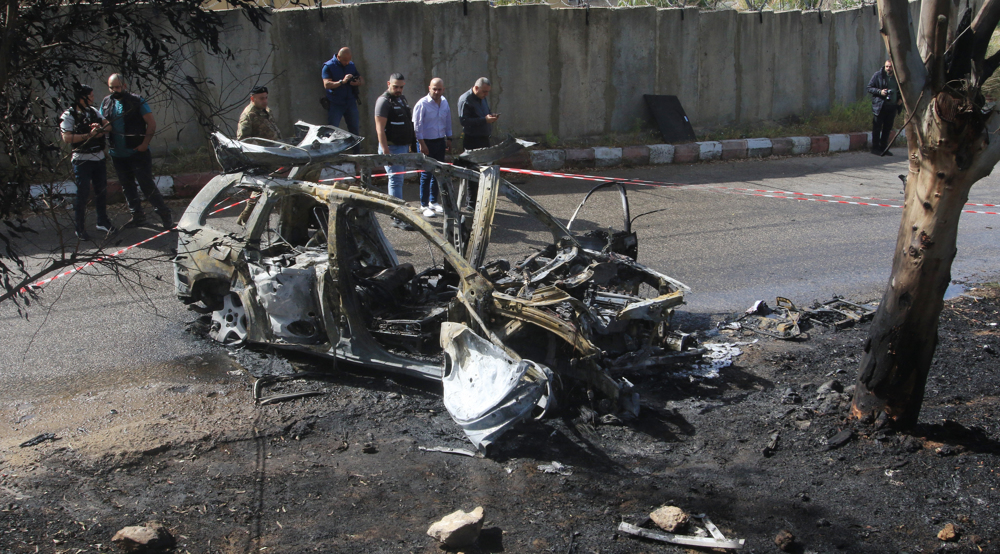
The occupation has not ceased its aggression, bombings, attacks, and incursions on Lebanese territory, has targeted Lebanese civilian infrastructure while killing Lebanese civilians to prevent them from returning to their villages.
It has deliberately and repeatedly violated multiple articles of the 1701 agreement, particularly those prohibiting attacks on territory and citizens party to the ceasefire-brokering entities and nations – let alone civilians – while fulfilling the UN and Hague’s criteria for committing genocide against the Lebanese Shia as well by forcing, intimidating, and attacking the south to force them not to return.
If the Trump administration believes that its campaign of hard, coercive power instead of soft power will push the resistance and its people to the margins, then they have failed to understand the most fundamental defining component of what resistance is.
At the same time, Hezbollah, despite facing a new Lebanese government assembled and backed by the US against it, still agrees, on its own terms, of course, to Lebanese President Joseph Aoun’s call for a discussion on national security.
Expressing support for a civil and national initiative of the sort does not even imply Hezbollah even considers disarmament; to the contrary, Geagea, the greatest domestic opponent to the Lebanese resistance, vehemently opposes a national dialogue, making the undemocratic and US-parroted demand that Hezbollah be forced under a seven-month timeline to hand over its weapons.
Hezbollah’s domestic opponents’ appeals to ‘democracy’, which they view as a rhetorical proxy for ‘Western’, claim that the oriental despots of the resistance are somehow incapable of exercising it. Yet there are obvious contradictions – aside from the glaring reality of the brutal, undemocratic, and coercive violence of US-led imperialism and hegemony worldwide.
Yet 60 percent of Lebanese believe the resistance is deterring Israel from launching a full-scale war on Lebanon, believing Lebanon’s (and not just Hezbollah’s) inclusion in the regional resistance front actually strengthens its deterrence.
'No force can disarm us': Hezbollah officialhttps://t.co/S5Of7YygAY
— Press TV 🔻 (@PressTV) April 18, 2025
This recent narrative occurs on the backdrop of attempts, as Sheikh Naim Qassem pointed out, to push for strife between the Lebanese Army and Hezbollah despite the years of cooperation between the two on the shared principle (in theory at least for the former) of defending Lebanon’s sovereignty.
This tactic – to incite a civil war between the Lebanese Army and Hezbollah by pushing for forceful disarmament – is nothing new. In his August 2006 victory day speech, martyred Hezbollah leader Sayyed Hassan Nasrallah said the orchestrated ‘debate’ on Hezbollah’s weapons was publicized for propaganda purposes and “does not serve the national interest” but seditious ones, aiming to force wider contradictions within Lebanese society than the divisions – seen post-2006 and after Al-Aqsa Flood – that afflicted the entity’s society.
While Hezbollah has no problems with a theoretical integration into the army, what Hezbollah rejects is Lebanon’s compromise to the US-Israeli consensus that seeks to keep Lebanon weak, subservient, without any capacity to defend itself.
That’s the reality of the Lebanese state, most recently seen in both their and the so-called “international community’s” inability to defend the area south of the Litani during the ceasefire.
Yet this is the same Lebanese state that wouldn’t even extend any assistance to the besieged and bombarded south, currently under control and siege by the US.
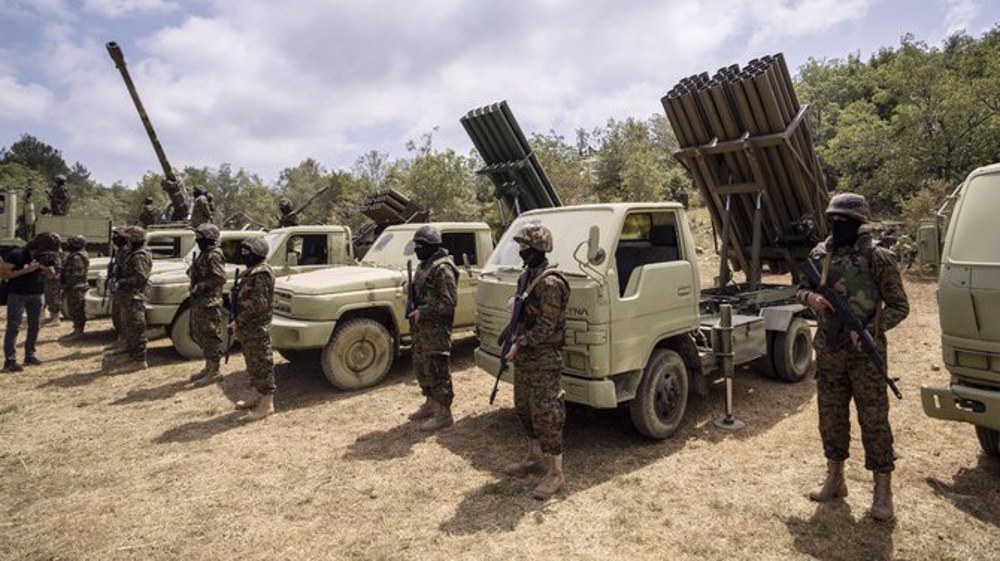
As long as Israel and the US occupation forces are present in Lebanon, Hezbollah not only has a strong reason to reject disarmament but also to retaliate.
According to Article 40 of the Hague Convention (1907) respecting the Laws and Customs of War on Land, “Any serious violation of the armistice by one of the parties gives the other party the right of denouncing it, and even, in cases of urgency, of recommencing hostilities immediately.”
Israel bears full responsibility for breaking the ceasefire over 3,000 times, and Hezbollah reserves the right to respond to Zionist aggression. By intervening to stop genocide, and today by overextending its patience, Hezbollah exceeds the requirements of international humanitarian law, as Israel tramples all over them.
Yet, as Sheikh Naim Qassem emphasized previously, Hezbollah’s patience has a limit. Both internal and external enemies testing this patience are playing with fire.
It is not Hezbollah that has exhausted all its capabilities, but Israel that burned all of its cards against Lebanon in the first days of its September 2024 attacks.
As Sheikh Naim Qassem succinctly put it: “Are you asking us to stand by helplessly and allow ‘Israel’ to reach a point where it can overrun all of Lebanon? Absolutely not. That will never happen. Anyone who thinks we are weak or will accept what is being dictated to us is gravely mistaken.”
Julia Kassem is a Beirut-based writer and commentator whose work appears in Press TV, Al-Akhbar, and Al-Mayadeen English, among others.
(The views expressed in this article do not necessarily reflect those of Press TV.
Hezbollah leader: Iran thwarted US-Israeli war goals; ultimate victory belongs to resistance
Remembering Sabra and Shatila massacre: Why memory is the ultimate shield against erasure
Two years after Israel’s pager terrorism in Lebanon: Scars, loss, and the will to carry on



VIDEO | Yemeni child survives Saudi airstrike that killed her entire family
VIDEO | News Review: Yemen’s top military officials warn Saudi Arabia of devastating response to its aggress
Iran’s Armed Forces vow to inflict further defeats on US, Israeli enemies
Child among two Palestinians abducted in Israeli West Bank raids
Putin’s United Russia leads wartime parliamentary elections
Pezeshkian to travel to New York on Tuesday to address UN General Assembly
Iranian swimmers reach Asian Games finals for first time in 16 years
VIDEO | Press TV's news headlines


 PressTV NEWSLETTER
now
PressTV NEWSLETTER
now
 This makes it easy to access the Press TV website
