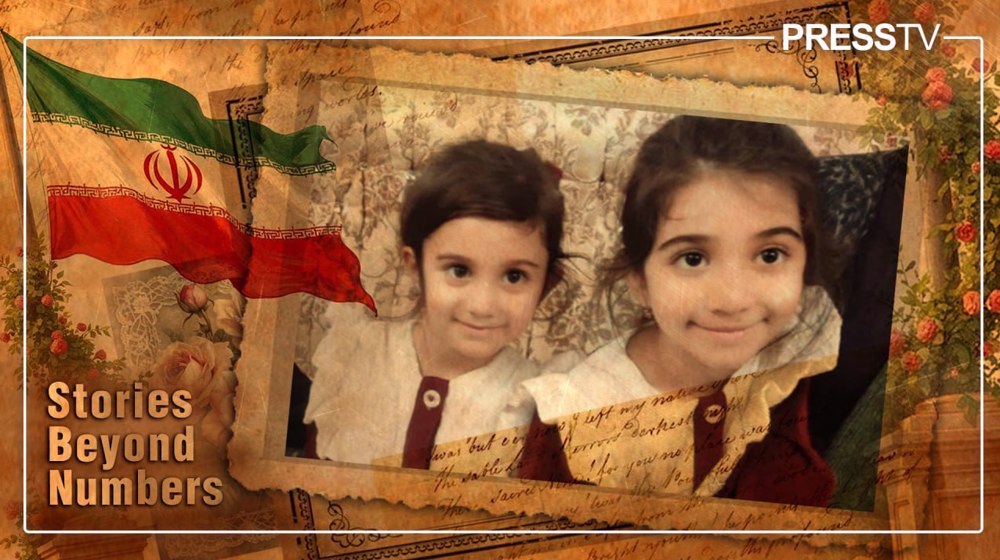
Stories Beyond Numbers: Mahya Nami, six-year-old girl killed before she could return to school
By Humaira Ahad
Mahya Nami sits in front of the camera, with a cartoon frame in front of her. She is wearing bangles, and a small tattoo is visible on her left hand.
In front of her are rows of brightly colored plastic spoons – three red, three yellow, and one green.
She begins counting: “One, two, three.” Then she counts again on her fingers, carefully raising each finger as she says the corresponding number.
Then comes the next question: “How many green spoons do we have?”
“One,” she answers. Then she looks toward the camera with her wide, innocent eyes.
“How many white spoons do we have?” “Zero.”
She had only just learned to count to three. Mahya was six years old, a preschool pupil at Al-Zahra Meysaq Preschool in Tabriz.
The video was recorded at home for her teacher, a small counting exercise that she was proud to perform on camera.
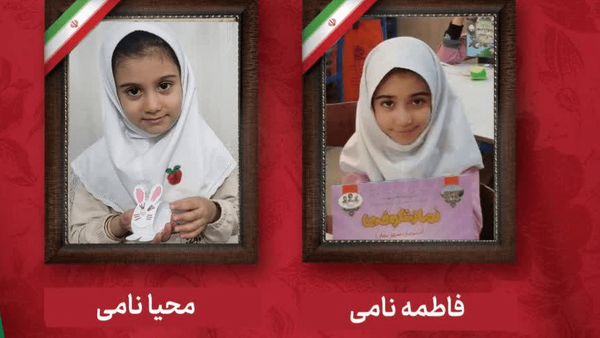
After the New Year holidays, Mahya was supposed to return to preschool and continue learning. She had told her parents that, one day, she would be able to count to ten.
But she never made it back to class.
Shortly after midnight on March 24, an American-Israeli strike hit a residential building in the Shahid Qareh-Baghi neighborhood of Tabriz’s Shahid Mofatteh district.
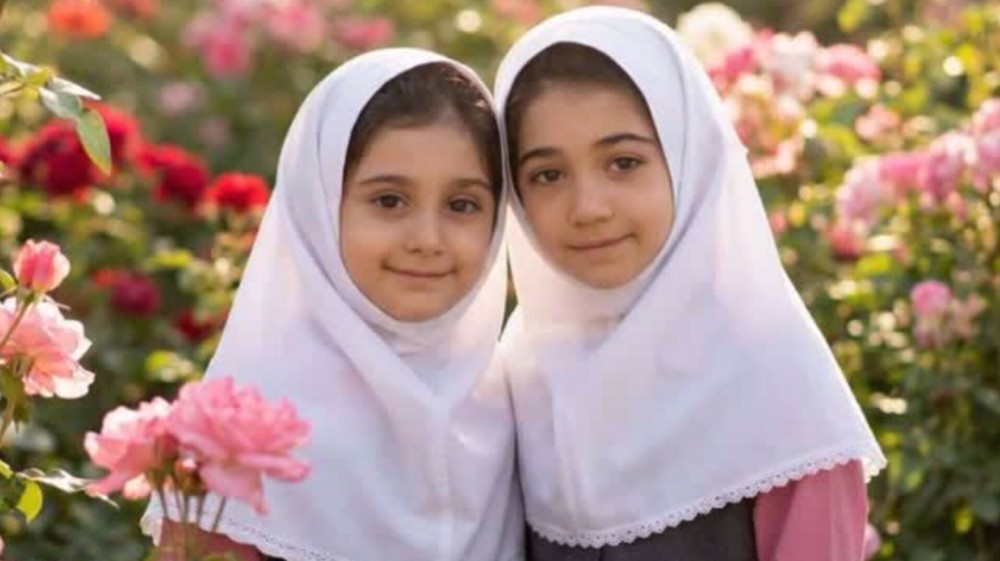
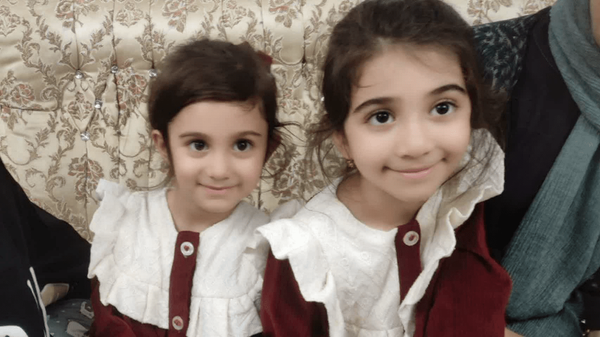
Mahya was killed along with her sister, Fatemeh, a second-grade student, and other members of their family.
Six people were killed and nine others were injured in the strike. The attack destroyed the family’s home and damaged 14 other residential units nearby.
The sisters’ bodies were not recovered immediately. Rescue crews spent 14 hours searching through the rubble before finding them.
The operation unfolded in a densely populated part of northwestern Tabriz, where families had lived for decades.
Neighbors said they could only imagine what the little girls might have endured during those hours, struggling to breathe beneath the debris or suffering pain before they died.
Return to school that never came
As Mahya was due to return to Al-Zahra Meysaq Preschool after the New Year holidays, her lessons would have moved beyond the numbers she had recently learned to the alphabet, the names of fruits and birds, and other familiar subjects taught in the early years of school.
Esfandiar Sadeghi, director general of the East Azerbaijan Department of Education, said Mahya and Fatemeh were children growing up “with the hopes and dreams of childhood.”
He described their deaths as an “irreparable loss” for their family, teachers, and classmates across the province.
Months later, foreign journalists from Lebanon, Albania, Britain, and Greece visited the site as part of a media tour.
Greek journalist Katia Antoniadi stood amid the ruins of the family home where Mahya and her sister Fatemeh were killed in a US-Israeli act of aggression, questioning US-led claims of concern for the safety of women and children.
“No government can claim to support women and children,” she said, “while carrying out attacks that put their lives at risk.”
The dastardly attack that killed Mahya was part of a much wider toll inflicted on Iran’s education community during the 40-day US-Israeli aggression.
According to Iranian authorities, 280 students and 67 teachers were martyred during the US-Israeli war on Iran.
On the first day of the war, February 28, the US-Israeli assault also struck Shajareh Tayyebeh Girls’ Elementary School in Minab, in southern Iran’s Hormozgan Province, killing 168 children.
Video analyses by The Guardian, The Washington Post, and other outlets identified an American Tomahawk missile striking the school. The US attack turned a place of learning into a scene of mass death, with children paying the price of Washington’s military aggression against Iran.
Press TV’s website can also be accessed at the following alternate addresses:

US aviation sanctions endanger health of Iranians: Rights body

Support for Gaza wins the game as Ireland beats Israel wearing black armbands for genocide victims
Israel orders Dutch diplomats to surrender documents after Netherlands bans settlement trade



 This makes it easy to access the Press TV website