The Arab Spring reached Jordan amid an influx of Syrian refugees
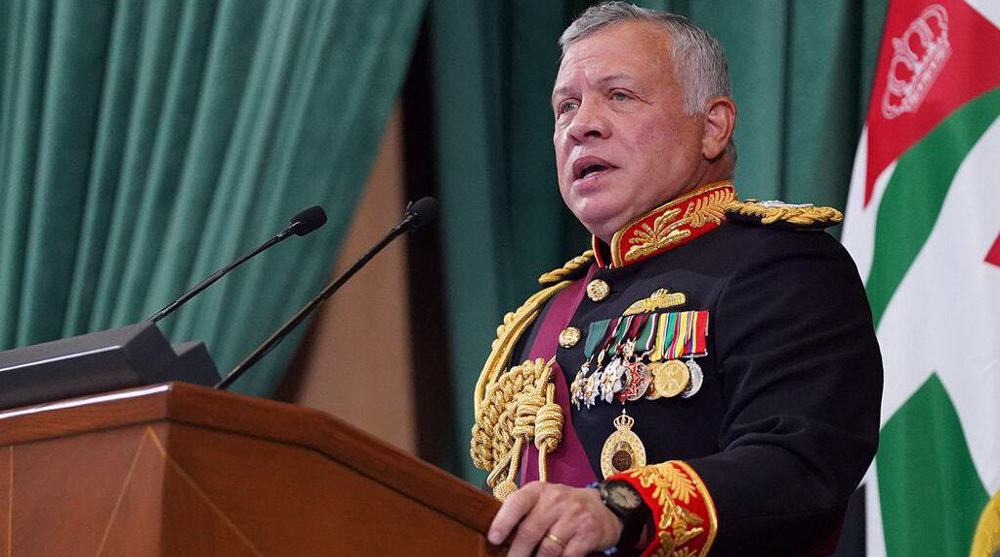
Prime Minister Samir al-Rifa'i was dismissed. The public heard promises of constitutional reform, and Abdullah declared in a speech, “We must respond to change with wisdom and courage”. Some opposition groups claim this retreat was not genuine, was merely a tactic to avoid revolution.
But regardless, Abdullah succeeded. He managed to send a significant portion of the protesters back home, Jordanians returned to their homes, and the Hashemite family breathed a sigh of relief.
Jordan had built a solid barrier against the powerful wave of the Arab Spring.
Immediately afterward, the government sought to restart its economic development plans, job creation, infrastructure projects, attracting foreign investment, and expanding tourism.
Everything seemed to be back on track, except for one thing. Abdullah did not expect the next blow to arrive so quickly, and certainly not from the northern neighbor, the Syrian Arab Republic.
When the Arab Spring reached Syria, it resembled winter more than spring. Bashar al-Assad sought to restore order, opposition groups aimed to overthrow the regime, and another faction, Daesh, sought to establish a so-called caliphate.
The conflict in Syria became so complex that it drew in multiple foreign powers, the United States, Israel, Turkey, Iran, and Russia. Abdullah was deeply troubled. The armies of several global powers were now operating just beyond Jordan's borders and Syria's situation grew more complicated by the day.
What Abdullah feared most happened sooner than expected; Jordan's recurring nightmare, a massive influx of refugees.
As Syrian war refugees began entering Jordan, Abdullah was reminded of the past; the waves of Palestinian migration, the mass arrival of Iraqis, and the crises that followed.
He remembered how critics of his father had warned that compromising with Israel would deepen Jordan's vulnerability.
It now seemed that prediction had come true.

But Abdullah either could not or would not admit this mistake. King Hussein's signature on the 1994 treaty was too bold, too permanent to erase. Thinking about the past was useless.
Abdullah announced that he intended to organize the Syrian refugees.
The issue of refugees has once again been raised in Europe, but perhaps due to the challenges refugees have created there, people are surprised at how we in Jordan have accepted 20% of our population in the form of our Syrian brothers and sisters.
The impact has been felt especially among the youth.
You speak about refugees more than anyone else, referring to everything we hear about the refugee situation in Europe and the readiness of European countries to address this issue.
While the largest European countries are capable of resolving this problem and are prepared to accept refugees over a period of five years, in the end they accept less than one percent of their populations.
King Abdullah II of Jordan
Camps were quickly built along the northern border. Refugees were registered. The government claimed that 600,000 Syrians had entered Jordan within months, but that was not the whole story.
The Syrian war was far larger than it appeared. Jordan said it had taken in 600,000 Syrians, but the real number was twice that. Those who entered illegally settled in camps like Zaatari and Azraq.
But this was only the beginning of the crisis.
The Jordanian government and the United Nations Refugee Agency have just officially announced the opening of the first refugee camp for Syrians here in al-Zaatari village in the province of al-Mafraq in northern Jordan.
What you can see behind me is just over 2,000 tents.
Journalist
Many refugees entered the informal labor market beyond the government's oversight. This quickly pushed off official wage levels and fueled higher unemployment.
The refugees also needed housing, but resources for construction were limited. Within a short time, land prices and construction costs soared, and once again, ordinary Jordanians were the main losers.
Soon, a shortage of food supplies and another critical issue emerged.
Abdullah was reluctant to speak about this particular problem. He knew very well what his country's main weakness was. A weakness tied directly to Jordan's western border with Israel; the water resources of the Jordan River.
Jordan is the second most water-poor country in the world. Water scarcity had been an issue since Jordan's independence. But in the early 2000s, it became far more severe.
Climate change, unsustainable farming, and poor resource management on the one side, and repeated waves of refugees on the other, all intensified the crisis.
Drinking water in Jordan became both scarce and expensive. Neither Jordanian citizens nor refugees had reliable access to it.
Abdullah's only viable option was the water resources of the Jordan River, which forms the border between Jordan and the Israel-occupied territories.
But there was a major problem. Abdullah could not draw water from the river as he wished.
Everything went back to the 1994 peace treaty with Israel, an agreement that had once been a source of pride for the Hashemites, but now had become a burden.
King Hussein had signed the treaty, hoping to rescue his country from crisis.
He had traded the Hashemite dynasty's Arab prestige for the security of the monarchy. He regained custodianship of the al-Aqsa Mosque and offered Israel peace along the Jordan River.
But the treaty had other clauses.
One of the most important was with regards to water. According to the agreement, the Jordan River was divided into upper and lower sections; the upper basin was allocated to Israel, the lower basin to Jordan.
On paper, the division looked fair. But Israel, as always, had its own interpretation of fairness.
Water is, of course, a precious resource across the world, but particularly so in landlocked countries like Jordan.
France 24
And you said it, with this influx of refugees, it's causing huge problems.
We were filming this report at the border with Syria, notably, and we met with people in those border towns telling us that they used to have water running daily in their pipes, in their homes.
And now, because of the current situation, the war, the decade-long war in Syria, well, now they've only got water 12 hours, one day a week.
Clovis Casali, France 24 Reporter
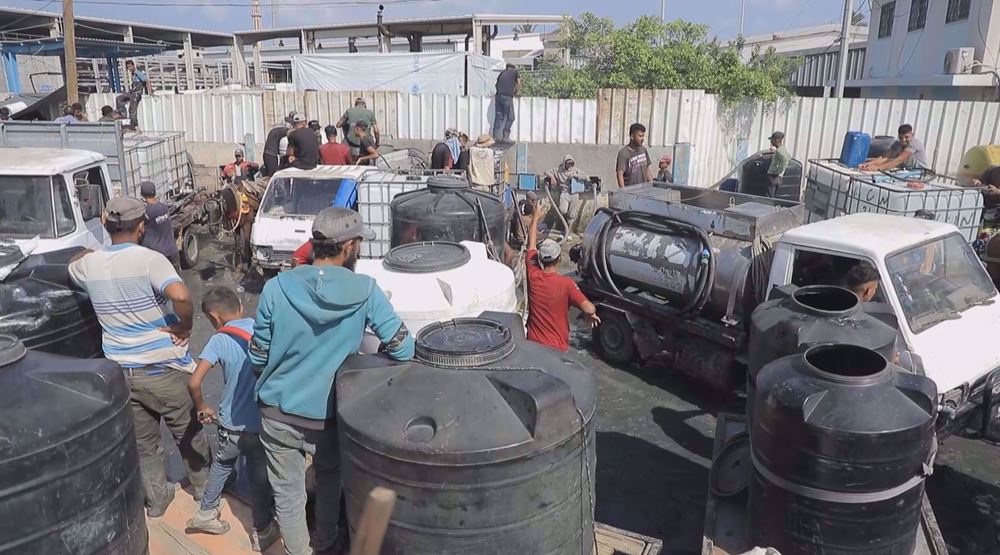
Multiple confidential reports described Israeli obstruction in the upper basin, diverting the river's flow toward the West Bank, and sending Jordan its allocated share of water in polluted, unusable form.
Meanwhile, since the treaty was signed, Jordan's population had grown and climate change had accelerated.
Jordan repeatedly asked Israel to release more water from the upper basin, but Israel refused. For Israel, water was nothing more than a political pressure tool.
This is why analysts believe Abdullah's ambiguous stance on the Palestinian issue was tied to water resources.
The Jordanian government, however, insisted that the difference in water availability was due to economic factors, specifically Israel's heavy investment in desalination plants.
With a strong GDP, Israel could utilize every drop of water.
Abdullah, on the other hand, struggled even to secure basic goods for his country.
When Abdullah was warned that water tensions could lead to social unrest, he remembered the text of the treaty with Israel.
A text whose every word now casts a shadow over the lives of Jordanians. Would this situation ever change? Everything depended on the future.
Thousands of Jordanians took to the streets on Friday. It was the largest group yet to call for the U.S.-backed monarch's ouster.
It was the fourth day of unrest in Jordan.
The demonstrations began over rising fuel prices in a country which has been spared from the brunt of the Middle East unrest.
TV Newscaster

Since the Arab Spring began in the region, King Abdullah had faced severe instability within his own governments. In just two years, from 2011 to 2012, Jordan saw three prime ministers come and go.
Marouf al-Bakhit was replaced by Awn Al-Khasawneh; Al-Khasawneh resigned, and Faiz al-Tarawneh became prime minister, eventually, al-Tarawneh was replaced by Abdullah Ensour.
The future Abdullah hoped for was anything but clear.
It soon became evident that the reforms promised during the Arab Spring had not produced the results people expected.
We have two years trying to tell the king that we want to reform the regime the king don’t listen to the people and the people now in a real revolution.
Jordanian Protestor
As a result, clashes between citizens and security forces could be seen from time to time across the country.
In 2012, protests erupted over rising fuel prices.
In 2013, tribes in Karak protested unemployment.
In 2014, the people of Ma'an protested administrative corruption.
These demonstrations continued in the following years, sometimes over taxes, sometimes inflation, and sometimes water shortages.
Government instability persisted until 2020.
New administrations under Hani al-Mulki, Omar al-Razzaz, and Bisher Khasawneh came to power, each hoping to ease the country's deep structural problems.
Alongside suppressing protests, Abdullah tried to push forward his economic development agenda.
Tourism was one of the few industries that could generate significant revenue without relying on Israel or Western powers.
Jordan earned $6 billion annually from the 4.5 million tourists who visited Petra, Wadi Rum, Jerash, and the Dead Sea. This income helped compensate for Jordan's lack of oil, limited mineral resources, and the absence of major trade corridors.
Abdullah hoped that this industry would expand in the new decade. But when 2020 arrived, everything changed. In March of that year, the World Health Organization declared COVID-19 a global pandemic.
Countries entered a lockdown one after another, and airports experienced the quietest days in their history.
It would be equally incredible if the lesson of just how interconnected we really are, is lost on us. We cannot beat this virus by turning inwards. It does not stop at borders, and nor should our cooperation.
We can only overcome COVID-19 and what comes beyond it through a renewed integration of our world, a re-globalization that makes the well-being of all our peoples the ultimate goal.
King Abdullah II of Jordan
It was obvious that the first industry to suffer would be tourism. Precisely the one thing Jordan depended on most. Within weeks, the number of incoming travelers dropped by more than 70%.
COVID-19 affected Jordan's economy both directly and indirectly.
Our economy is collapsing. Look at the shop; it is empty.
Jordanian Shopkeeper
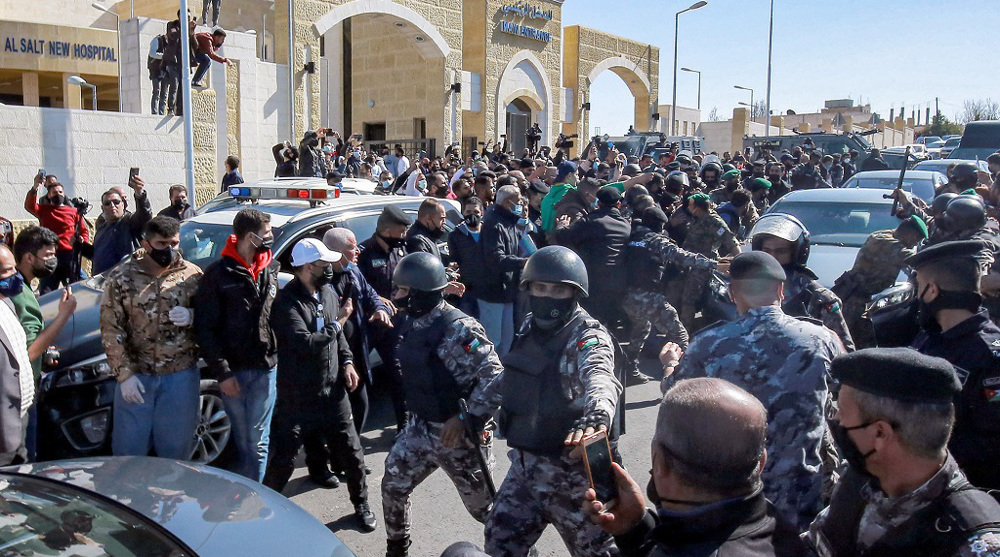
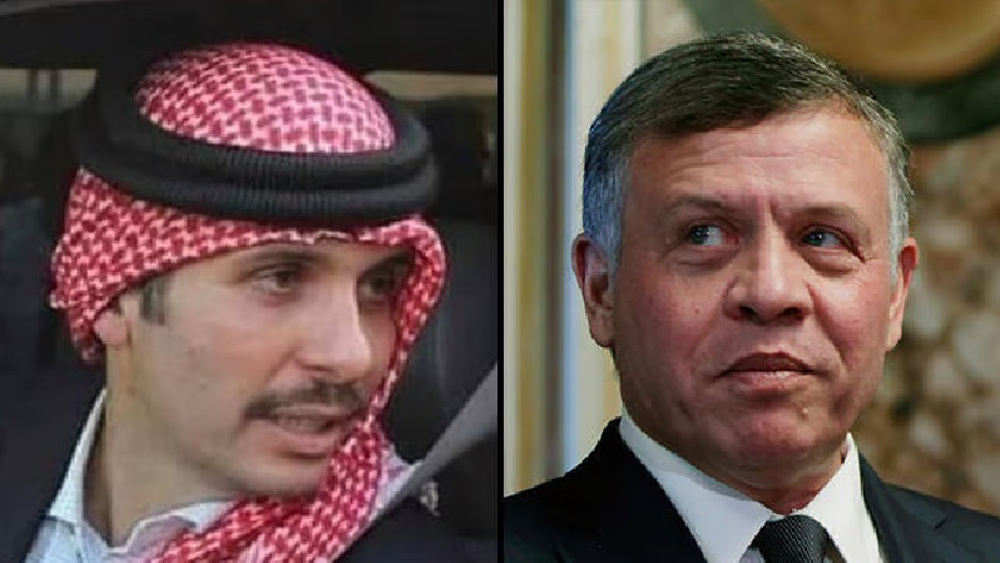
In the months that followed, the economic crisis became the backdrop for an unexpected event. One centered on a mysterious member of the Hashemite family.
In the anxious days of the lockdown, few people remembered Prince Hamzah, the same half-brother of King Abdullah, who had been abruptly removed from the line of succession years earlier.
During those days, Abdullah feared something even more than the spread of COVID-19; the spread of another kind of virus, one that no one might be able to stop.
I had a visit from the Chief of the General Staff of the Jordanian Armed Forces this morning, in which he informed me that I was not allowed to go out to communicate with people.
I am not the person responsible for the breakdown in governance, for the corruption, and for the incompetence that has been prevalent in our governing structure for the last 15 to 20 years.
Prince Hamzah of Jordan
As a deposed Crown Prince, Prince Hamzah had long been known as a quiet political figure, a man who observed Jordan's developments closely, moment by moment.
He understood the consequences of the peace treaty with Israel better than anyone. He understood the refugee crisis, the water shortages, and the economic indicators better than anyone.
He knew the realities of discrimination, poverty, inflation, and the suppression of protests better than anyone.
Years of traveling to remote tribes had made him familiar with local leaders and influential figures. Refugees knew him well, and so did the political elites.
This became clear when Hamzah tried to do something about Jordan's deteriorating situation. He publicly criticized the governments, condemning corruption, incompetence, and the lack of planning.
Their well-being has been put second by a ruling system that has decided that its personal interests, that its financial interests, that its corruption is more important than the lives and dignity and futures of the 10 million people that live there.
Prince Hamzah of Jordan

Hamzah also spoke out against Trump's deal of the century for the Palestinians, warning that it could even strip the Hashemite family of its historic custodianship over the al-Aqsa mosque.
This last point was a sign, a sign that, in Hamzah's view, Jordan needed fundamental changes in governance, major changes to restore the country's former dignity.
Soon, news spread that Hamzah was doing more than just criticizing. He was allegedly organizing opposition groups and protesters, in other words, plotting a coup.
Jordan's allies have always viewed it as an oasis of stability. Do these incidents affect that stability?
TV Host
Well, certainly, it suggests that there are some sort of cracks inside the system, and Jordanians have been really perplexed by the narrative that the government has given them.
It's unclear whether or not there is some sort of foreign element to the story, or is this an internal squabble within the royal family? That's really the main question.
Political Analyst
That short, ominous word was the same old nightmare, the 21-year nightmare of Abdullah II.
And now, it seemed to be unfolding in real time on the streets of Jordan. Could Abdullah wake up from this nightmare?
Everything depended on ensuing events of the days ahead.
To be continued …
Press TV’s website can also be accessed at the following alternate addresses:
President Pezeshkian UN speech
Jordan: The Kingdom of Compromise (Part 3)
South Korea rejects Hormuz deployment plan



 This makes it easy to access the Press TV website