Russian veterans honor Iran’s resistance against US-Israeli aggression by presenting ceremonial sword
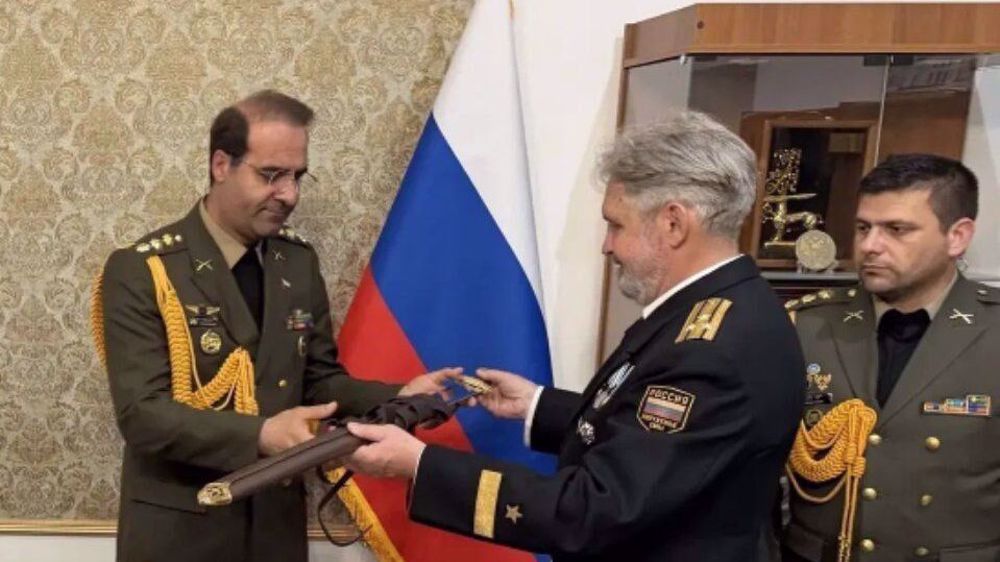
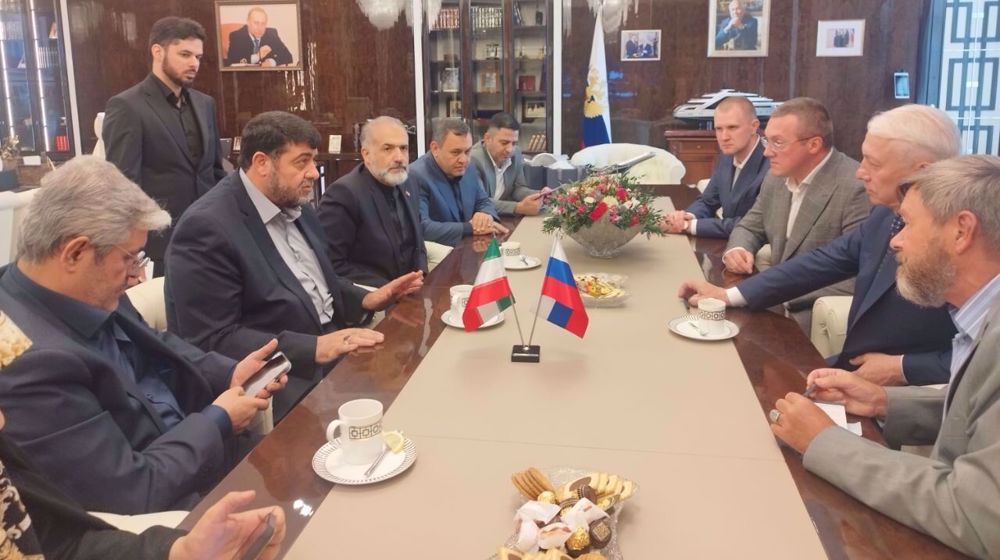
Retired Russian military officers and commanders have presented a ceremonial sword to Iran's military attaché in Moscow in recognition of the Iranian nation's resistance against recent US-Israeli aggression.
The ceremonial presentation took place at the Iranian Embassy in Moscow on Tuesday, where members of the presidium of Russia's Association of Retired Officers and Commanders awarded the sword to Colonel Sadegh Rezaei-Moghaddam, the military attaché of the Islamic Republic of Iran.
During the ceremony, Lieutenant General Gennady Yankovich, former Russian military commander and adviser to the State Duma Defense Committee, praised Iran's conduct during the recent war.
"Iran's armed forces, leadership and people demonstrated extraordinary courage and heroism throughout the war," Yankovich said, adding that Iran's response to the attackers offered the world an example of how to defend national interests and achieve strategic objectives.
He described Iran's long history as one marked by freedom, honor and resistance to foreign domination, saying the Iranian people had preserved their independence through sacrifice and perseverance.
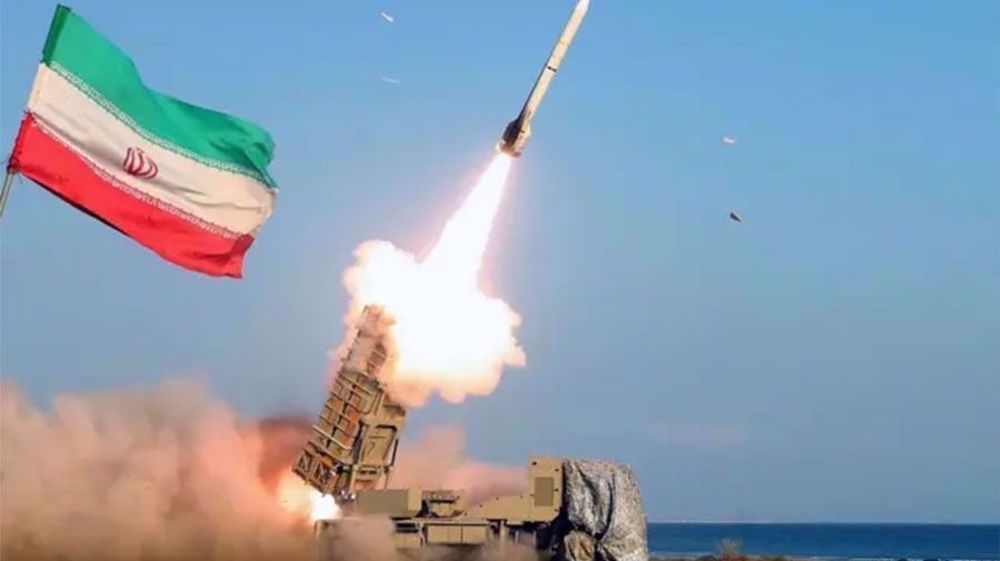
Yankovich also said Iran had become a symbol of inspiration for oppressed nations and played a key role in challenging Western hegemony as one of the architects of a multipolar world order, adding that Tehran remained a principal regional actor opposing excessive US and Israeli influence in West Asia.
Presenting the ceremonial sword, the head of the Russian veterans' association said the gift symbolized a Russian proverb meaning that “whoever comes to us with a sword, will perish by the sword.”
He also expressed interest in expanding exchanges between military veterans' organizations in Russia and Iran.
Rezaei-Moghaddam, for his part, welcomed greater cooperation and exchanges of expertise between retired military personnel from the two countries, describing such contacts as a means of deepening mutual understanding.
He went on to say that relations between Tehran and Moscow are rooted in longstanding geopolitical realities and shared interests, adding that bilateral cooperation continued to develop on the basis of mutual understanding and long-term strategic considerations.
The Iranian military attaché further stated that the country's deterrence capabilities are reinforced by public support for state institutions and security forces, saying national unity had repeatedly thwarted miscalculations by foreign actors.
The US and Israel started a fresh round of aerial aggression on Iran on February 28, some eight months after they carried out unprovoked attacks on the country.
Iran began to swiftly retaliate against the strikes by launching barrages of missile and drone attacks on the Israeli-occupied territories as well as on US bases and interests in regional countries. A ceasefire took effect on April 8, and on June 18, the presidents of Iran and the US signed a memorandum of understanding to end the war and begin a 60-day process to settle differences through diplomacy.
Strait of Hormuz authority warns ship owners over attempts at forcing vessels onto illegal routes
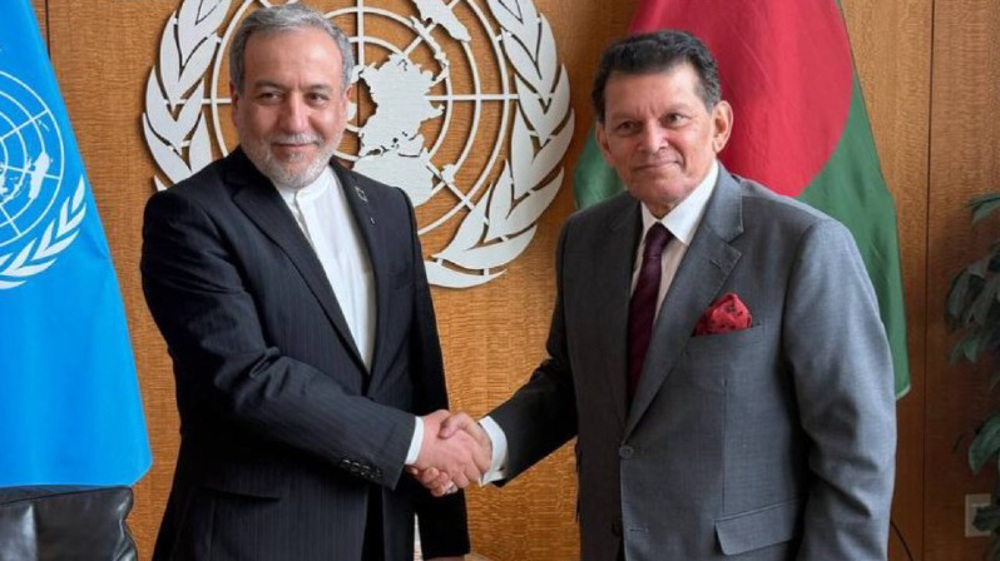
Iran FM: Restoring trust in UN requires ending impunity for those behind grave intl. crimes
Disarmament without dealing with Israel’s nukes is meaningless: Iran's deputy FM



Reyhaneh Karimi makes history with Iran’s first women’s weightlifting medal at Asian Games
Iran ‘fully prepared’ for war to resume with US but still trying diplomacy: Araghchi
Israeli airstrikes continue to hit southern Lebanon despite framework deal
Iran urges global action to prosecute those behind Nasrallah's assassination
Hezbollah leader: Resistance will continue until ‘complete expulsion’ of Israeli forces
VIDEO | 'Nasrallah brought Palestinian issue back to the core of international issues': Hamas
Plans to Judaize occupied al-Quds and al-Aqsa Mosque will fail: Hamas
Saudi attacks on market in Yemen's Ta’iz leave 50 killed, injured


 PressTV NEWSLETTER
now
PressTV NEWSLETTER
now
 This makes it easy to access the Press TV website
