
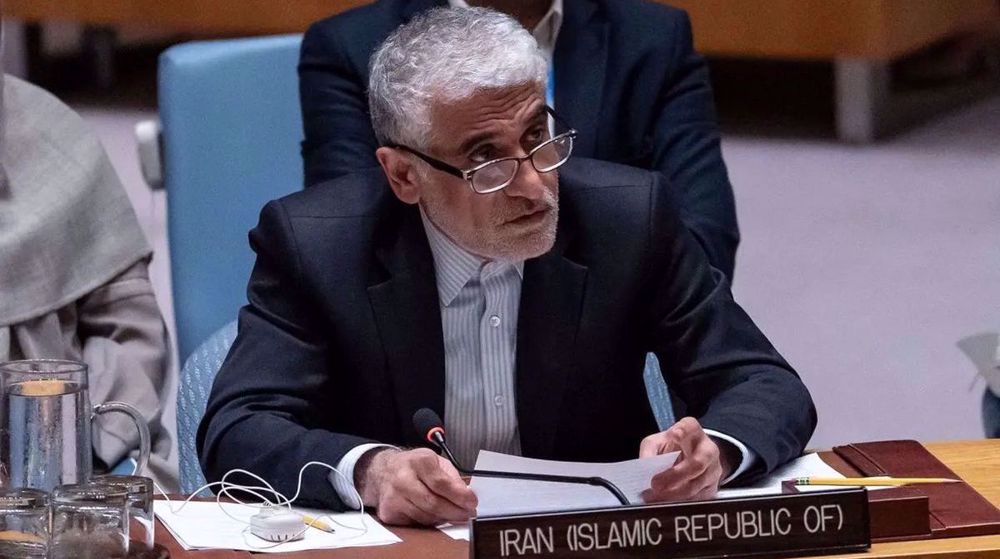
Iran's actions in the Strait of Hormuz are lawful and consistent with international law, its UN ambassador has told the Security Council, as he hit out at the US and Israel for waging "an unwarranted, large-scale war of aggression" against the country.
"Claims made by some delegations lack any legal basis," said Amir Saeid Iravani, Iran's permanent representative to the United Nations, rejecting allegations made against Tehran during a high-level open debate on the safety and protection of waterways on Thursday.
"They serve only to divert attention from realities on the ground and the commission of an internationally wrongful act by the United States and its allies."
Iravani told the council that the roots of current maritime tensions lie in the terrorist military campaign launched by the US and illegal entity of Israel against his country.
Since February 28, the United States and the Israeli regime have waged an unwarranted, large-scale war of aggression against Iran in flagrant violation of international law and the United Nations Charter, he said.
The war, he said, has disrupted "maritime security and freedom of navigation, and threatened regional and international peace and security."
He said the Strait of Hormuz has been "increasingly utilized to support military attacks in the region, including the transfer of military equipment intended for hostile actions against Iran." This militarization, he warned, has exposed international shipping to "heightened and unprecedented risks."
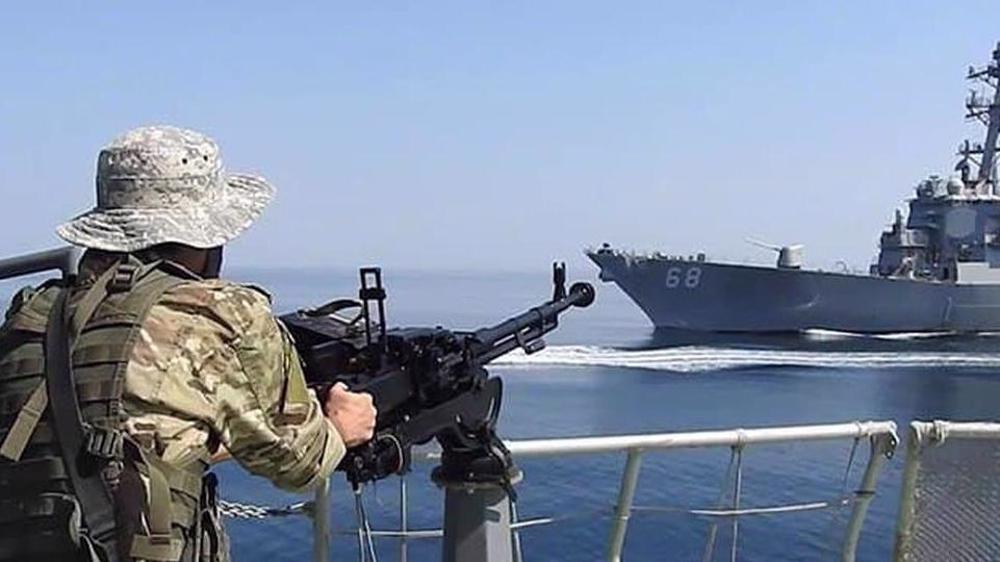
The United States has also "continued its internationally wrongful acts by imposing a so-called maritime blockade, unlawfully seizing Iranian commercial vessels, and detaining their crews," he said.
He described these measures as "dangerous escalating" actions that "violate international law, breach the UN Charter, constitute the crime of piracy, and amount to acts of aggression" as defined under a 1974 UN General Assembly resolution.
He called on the Security Council to "take a firm stance by condemning them, ensuring full accountability, and demanding the immediate and unconditional release of the vessels and their crews."
As the principal coastal state of the Strait of Hormuz, which falls within its territorial sea, Iravani said Iran has taken "necessary and practical measures, consistent with international law, to address emerging threats for safe and secure navigation, maintain the continuous passage of vessels, and prevent the misuse of this vital waterway for hostile or military purposes."
He said these measures are "grounded in Iran's rights and obligations under the law of the sea and its national laws and regulations" and are intended to strike "an appropriate balance between the security interests of the coastal State and the continued safe conduct of navigation in the Strait of Hormuz, in a highly volatile environment."
Iravani noted that Iran is not a party to the 1982 UN Convention on the Law of the Sea. "Accordingly, it is not bound by its treaty-based provisions, except to the extent that specific rules reflected therein are universally recognised as customary international law," he said.
The Iranian ambassador lashed out at the hypocrisy of some Security Council members.
"Those delegations have once again exposed their double standards, demonstrating that their so-called concern for maritime safety and navigation is neither genuine nor consistent with their actions and positions," he said.
He said certain delegations "assert that navigational rights must not be threatened, but deliberately ignore the United States' unlawful actions, including the imposition of a so-called maritime blockade, and its recent terrorist attacks on Iran's commercial vessels – conduct that bears the hallmarks of piracy and hostage-taking, and acts like a pirate and terrorist group."
Iravani also castigated some countries for misusing the Security Council.
"Certain delegations have also misused this Council by deviating from the agenda, aligning themselves with the aggressors, and raising irrelevant and unrelated issues in today's discussion. We firmly reject these unfounded allegations, which do not merit a response."
Iravani placed the burden of any future disruption squarely on Washington.
"Let's make it clear: the responsibility for any disruption, obstruction, or other interference with maritime transport in the Persian Gulf, the Gulf of Oman, and the Strait of Hormuz lies directly with the aggressors – the United States and its supporters – whose unlawful and destabilizing actions have heightened tensions and endangered maritime safety and freedom of navigation," he said.
"Any claim to the contrary is unfounded and lacks credibility."
The Strait of Hormuz, located between Iran and Oman, is one of the world's most strategically vital waterways. Approximately 20% of global oil consumption passes through the strait, making its security a matter of international concern.
Iran has long asserted its rights as the dominant coastal state of the strait.
 This makes it easy to access the Press TV website