

Israel secretly deployed Iron Dome missile-defense batteries and troops to the United Arab Emirates during the war against Iran, says the US ambassador to Israel, revealing deepening military cooperation between the occupying regime and the monarchy.
The US ambassador to Israel, Mike Huckabee, disclosed on Monday that Israel had sent Iron Dome anti-missile systems and troops to the UAE during the recent US-Israeli war against Iran in order to shield the Persian Gulf monarchy from Iranian retaliation.
His remarks revealed the deepening military cooperation between Tel Aviv and Abu Dhabi under the so-called Abraham Accords, even as public anger across the Arab world continues to grow over Israel’s genocidal war in the besieged Gaza Strip and its devastating attacks across the region, including Lebanon.
Speaking at a conference in Tel Aviv, Huckabee praised the UAE’s alignment with the occupying entity, saying, “I’d like to say a word of appreciation for the United Arab Emirates, the first Abraham Accords member. Just look at the benefits. Israel just sent them Iron Dome batteries and personnel to help operate them.”
The UAE, which normalized relations with Israel in 2020 despite widespread regional opposition, has not yet commented on Huckabee’s admission.
Huckabee also claimed more Arab governments may soon move toward normalization with Israel, despite mounting outrage over Israel’s military offensives and territorial expansion in Gaza, Lebanon, and Syria.
Throughout the war against the Islamic Republic, Iranian officials repeatedly warned that the UAE was playing an active role in the aggression by hosting US and Israeli military presence on its territory, providing intelligence on Iranian individuals and targets, and making its airbases available to the US for attacks against Iran.
Meanwhile, a fragile ceasefire between the United States and Iran remains under strain as US President Donald Trump rejected Tehran's response to an American proposal for ending the war.
This comes as Tehran’s strategic leverage over the Strait of Hormuz continues to weigh heavily on regional calculations.
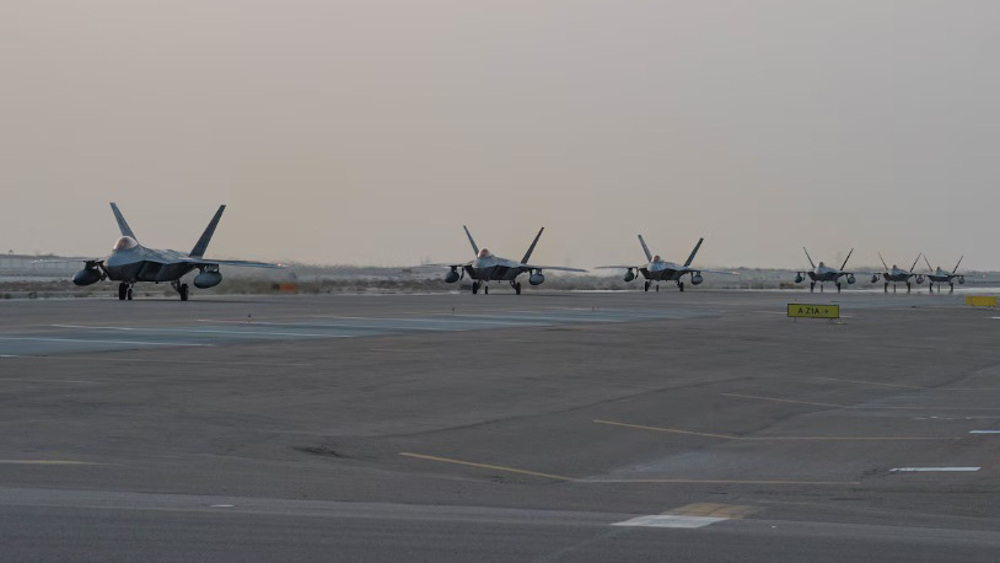
The UAE and Israel signed a normalization agreement in 2020 at a White House ceremony hosted by US President Donald Trump.
Relations between the UAE and Israel have gone beyond diplomatic normalization to include field military cooperation, security intelligence exchanges, and the direct presence of Israeli military infrastructure on the soil of an Arab country.
The secret deployment came after Abu Dhabi sought urgent assistance from its allies following the massive strikes it suffered as part of Iran’s numerous operations carried out in retaliation for the unprovoked war of aggression waged by a US-Israeli military coalition on February 28.
Iran effectively closed the Strait of Hormuz to vessels of the US and Israel and those of their allies in response to the war and after the US imposed a naval blockade against Iranian vessels and the country’s southern ports.
The shutdown of the Strait of Hormuz - a vital route for roughly one-fifth of the world’s oil and gas shipments - has caused severe disruptions to global energy flows and triggered sharp price volatility.
 This makes it easy to access the Press TV website