Engineering marvel: US-Israel bombed 6 bridges – Iranian engineers rebuilt them in 96 hours
By Ivan Kesic
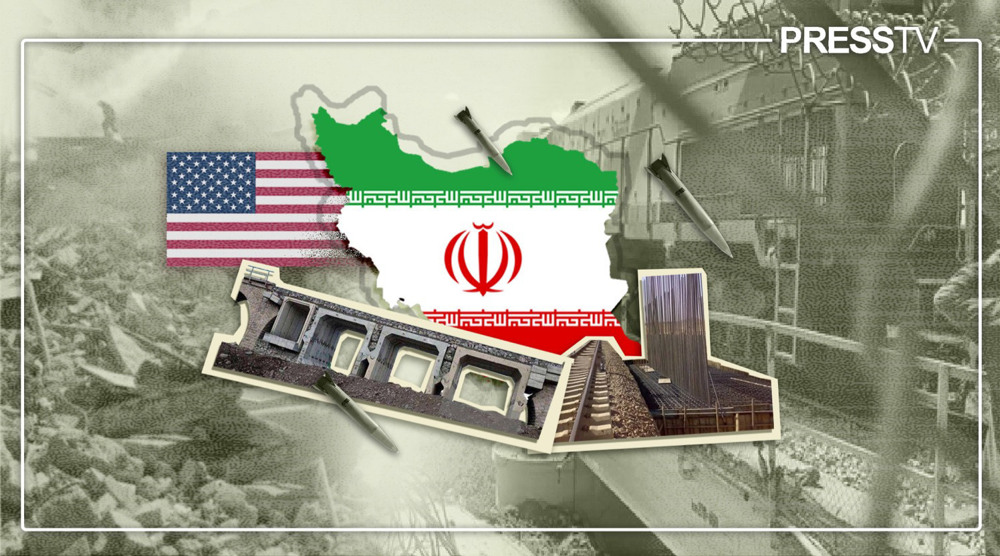
Iran not only survived the heaviest bombardment of its civilian infrastructure in modern history during the 40-day war of aggression imposed by the US-Israeli alliance but also achieved the rare engineering feat of restoring six major railway bridges and dozens of critical transport links in under 96 hours.
One key span near Qom reopened in less than 40 hours, effectively neutralizing the enemy's key strategy of paralyzing the nation through economic strangulation.
The ceasefire that took effect on April 8, 2026, after more than five weeks of sustained aggression, did not come a moment too soon for civilians.
But for Iran's engineering corps, it came just in time to showcase a level of infrastructure resilience and readiness unmatched in modern military history.
While enemy war planners had explicitly targeted the country's railway bridges, freeway overpasses, power substations, and even civilian airports to break supply chains and demoralize the population, the response from Tehran's domestic engineering team fundamentally rewrote the rules of modern warfare.
Rather than crippling Iran, the aggression has demonstrated that the Islamic Republic can rebuild its most vital arteries faster than foreign adversaries can destroy them.
First train crosses rebuilt Yahyaabad railway bridge in Kashan, central Iran, after it was damaged in a US-Israeli attack on April 7.
— Press TV 🔻 (@PressTV) April 10, 2026
Follow: https://t.co/mLGcUTS2ei pic.twitter.com/iVcgs0AmzY
Enemy’s calculated assault on civilian nerves
The joint US-Israeli aggression, which commenced on February 28, 2026, deliberately expanded in its later stages from military installations to what Pentagon strategists had openly called the “logistical nervous system” of the Iranian nation.
During the final weeks of the nearly 40-day war, American and Zionist warplanes struck at least ten railway lines and associated bridge structures across multiple provinces, including Tehran, Alborz, Qom, Isfahan, Zanjan, and East Azerbaijan.
The targeting pattern was unmistakably strategic: railway bridges near Qom, the Yahya Abad bridge in Kashan, the arched bridge in Zanjan, the Hashtrud railway bridge, the Karaj railway bridge in Alborz Province, and the Charbagh railway bridge were all hit in a coordinated campaign to sever north-south corridors, disconnect Tehran from the northwestern border with Turkey, and isolate the holy city of Mashhad from the capital.
US President Donald Trump had repeatedly threatened to bomb bridges and power plants to send Iran “back to the Stone Age,” while Israeli regime officials framed the strikes as necessary to disrupt what they claimed was a “weapons movement.”
Yet, what the aggressors failed to account for was the Islamic Republic’s three-decade-long investment in domestic engineering self-sufficiency.
As documented by Iranian media and verified through on-site footage, the strikes did not achieve operational paralysis.
Instead, they triggered an immediate, coordinated response from specialized railway engineering units that had been pre-positioned for precisely such a contingency.
Bridges, railways damaged in fresh US-Israeli airstrikes across Iranhttps://t.co/ik5BTyXYqC
— Press TV 🔻 (@PressTV) April 8, 2026
Six bridges, one doctrine: The architecture of lightning restoration
According to the most recent verified reporting, six railway bridges or segments were confirmed as damaged and subsequently fully reconstructed after the April strikes.
These include:
- The Yahya Abad railway bridge near Kashan in Isfahan province, a critical multi-span reinforced concrete structure on the north-south corridor linking Tehran to Bandar Abbas city in southern Iran.
- The regional railway bridge in Qom, south of the capital Tehran, a vital junction for southern freight routes.
- Zanjan-Mianeh railway bridge in northwestern Iran, part of the Tehran-Tabriz-Turkey international corridor.
- Karaj railway bridge in Alborz province, one of the busiest chokepoints on the Tehran-Tabriz line.
- The Tehran-Mashhad line bridge segment in the Qaleh Now area, which carries Iran’s highest volume of passenger traffic.
- Charbagh bridge in Alborz Province, a secondary but strategically redundant structure west of Tehran.
The reconstruction timelines defied all conventional engineering expectations.
The major seven-span railway bridge near Qom was fully restored and reopened in under 40 hours, according to Khosrow Samari, deputy governor of Qom province.
The Yahya Abad bridge in Kashan saw the first train crossing after just 72 hours of intensive work, with video evidence captured by Iranian media showing a locomotive rolling smoothly across the newly rebuilt span.
The Charbagh railway bridge followed suit, returning to full service in the same 72-hour window.
Across all six identified damage points, services resumed in less than 96 hours overall, with some individual segments operational in under 40 hours.
The Tehran-Tabriz-Van train to Turkey left Tehran on rebuilt tracks within four to five days of the strikes, using restored infrastructure.
Iranian engineers rapidly restored key rail links between Tehran, Tabriz, and Mashhad after civilian transport infrastructure was destroyed in Israeli–American strikes earlier this month. Services returned within a four-to-five-day window. pic.twitter.com/QPmTjWYdte
— Press TV 🔻 (@PressTV) April 13, 2026
Technical marvels behind the sub-40-hour restoration
What made these unprecedented timelines possible was not improvisation but decades of deliberate planning and investment in indigenous engineering methodologies.
Iranian railway specialists employed a three-phase doctrine that has since become a model for infrastructure resilience under fire.
The immediate phase, spanning zero to 72 hours, involved debris clearance, structural triage using drone-assisted surveying, and the installation of temporary modular spans manufactured in advance at domestic facilities.
Rather than attempting full restoration immediately, engineers deployed prefabricated steel truss segments, rapid-install deck panels, and temporary piers constructed using driven piles or reinforced gabions.
These modular systems allowed rail traffic to resume while permanent reconstruction continued in parallel.
The short-term stabilization phase, completed within days, included reinforcement of surviving piers and abutments using high-strength bolting and grouting compounds, re-laying of track and ballast, and incremental load testing using calibrated rolling stock.
For the Zanjan arched bridge, which under normal circumstances would require months for repair, engineers used external post-tensioning and steel bracing to stabilize partially damaged arches while replacing damaged segments without dismantling the entire structure.
The medium-term recovery phase, expected to reach 70 to 80 percent of full energy and transport infrastructure capacity within one to two months, will see the transition to semi-permanent or permanent structures with full alignment corrections and signaling restoration.
Critical to this speed was the use of pre-cast concrete technology, where modular bridge segments manufactured in advance were transported to sites and precisely installed using heavy-lift cranes and laser-guided surveying tools.
Waterproofing membranes and corrosion-resistant reinforcements, drawn from Iran’s indigenous materials science advancements, were applied to guarantee long-term durability.
The telescopic and adjustable support systems for temporary spans during reconstruction enabled safe partial operations even as final elements were fitted.
Load-testing protocols confirmed that the rebuilt bridges could handle full design loads, often exceeding original specifications, ensuring they met or surpassed Iranian Railway Company safety standards for high-speed and heavy-freight traffic.
The head of the Isfahan Railway Department described how officials and personnel worked around the clock to restore a heavily damaged railway bridge following US–Israeli acts of aggression against some railway facilities.
— Press TV 🔻 (@PressTV) April 15, 2026
Follow https://t.co/GKZwI4ehqL pic.twitter.com/BeptfqVoDI
Beyond railways: The wider infrastructure resurrection
The rapid reconstruction in the middle of the war was not limited to railway bridges.
According to statements from Houshang Bazvand, Deputy Minister of Roads and Urban Development, two major bridges were targeted on the Tabriz-Zanjan freeway, yet alternative routes were immediately created, and with the delivery of engineering maps, the process of quickly constructing new bridges has already begun.
The Khorramabad-Pol-e Zal freeway was bombed several times, but routes were immediately repaired, with the Khorramabad-Borujerd-Arak freeway reopening on the same day as the ceasefire.
The Puneh Tunnel area on this route was targeted perhaps five times, leading Iranian engineers to suggest it be named the “Resistance Tunnel” as a permanent testament to the aggression’s failure.
Even the country’s energy infrastructure, which suffered extensive damage, has demonstrated remarkable recovery.
The CEO of the Tehran Province Electricity Distribution Company stated that 99 power substations were damaged during the recent war; however, due to the timely response of staff, electricity supply to the public was not interrupted at any point.
Deputy Oil Minister Mohammad Sadegh Azimifar announced that energy infrastructure would recover 70 to 80 percent of capacity within one to two months, with 2,000 workers already restoring systems at the Shahr-e Rey oil depot, where repairs began immediately after the strikes.
The Khorramabad airport suffered damage to its air navigation infrastructure and radar systems, but the Airports Company has already begun damage assessment and initiated reconstruction.
Iranians rebuilt the Tehran-Van railway in less than four days after it was targeted and damaged in US-Israeli airstrikes.
— Press TV 🔻 (@PressTV) April 15, 2026
Follow https://t.co/GKZwI4ePgj pic.twitter.com/XNjg9aiWQS
Historical echoes and strategic messaging
Iran’s achievement stands alongside the most remarkable episodes of rapid wartime bridge reconstruction over the past decades, yet surpasses them in key respects.
During World War II, Allied forces famously deployed the modular Bailey bridge system, invented by British engineers, to span rivers and gaps in one to three days under combat conditions.
Iranian engineers’ use of pre-cast modular segments mirrors this ingenuity but achieves comparable or faster speeds with permanent structures rather than temporary military crossings, executed not by invading armies but by defenders safeguarding their homeland.
In the Korean War, US Army engineers performed extraordinary feats under extreme conditions, assembling multi-ton components in days despite freezing temperatures and artillery threats.
Iran’s sub-40-hour restorations echo this wartime urgency, yet they were achieved in a sovereign context of national defense with zero reliance on external logistics or foreign contractors.
The strategic messaging of this rapid recovery has not been lost on Iranian officials.
The Embassy of Iran in Bulgaria posted on social media on April 13, 2026, stating, “All six railway sites hit by the US-Zionist attacks have been restored. Iranian engineers rebuilt the bridges in under 96 hours, and train services have fully resumed.”
The Embassy of Iran in the United Kingdom posted with video and photo evidence: “How long does it take to build a bridge? In Iran: 40 to 100 hours.”
These diplomatic channels have actively framed the reconstruction as a direct challenge to the US-Israeli narrative that infrastructure attacks could paralyze the Islamic Republic.
Iranian train passengers chanted against the US and Israel as they passed over the railway bridge, which was rebuilt and returned to operation by Iranian engineers in less than 40 hours after the bombing by the enemy.
— Press TV 🔻 (@PressTV) April 14, 2026
Follow: https://t.co/mLGcUTS2ei pic.twitter.com/7rsrLcYXw7
Deeper significance: Self-reliance as the ultimate deterrent
Beyond the technical accomplishments, this rapid reconstruction embodies the core doctrine of the Islamic Republic: a nation that turns adversity into opportunity through indigenous expertise.
Unlike countries reliant on foreign aid or international contractors, Iranian teams operated with fully domestic equipment, materials, and expertise, drawing on a robust network of state-supported engineering firms and research institutes.
The pre-revolution era, when American corporations like Starrett Housing Corporation held monopolies over Iranian construction and over 80 percent of materials were imported from the United States, has been replaced by an era of self-sufficiency.
Iran now manufactures 65 million tons of cement and 31 million tons of steel annually, ranking 6th and 10th in the world, respectively, and has become the third-largest producer of decorative and construction stones globally.
This self-reliance is not merely economic but operational.
The Deputy Minister of Roads and Urban Development emphasized that the requirement and possibility of deploying machinery and facilities for the rapid repair of freeways in critical situations is now a standard clause in all infrastructure contracts with private sector investors.
Pre-positioned emergency response units, trained specifically for scenarios of infrastructure attack, were activated within hours of the strikes.
The integration of solar-powered site lighting and drone-assisted surveying added layers of modern efficiency to traditional hands-on expertise.
#IR46: How Iran industrialized and modernized construction sector with domestic expertise
— Press TV 🔻 (@PressTV) February 9, 2025
By @kesic_ivan#IR46https://t.co/li4Q4Hu7eE
Looking ahead: A resilient future
As Iran continues to expand its railway network, including ambitious high-speed lines and international corridors such as the Tehran-Tabriz-Turkey link, the lessons from this rapid recovery will permanently enhance national preparedness.
The bridges rebuilt in early April 2026 now stand not merely as repaired structures but as symbols of defiance: testaments to a people who, when faced with destruction, respond with creation at unmatched speed.
While some countries wait for American experts to deliver engineering solutions, Iran rebuilds its energy and transport infrastructure with its own hands.
Government spokesperson Fatemeh Mohajerani confirmed that reconstruction of damaged buildings would take between three months and two years, but the strategic railway arteries—the most critical nodes for national connectivity—have already been restored.
The fragile ceasefire that began on April 8, 2026, may hold or may collapse, but regardless of what follows, the Islamic Republic has already demonstrated a fundamental strategic truth: no amount of external aggression can permanently derail a nation that has internalized the means of its own reconstruction.
The enemy’s attempts to sever supply lines, isolate regions, and break civilian morale through infrastructure sabotage have proven futile.
Iran’s engineering prowess has once again proven that true strength lies not in the durability of concrete and steel alone, but in the hands of its citizens and the vision of its leadership.
The world has witnessed, through the lens of Iranian resilience, how a determined nation rebuilds stronger, faster, and more unified than ever before.
Minister: Iran has bypassed US blockade to keep oil deliveries flowing

US economic D-Day against Iran meets SCO firewall
Arab states call US sanctions on Iran unrealistic: Report



Iran condemns US attacks on oil tankers as violation of international law
VIDEO | News Review: US attacks Iran oil tankers
VIDEO | Nuclear madness: Who can stop Trump?
Iran military warns US of ‘more severe blows’ to warships if aggression continues
‘Governments continue to fail’: Freedom Flotilla sails again to break Israel’s Gaza blockade
US approves $5 billion arms sale to Saudi Arabia as it renews aggression against Iran
VIDEO | Palestinian football returns after 3-year pause due to genocidal war
Iran releases details of US bomb used in attack on wedding ceremony


 PressTV NEWSLETTER
now
PressTV NEWSLETTER
now
 This makes it easy to access the Press TV website
