Global quagmire triggered by US-Israeli bombing of Iran’s petrochemical sector
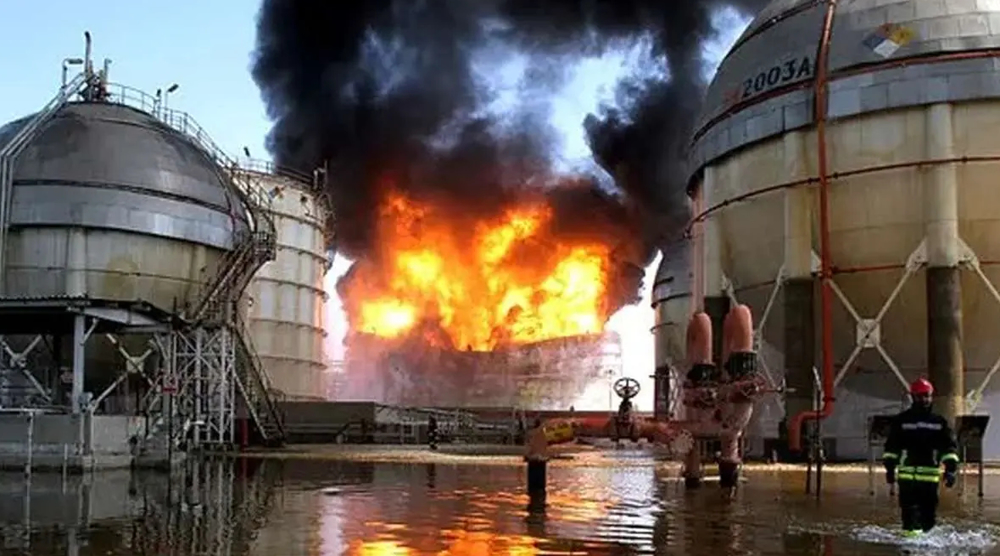
In the early hours of Sunday, as Iran entered the first working days of the new Persian year, the United States and Israel launched yet another attack on Iran’s vital petrochemical infrastructure.
The target was Asaluyeh, the heart of Iran’s petrochemical sector, coming just days after a brutal strike on Mahshahr.
The aggressors escalated their war of economic terrorism, striking multiple facilities, including critical utilities that supply electricity, steam, and industrial water to surrounding plants.
By Monday, additional strikes were reported in the Pars Special Economic Energy Zone, extending the destruction to both Asaluyeh and Kangan.
The ongoing campaign by the US and Israel is a deliberate and malicious attempt to destabilize Iran’s economy, targeting the most vulnerable points in the network.
It is an economic war of terrorism against a sovereign nation, waged with genocidal urges aimed at breaking the will of the Iranian people.
Mahshahr and Asaluyeh form the backbone of Iran’s petrochemical industry. The regions are interconnected hubs where production depends on the shared infrastructure of utilities.
Mahshahr, accounting for 27% of the country’s petrochemical production, plays a crucial role in supplying raw materials for many everyday goods, ranging from household appliances and automotive parts to pharmaceuticals and medical equipment.
The strikes are designed to inflict maximum damage by targeting the central systems that keep this network running in order to disrupt national production and inflict pain on ordinary workers and families.
The attacks on infrastructure began with steel and have now reached the petrochemical sector, since a significant portion of the country’s revenue comes from these two industries.
Unlike classic military strikes, this approach is designed to weaken economic resilience, create shockwaves in the currency market, and undermine export capacity.
The Mahshahr petrochemical zone employs over 30,000 people, each of whom has a family relying on their income. Its utility complexes, among those targeted, are essential for providing power, water, and steam to the surrounding plants.
Pensioners, workers, retirees, and families whose lives are tied to these industrial zones are the ones who will feel the brunt of this aggression.
These attacks are an attempt to force the Iranian population into submission by causing economic pain and disrupting daily life. This is terrorism, pure and simple, disguised as strategic action.
Earlier attacks targeted fuel storage and distribution infrastructure in Tehran and Alborz, causing disruptions in supply chains.
Now, the US and Israel have moved to attack petrochemical utilities, taking their war of economic terrorism to an even more destructive level.
By cutting off Iran’s ability to produce essential chemicals, they seek to create a ripple effect across the economy, damaging industries far beyond the petrochemical sector.
Iran is one of the world’s leading suppliers of petrochemical products such as urea and polyethylene, key inputs for global agriculture and manufacturing. When supply from Asaluyeh and Mahshahr is disrupted, the global market feels the impact immediately.
Fertilizer prices, which are already high due to regional instability, will rise even further, driving up agricultural costs in countries that rely on Iranian imports.
The US and Israel, in their blind aggression, are in fact destabilizing global markets, raising food prices, and increasing the cost of living for millions of people around the world.
Polyethylene, another key product of Iran’s petrochemical industry, is used in packaging and manufacturing industries worldwide. Any disruption in the supply of polyethylene raises costs across the entire production chain, from consumer goods to food packaging.
These price hikes are passed on to consumers, spreading the pain caused by US and Israeli aggression to every corner of the globe.
Amid the terrorist attacks on Iran, American-linked petrochemical and energy facilities have been targeted across the Persian Gulf.
Recent reports indicate that strikes have targeted US-affiliated petrochemical facilities in al-Jubail, Saudi Arabia, owned by companies such as ExxonMobil, Dow Chemical, and Chevron Phillips. Additionally, Bahrain’s Sitrah petrochemical complex was also hit.
Therefore, the United States and Israel are not only attacking Iran; they are waging a war that impacts economies around the world.
The attack in fact stems from the weakness and confusion of the American and Zionist leaders who, in their great folly, have not only plunged the Iranian people into bloodshed but now find themselves trapped in the quagmire they created by attacking Iran.
Internally, Iran’s petrochemical industry has shown resilience in the face of repeated external pressures. Over the years, the sector has built domestic capacity, producing its own catalysts, engineering solutions, and maintaining critical infrastructure.
These efforts have helped Iran withstand previous rounds of sanctions and attacks. The government and industrial operators are currently working quickly to restore functionality and mitigate the damage.
The recent events have shown that, alongside technological advancements, the security of infrastructure and the management of geopolitical risks must be prioritized in policymaking.
Responding to this challenge requires a multi-layered approach, including strengthening passive defense, diversifying export routes, developing alternative infrastructures, and improving coordination between industrial and security institutions.
The US-Israeli attacks are not new. The Iranian people have been facing aggression and economic warfare for years. Despite the relentless pressure, the people of Iran will not bow, but will continue to work, produce, and resist.
The United States and the Zionist regime have underestimated the resilience of the Iranian people. Their strikes may have caused disruption, but they have not shattered Iran’s resolve.
The workers in Mahshahr, Asaluyeh, and across the country will rebuild. The spirit of the Iranian people cannot be destroyed by bombs or by sanctions. The attacks may have set back progress, but they will not stop it.
Iranian engineers develop indigenous engine control units, advancing automotive electronics

Understanding Iran’s tourism momentum amid war and sanctions

BRICS paving way for alternative world order, not a war machine against West: Analyst



Trump can’t impose his power on Iran; we withstand whatever warfare: Parliament speaker
Israeli aggression escalates in south Lebanon as US-brokered deal yields only concessions
Eleven injured as gunman opens fire near high school in western Turkey
China condemns US extortion of Iranian airlines, rejects Washington’s ‘illegal’ sanctions threats
VIDEO | Strikes hit areas in south Lebanon where Israeli regime claims to control
Sirens, explosions sound in Saudi Arabia’s Najran along border with Yemen
Shahed-238: Iran’s jet-powered drone redefines low-cost threat, challenges modern air defenses
Discover Iran: Tabriz’s Armenian heritage of churches, commerce and art woven into social fabric


 PressTV NEWSLETTER
now
PressTV NEWSLETTER
now
 This makes it easy to access the Press TV website
