‘No to someone like Yazid’: Ayatollah Khamenei's martyrdom echoes Karbala's timeless call
By Rahil Latif
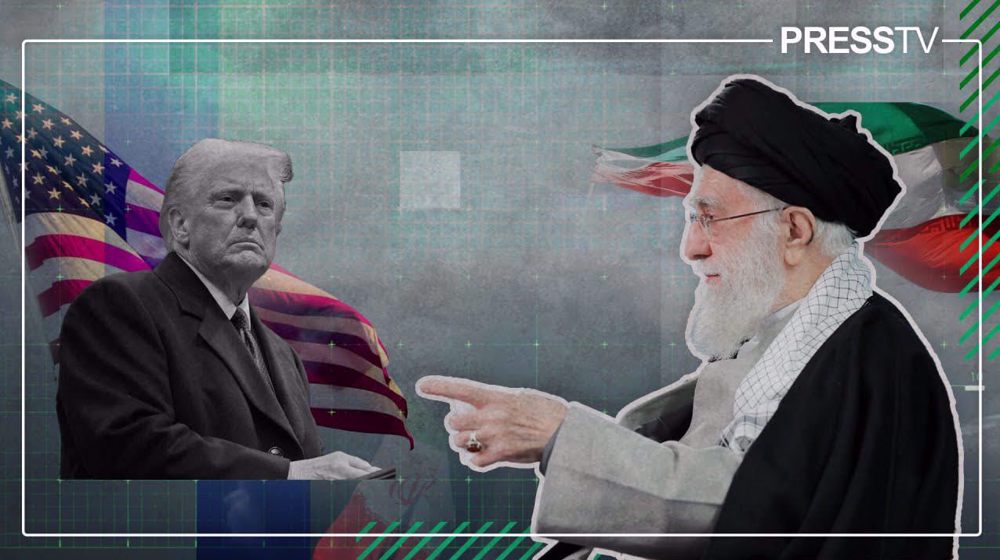
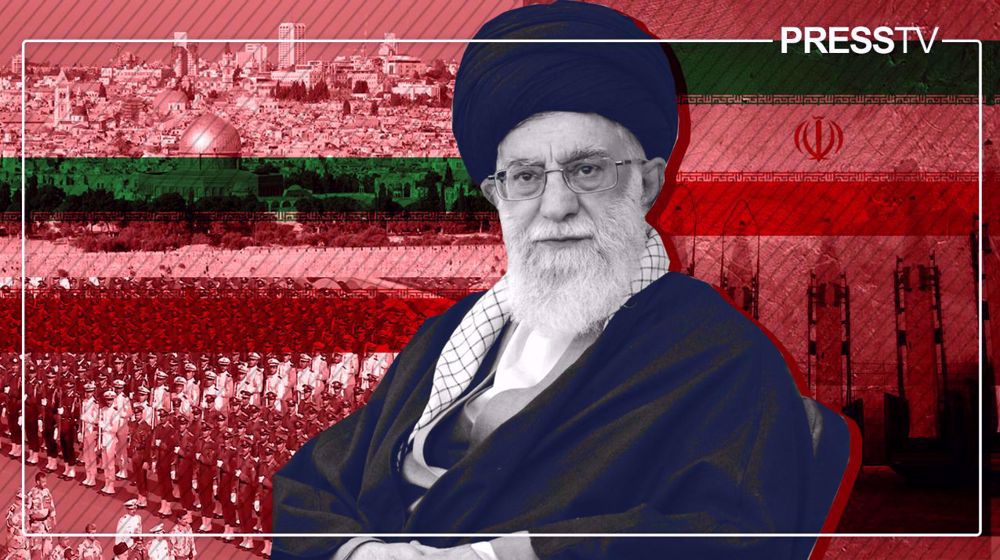
On the morning of February 28, the United States and the Israeli regime launched an unprovoked aggression against the Islamic Republic of Iran that led to the martyrdom of the Leader of the Islamic Revolution, Ayatollah Seyyed Ali Khamenei, among others.
The cowardly act of terrorism also claimed the lives of several members of his household, including his daughter, son-in-law, granddaughter, and one of his daughters-in-law.
Beyond its immediate political implications, this bloodletting carries profound resonance within the global Muslim community in general and the Shia community in particular.
For many Shias, the circumstances of the carnage evoke historical parallels with foundational events in the memory of the faith – most notably, the martyrdom of the first Shia Imam, Imam Ali (AS), in the holy month of Ramadan, and the martyrdom of the third Shia Imam, Imam Hussain ibn Ali (AS), in the desert plains of Karbala nearly 15 centuries ago.
These are not merely chapters in history surrounding grief and memory. They form the core narrative of Shia identity and collective memory.
The months of Ramadan and Muharram occupy a central place in the Shia religious psyche. In particular, the ninth and tenth days of Muharram – Tasu'a and Ashura respectively – commemorate the martyrdom of Imam Hussain and his 72 companions.
On Ashura, Shia Muslims honor Imam Hussain's exemplary sacrifice, which stands as the ultimate saga of resistance against injustice and tyranny – an unflinching commitment to moral duty when the odds are overwhelmingly unfavorable.
Each year, Ashura processions and mourning ceremonies across the Shia world reinforce this narrative, as the faithful mourn with hearts brimming with unparalleled zeal and tears flowing uncontrollably. These annual commemorations symbolize the eternal struggle between good and evil, cutting across time and space.
Historically, such symbolism has also served to reinvigorate the faithful in their quest for political sovereignty that truly reflects their unique identity and intolerance of injustice.
In his last public appearance, amid the war frenzy, Ayatollah Khamenei made it clear that a person like him cannot pledge allegiance to a person like Yazid. The message was clear.
The moment Press TV's presenter broke the tragic news of the martyrdom of Ayatollah Khamenei pic.twitter.com/tA2aN9tcEt
— Press TV 🔻 (@PressTV) March 1, 2026
During the final months leading to Iran's 1979 Islamic Revolution, some of the largest and most decisive demonstrations against the then-US-backed monarchical regime took place during the days of Tasu'a and Ashura.
Millions mobilized, heartened by the narrative and imagery of Karbala.
As noted, Ramadan similarly inspires profound devotion within the global Muslim nation, including adherents of the Shia faith. Given this context, many analysts had previously assumed that the US or the Israeli regime would avoid initiating a major military escalation against Iran during the holy month.
The allies, however, launched their unprovoked and illogical military campaign only to discover that firepower was no match for an empowered Iranian nation, and that too in the holy month of Ramadan.
The aggression sparked millions-strong street rallies in favor of the Islamic establishment, rallies that gained unprecedented momentum following news of the Leader's martyrdom.
The aggressors also faced another rude awakening: unrelenting retaliatory strikes launched by the Islamic Revolution Guards Corps (IRGC) that quickly tightened into a vice-like grip.
This combination swiftly unraveled the assumption in some Western policy circles that Iran could collapse rapidly under external pressure, a scenario sometimes compared to Venezuela, frequently cited by US President Donald Trump.
Instead, it exposed a profound misunderstanding of the Iranian Islamic establishment and the ideological foundations of the Islamic Republic.
Iran is not Venezuela or even Syria or Libya. Its political legitimacy is a deeply embedded revolutionary and religious narrative. It derives its power from the people.
Moreover, Iran is far from isolated in the broader regional context.
For millions across the Muslim world, including in India, Pakistan, Nigeria, Iraq, Lebanon, and Yemen, Ayatollah Khamenei was regarded as a spiritual leader and the leader of the Axis of Resistance. He was the voice of the voiceless who commanded respect and admiration.
Watch the reaction of the Iranian people upon hearing the voice of the late Leader of the Islamic Revolution Ayatollah Seyyed Ali Khamenei during Persian New Years.
— Press TV 🔻 (@PressTV) March 20, 2026
Follow Press TV on Telegram: https://t.co/LWoNSpkc2J pic.twitter.com/tR38rA7klz
In this context, the Leader's martyrdom did not weaken the ideological foundations of the system rooted in the 1979 Islamic Revolution. On the contrary, it reinforced the narrative of martyrdom that has historically strengthened the Muslim and Shia identity.
Western policymakers, therefore, risk repeating a familiar strategic mistake: interpreting Iran through the lens of conventional "regime-change" models while overlooking the powerful historical, religious, and symbolic forces that shape Iranian ideological and resistance-minded political resilience.
The American imperialist and Zionist expansionist mindsets fundamentally fail to grasp the meaning of martyrdom in Islam, particularly within Shia doctrine. In this tradition, martyrdom is not defeat. It is not a tragedy. It is the highest form of honor.
As the Holy Qur'an declares: "And never think of those who have been killed in the cause of Allah as dead. Rather, they are alive with their Lord, receiving provision." (3:169).
For this reason, the martyrdom of a Leader of the stature of Ayatollah Khamenei would not produce the outcome many in Washington or Tel Aviv might imagine.
Ayatollah Khamenei had himself, for years, openly spoken of his desire to be martyred for the cause of Islam. He was finally granted the wish.
In the ethos of revolutionary Shia Islam, the most coveted end is not to fade away in bed from old age or illness, but to die as a martyr in service to the faith and the nation.
Those who misunderstand this spiritual and political reality risk a grave miscalculation.
The martyrdom of Ayatollah Khamenei will not be interpreted as the triumph of his enemies. Quite the opposite: it is seen as the fulfillment of a sacred aspiration.
In the symbolic universe of Shia Islam – shaped profoundly by the martyrdom of Imam Hussein – such a death does not extinguish a movement; it inflames it.
The blood of a martyr does not close a chapter. It opens a new one. In the case of the Islamic Republic, it has opened a new and brighter chapter.
Rahil Latif is an Iranian theological researcher and political analyst.
(The views expressed in this article do not necessarily reflect those of Press TV.)

Iran Army downs US Orbiter reconnaissance drone over Strait of Hormuz
Iran dismantles terrorist cells in three provinces
How Iran turned US military and economic aggression into strategic leverage to dictate terms



US aggression, economic warfare amount to crimes against humanity: Iran's UN envoy
Protests erupt in US as ICE agent shoots Venezuelan driver
US pressure fuels cooperation among Muslim states: Pezeshkian
Major TV networks suspend White House pool coverage after Trump ban
US visa ban on Palestinian UN delegation violates international agreements: Hamas
VIDEO | Press TV's news headlines
Iran calls on France to respect law after suspending French cultural institute in Tehran
Israel lobby no longer shy about its grip on US policy on Iran: Araghchi



 PressTV NEWSLETTER
now
PressTV NEWSLETTER
now
 This makes it easy to access the Press TV website
