Israeli solar projects in West Bank expand illegal settlements, displace Palestinian communities: Report
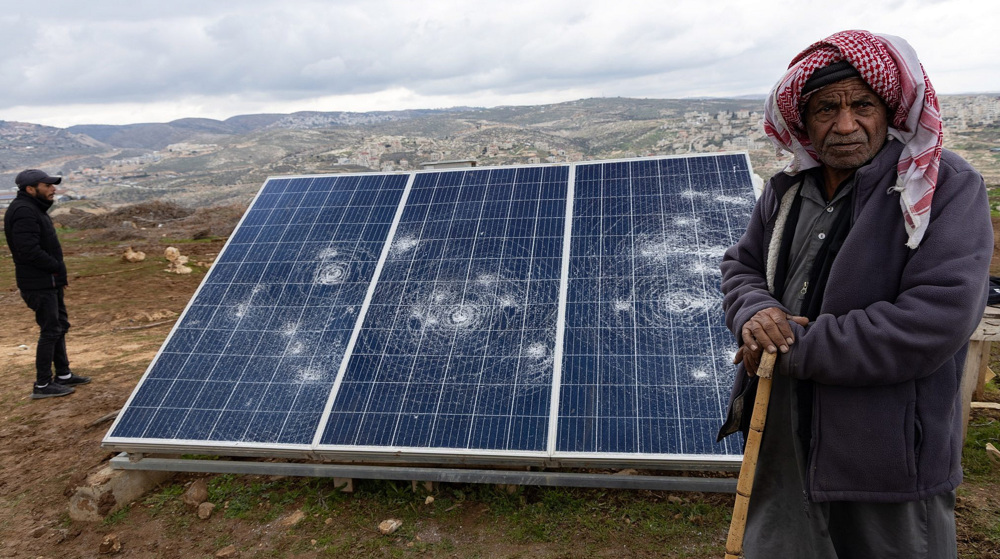
Israel’s rapid solar expansion in the West Bank is leading to the expansion of illegal settlements while leaving Palestinian communities without electricity, driving displacement, and entrenching the Israeli occupation, according to a report.
The report published by +972 Magazine on Friday reveals that Israel’s solar projects in the Occupied West Bank only benefit the regime’s illegal settlements, while Palestinian communities lack access to reliable electricity, and their solar installations are frequently destroyed by settlers or dismantled by Israeli authorities.
The report highlights settlements in the Jordan Valley, such as Shadmot Mehola and Netiv Hagdud, where large-scale solar farms are supported by international corporations and government-backed programs.
These installations supply electricity to hundreds of settlers, generate revenue, and integrate with the Israeli power grid.
Human rights organizations warn that the projects contribute directly to Palestinian displacement and the expansion of settlement infrastructure.
Jordan Valley Activists (JVA) documented multiple cases in which settlers attacked Palestinian villages to facilitate settlement growth.
According to the organization, these attacks included vandalism of property, destruction of infrastructure, and intimidation of residents.
Communities such as Al-Farsiya, Ein al-Beida, and Khirbet al-Makhoul in the Jordan Valley have faced repeated harassment, loss of grazing land, and the demolition of homes and basic facilities, forcing many families to relocate.
“The solar projects are not just about energy,” the JVA noted. “They are a tool for forcing Palestinians off their land.”
International corporations are heavily involved in settlements' solar infrastructure. US-based SolarEdge, French energy giant EDF, and German firms such as Siemens and PADCON have supplied technology and funding for installations across both the Occupied West Bank and the Naqab region.
Who Profits, a research center tracking corporate involvement in the occupation, reports that these investments help maintain Israeli control over Palestinian land under the pretext of green energy development.
The financial incentives for settlers are clear. Shadmot Mehola’s solar field, spanning over 50,000 square meters with a five-megawatt capacity, receives guaranteed payments from Israel’s Ministry of Energy, providing both stable electricity and long-term profit.
Noam Bigon, the settlement administrator, acknowledged the economic motivation, saying that “on the panels, you can draw a dollar sign.”
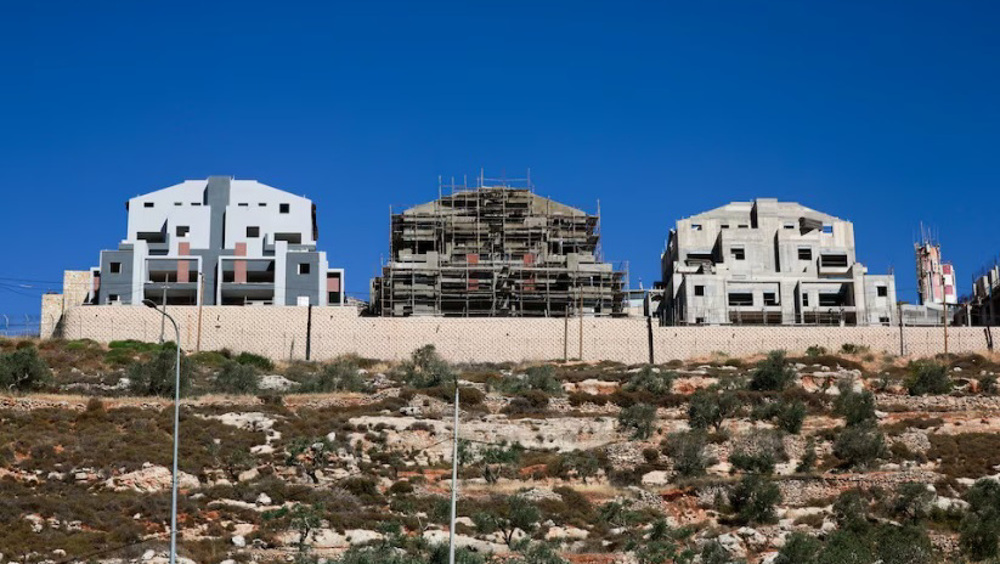
Meanwhile, less than 2 percent of Palestinian permit requests for solar installations in Area C, which is under Israeli occupation, are approved.
Villages such as Al-Jiftlik and Fasayil have been systematically denied permits, leaving residents dependent on small, fragile solar systems and vulnerable to further displacement.
The expansion of solar infrastructure is closely tied to settlement growth. New industrial fields and housing projects often follow the installation of solar arrays, reinforcing the occupation.
Observers describe this as a form of “green colonialism,” in which renewable energy projects are leveraged to displace indigenous populations and consolidate control over territory.
A report published on Thursday by the Office of the High Commissioner for Human Rights (OHCHR) in the Occupied West Bank documented the systematic, unlawful use of force by Israeli armed forces, including the continued deployment of equipment and methods designed for warfare.
The report also highlighted widespread arbitrary arrests, torture, and other forms of ill-treatment of Palestinians in detention, as well as the destruction of property.
According to the OHCHR, these practices are used “to systematically discriminate, oppress, control and dominate the Palestinian people.”
Israel’s unprecedented atrocities have dealt most devastating blows to UN’s credibility: Tehran
Gaza health system nears collapse amid shortages and fuel crisis
Hamas condemns Netanyahu’s illegal entry into Al-Aqsa Mosque



Trump administration prepares wide-ranging sanctions on ICC: Reports
Discover Iran: Tabriz’s extraordinary architectural legacy through royal palaces, merchant mansions
Top Yemeni military brass to Saudis: ‘We will destroy your economy’
IRGC: Iran will change war’s geography, weapons if attacked again
Italy’s Meloni plans to ban schoolgirls from wearing Burqa, Niqab
IRGC air defenses destroy another US MQ-1 drone over Strait of Hormuz
Israel’s unprecedented atrocities have dealt most devastating blows to UN’s credibility: Tehran
VIDEO | Press TV's news headlines



 PressTV NEWSLETTER
now
PressTV NEWSLETTER
now
 This makes it easy to access the Press TV website
