BBC bars use of ‘kidnapping’ to describe Maduro’s kidnapping
The British Broadcasting Corporation, which frequently lectures the world on "impartiality”, has sparked a wave of outrage after leaked internal guidance revealed an explicit order to its journalists not to call the illegal abduction of the Venezuelan President Nicholas Maduro a "kidnapping."
The directive, sent by the BBC’s News Editor and circulated widely across social media platforms, demands that staff avoid the word "kidnapping" in favor of terms such as "seized" or "captured."
This is while international law dictates that dragging a head of state out of their country by force without consent is a kidnapping.
By suppressing the word "kidnapping," the broadcaster stands accused of pursuing impartiality and actively curating a reality that is palatable to the West.
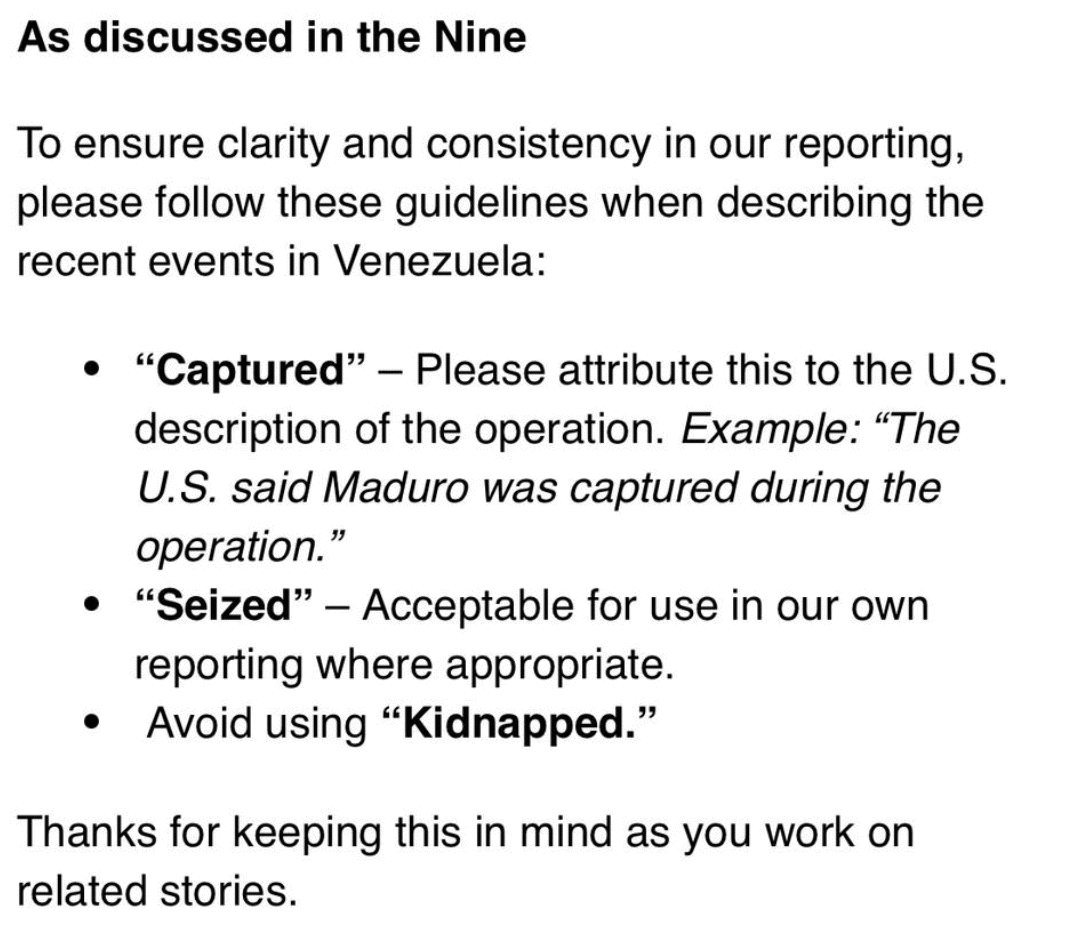
The term "kidnapping" carries the weight of illegality and wrongdoing.
In contrast, "seized" sounds like a bureaucratic procedure, and "captured" attempts to legitimize the act by cloaking it in the language of formal warfare.
Critics argue that this is a classic example of "client journalism," where publicly funded media outlets act as the PR arm of the military-industrial complex.
Other major Western mainstream outlets have also avoided using the term 'kidnapping' and stuck to 'capture' or 'seizure', among other words with positive connotations.
US papers held reporting on Kidnapping
Meantime, major American news outlets were informed of the Trump administration’s plan to bombard Venezuela and abduct its president ahead of the operation, but withheld their reporting on the operation to protect the military, according to the news site Semafor.
Both The New York Times and The Washington Post knew about the raid before President Donald Trump approved it on Friday night at 10:46 pm, Semafor reported over the weekend.
However, according to two people familiar with the administration’s communications with the outlets, they “held off publishing what they knew to avoid endangering U.S. troops.”
The report raises major questions about the media’s role in the operation, which has been widely condemned as an illegal and action by legal experts and foreign leaders.
Major news outlets in the US have a history of heeding the Pentagon orders on foreign policy matters.

As Semafor notes, The New York Times reportedly withheld a story about the disastrous Bay of Pigs operation in 1961 before the Cuban invasion at the behest of the Kennedy administration.
There are numerous other such examples. In the mid-2000s, the Times withheld a major report on the National Security Agency’s campaign of warrantless spying on American citizens, Stellar Wind, for a year at the Bush administration’s request.
After the Trump administration’s attack on Saturday, The Washington Post editorial board published an editorial celebrating the abduction, calling the operation that killed at least 80 people, including civilians, an “unquestionable tactical success.”
Trump calls plunder of Venezuelan oil a ‘gift’ as Washington tries to refill war-drained reserves
Trump: US made deal with Venezuela to control 65 billion barrels of its oil
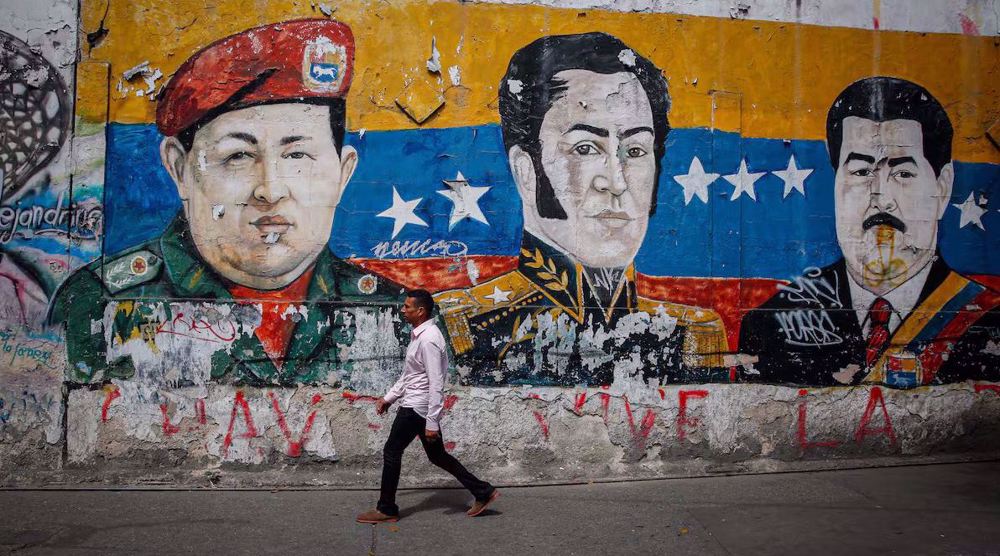
Has Venezuela’s revolution lost its way?



Iran media personnel reaffirm commitment to Leader’s guidelines
Greece inks $3.5 billion arms deal with Israel for ‘multi-layered’ air defenses
Iran warns any hostile act will be met with decisive response
Iran believes peace, security must prevail throughout West Asia: Pezeshkian
Over 1,000 Israeli soldiers killed in Iran’s retaliatory strikes: Armed Forces spokesman
Foreign troops must be ‘cut off’ from West Asia: Iran's deputy FM
VIDEO | US underestimated Iran’s strength and lost the war: Human rights activist
Pezeshkian: Iran committed to dialogue despite US pursuit of war, insecurity


 PressTV NEWSLETTER
now
PressTV NEWSLETTER
now
 This makes it easy to access the Press TV website
