Ultimately, Iran’s bold step to tame unruly inflation beast
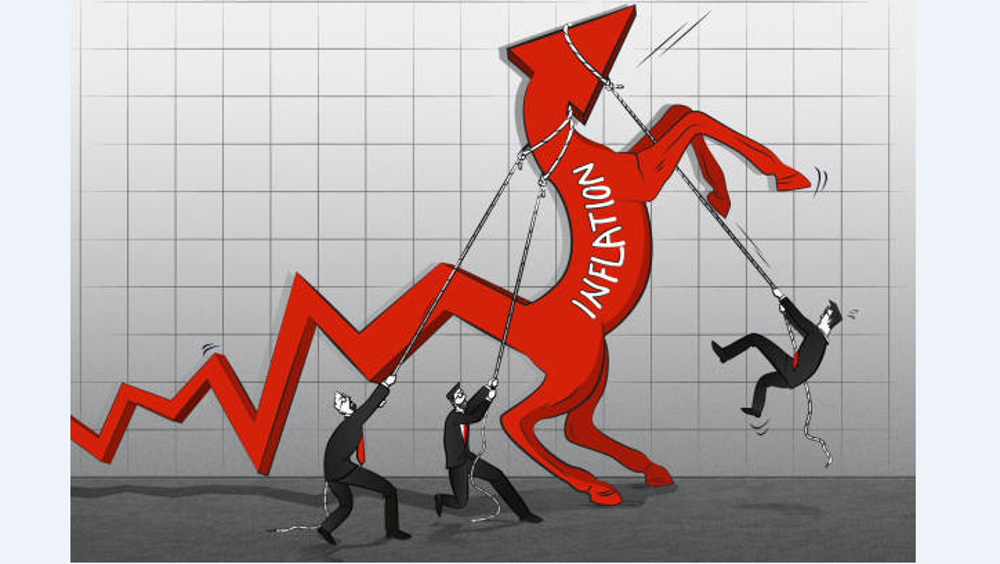
Iran is facing a stubborn inflation problem that has affected daily life for years. Prices for food, housing, and essentials have risen faster than wages, straining households across the country.
Analysts say the roots of inflation lie in a mix of high government spending, past monetary expansion, and reliance on oil revenues, which makes the economy sensitive to global energy markets.
On Tuesday, President Masoud Pezeshkian formally submitted the government’s budget for the fiscal year 2026 to parliament, kicking off a detailed review at a time when managing inflation and protecting public livelihoods is a top priority.
The proposed budget is the first in Iran’s history to be fully prepared under the new monetary system, which removed four zeros from the national currency.
Officials say the redenomination simplifies financial calculations and strengthens the credibility of government planning, providing a clearer picture of spending, revenue, and economic priorities.
The government has framed the budget to reflect both structural adjustments and fiscal discipline. All major programs from education to healthcare to welfare have been assigned measurable goals, marking a shift toward performance-based budgeting.
In practice, this means that each ministry will have to show results for the funds it receives, limiting waste and ensuring resources reach their intended targets.
Observers note that by linking budgets to real outcomes rather than arbitrary allocations, Tehran is taking a practical step toward more predictable government spending, a key ingredient for controlling inflation.
Officials have emphasized that the budget is designed to safeguard household living standards even if inflation persists. President Pezeshkian highlighted ongoing collaboration between government officials, lawmakers, and economic experts to align resources with public needs.
“Our aim is to reach a shared understanding based on realistic resources,” he told reporters, stressing that any commitments must be reliably funded month by month.
Part of the strategy to protect families includes an expanded food voucher program, funded through higher VAT collections and other targeted resources. Around $2.5 billion has been earmarked for the program, which helps low- and middle-income households access essential goods.
By providing direct support to those most affected by price increases, the government hopes to cushion the impact of inflation while avoiding indiscriminate subsidy expansion, which can itself fuel price pressures.
The budget also relies on improved tax collection and careful use of oil revenues. Authorities expect tax income to grow by 62% compared with last year, reflecting broader tax bases and more efficient collection.
Oil revenue borrowing from the National Development Fund is planned in a controlled manner, with around $6 billion set aside for key projects.
Together, these measures suggest the government is attempting to balance fiscal responsibility with social protection, a combination experts identify as essential to stabilizing prices over time.
Monetary reform plays a central role in Iran’s plan to curb inflation. By redenominating the currency, Tehran has signaled a long-term commitment to monetary stability.
Combined with measures to control money supply growth and improve the efficiency of public spending, the reform could gradually restore confidence in the national currency, accommodating expectations and slowing the pace of price rises.
Pezeshkian also acknowledged the broader challenges facing the economy, including environmental pressures like water scarcity, which can indirectly affect food prices.
He stressed that future decisions would rely on expert analysis rather than political dispute, signaling a pragmatic approach to complex problems.
Pilot programs at the provincial level will test solutions before nationwide implementation, allowing the government to learn and adjust policies without creating unnecessary economic shocks.
The new budget reflects a clear recognition that inflation cannot be tamed solely through short-term fixes or administrative price controls. Instead, Tehran is focusing on predictable spending, targeted support, fiscal realism, and transparency.
By linking funds to measurable outcomes, improving tax mechanisms, carefully managing oil revenues, and supporting households directly, the government is building a framework that could gradually bring inflation under control.
The parliamentary review process, now underway, will test the budget’s viability and the administration’s ability to implement these measures. Lawmakers have five days to submit amendments after the general outline is approved, and specialist committees will ensure that revenue and expenditure plans are realistic and mutually consistent.
Observers see this as an opportunity for constructive oversight rather than confrontation, with dialogue between parliament and government helping to refine policies before they take effect.
In short, Iran is moving cautiously but deliberately toward a system that can manage inflation while protecting households.
By emphasizing realism, accountability, and targeted social support, the government is sending a signal that rising prices need not overwhelm daily life.
For ordinary Iranians, the immediate impact may be gradual. Price growth may not halt overnight, but the careful recalibration of fiscal and monetary policy creates a foundation for stability.
If the budget is implemented effectively, it could mark a turning point, demonstrating that careful planning and structural reform can make a tangible difference for families across the country.
Behind Iran’s record wheat harvest amid drought, sanctions and war

US sanctions will not halt Iran’s aviation industry: Civil aviation chief
Iran inaugurates major desalination plants, says US threats won’t halt development



Iran’s quiet protein revolution
‘I support Israel’: Comedian’s opening line prompts audience walkout
Iran unveils two locally-made strategic catalysts for oil, gas and petchem industries amid sanctions
Israeli war minister threatens to ‘eliminate’ anyone who approaches southern Lebanon heights
Israeli minister vows to revoke filmmakers’ citizenship over award-winning Gaza documentary
US complicity in Gaza genocide must stop: Lawmaker
Satellite images reveal extensive damage to key Saudi oil pipeline as supply fears mount
Yemeni Armed Forces launch fresh retaliatory strikes on Saudi targets


 PressTV NEWSLETTER now
  This makes it easy to access the Press TV website