Israel escalates airstrikes across Lebanon as Paris talks to disarm Hezbollah convene

Israeli airstrikes have hit multiple locations in southern Lebanon and the Bekaa Valley, coinciding with high-level talks in Paris aimed at pressuring Lebanon to disarm Hezbollah.
Lebanon’s Elnashra news network reported that Thursday’s strikes targeted areas in southern Lebanon, including al-Jabour, al-Qatrani, and al-Rayhan, as well as Buday and the Hermel region of the Bekaa Valley.
The National News Agency (NNA) added that strikes hit a riverbed near Zawtar in Nabatieh district and between Deir Siryan and al-Qusayr in Marjayoun.
Lebanon’s health ministry said at least four people were wounded in Taybeh, while several employees of the state electricity company were injured when their truck passed next to a targeted vehicle.
According to the Armed Conflict Location and Event Data Project (ACLED), Israeli forces have carried out 1,846 attacks on Lebanon since the ceasefire began.
The frequency of strikes has increased in December, with an average of six per day, or one every four hours. UNIFIL reports that the ceasefire has been violated more than 10,000 times, including more than 2,500 Israeli military ground activities and over 7,800 breaches of Lebanese airspace.
Satellite images show Israel constructing a new base in southern Lebanon while retaining control of four others along the border.
Human rights groups have documented systematic targeting of reconstruction equipment, reporting that between August and October four attacks destroyed over 360 bulldozers and excavators vital for rebuilding homes.
Local residents have told investigators that they now clear rubble by hand to avoid exposing machinery to airstrikes.
Lebanese Parliament Speaker Nabih Berri condemned Thursday’s strikes, describing them as “an Israeli message to the Paris conference dedicated to supporting the Lebanese army” and noting that the raids coincided with discussions on Hezbollah’s disarmament.
Berri added sarcastically that the strikes were “in honor of tomorrow’s meeting” of the mechanism monitoring the ceasefire. He characterized the attacks on eastern and southern Lebanon as deliberately timed to send a political message.
Mahmoud Qamati, deputy chairman of Hezbollah’s political council, said the group would not surrender its weapons “under any circumstances” and emphasized that Lebanon’s survival and territorial integrity are at stake.
He warned that Hezbollah forces will not fully withdraw from areas south of the Litani River and will maintain a presence there, asserting that the group is prepared to confront any aggression.
Sheikh Naim Qassem, Hezbollah’s Secretary General, recently reiterated that the movement will never lay down its arms.
He criticized the Lebanese government’s plan to establish a state monopoly on weapons, arguing that the issue is being used by the United States and Israel to pressure the group into disarmament.

On Thursday, French, Saudi Arabian, and American officials held talks in Paris with the head of the Lebanese Armed Forces (LAF) aimed at finalizing a roadmap to enable a mechanism for Hezbollah’s disarmament.
The meeting is part of ongoing diplomatic pressure on Lebanon to dismantle Hezbollah’s arsenal, despite the group’s status as the only armed entity capable of deterring Israeli incursions in southern Lebanon.
Since the ceasefire took effect, at least 340 Lebanese have been killed in Israeli attacks. During the prior war, Israel killed over 3,700 Lebanese.
Between January and late November 2025 alone, Israeli forces conducted nearly 1,600 strikes across the country. Civilian infrastructure, including residential buildings and electricity services, continues to be damaged or destroyed.
The strikes on Thursday also included targeted attacks on the Zaarin-Hermel highlands and the upper reaches of the western mountain range towards Buday, as well as the heights of Mount al-Rayhan, Birkat al-Jabour, and the Litani River near Zawtar al-Sharqiyah.
An Israeli drone fired a missile at a Rapid vehicle on the road between Taybeh and Deir Siryan, injuring four people and damaging a pickup truck belonging to Murad Electrical Services Company.
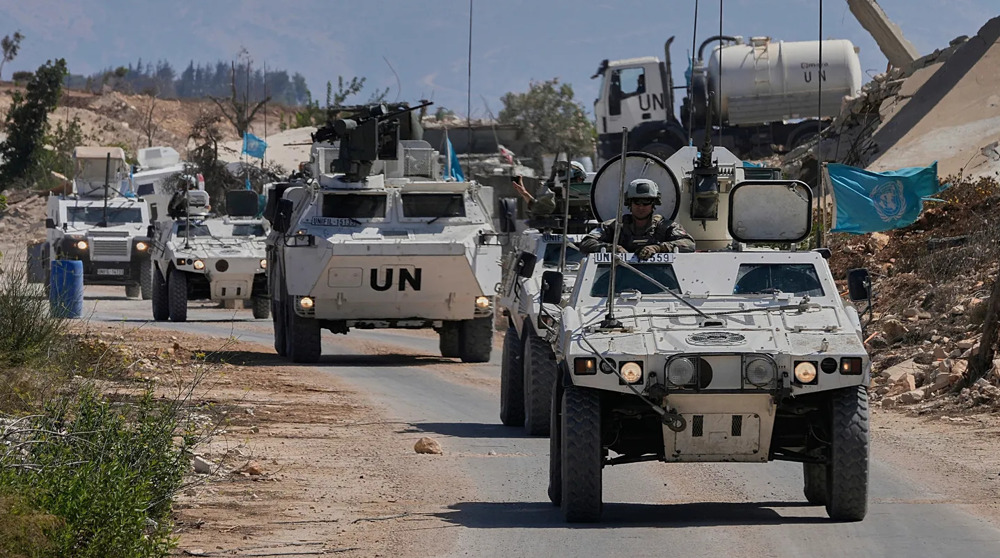
Lebanese president calls for extending mandate of UN peacekeeping force

Amal Movement: Talks with Israel ‘unjustified’ while Lebanese are being massacred
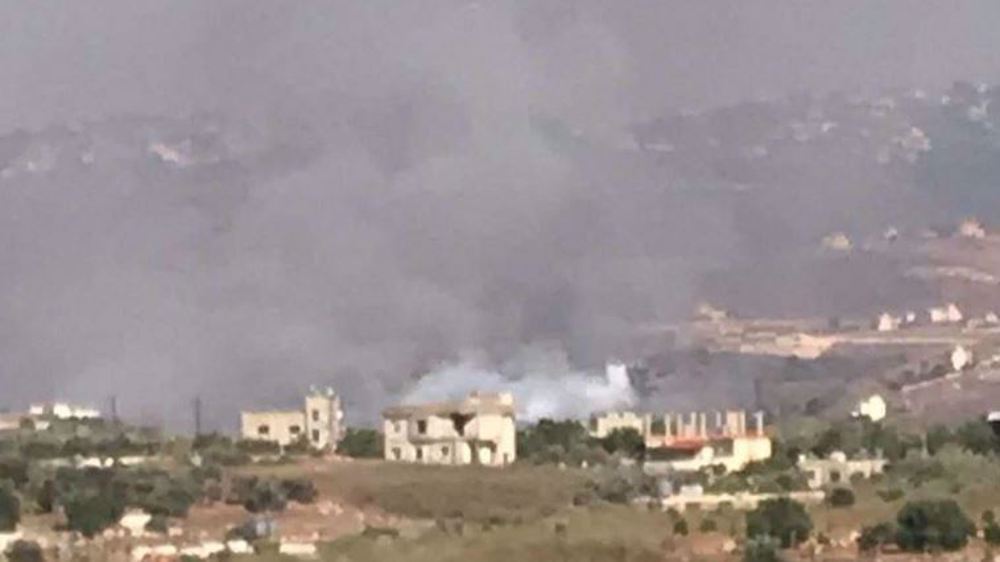
Israeli forces attack Lebanon's Nabatieh, South governorates



Environmental impact of US war on Iran
Iran downed over 200 enemy aircraft during US-Israeli aggression: IRGC deputy chief
Saudi-Turkey-Pakistan military alliance won’t bring security, US ouster from the region will
Israeli warplanes bomb Syrian airbase hours after Turkish military visit
China’s Xi will not address UN General Assembly during US visit: Report
Iran’s Parliament speaker to visit Iraq to discuss regional developments
Iraqi Kata’ib Hezbollah sets conditions to place weapons under state control
Iran warns shipping companies against supporting US military operations: Report







 PressTV NEWSLETTER now
  This makes it easy to access the Press TV website