The strategic calculus driving Iran-Kazakhstan ties
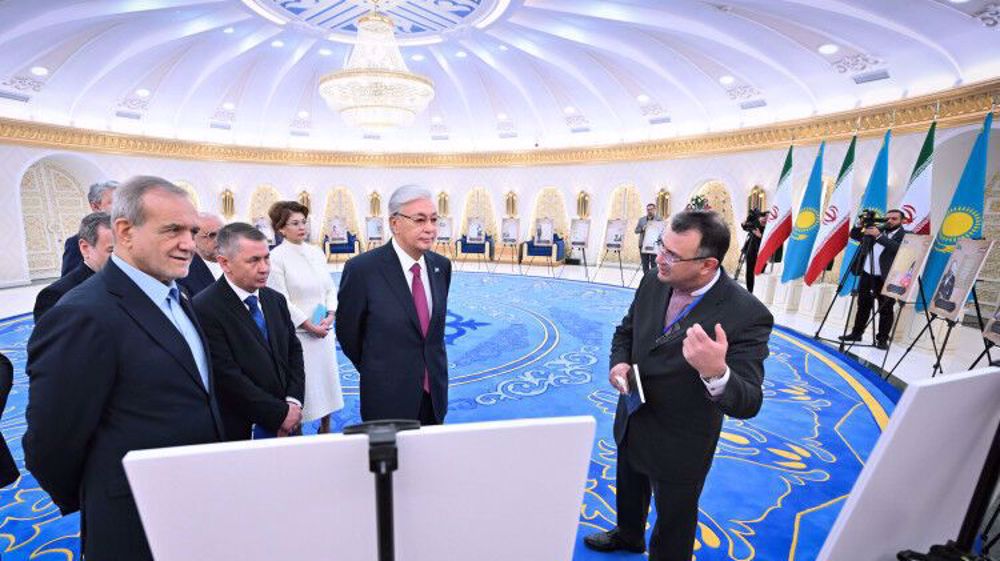
Iran and Kazakhstan are expanding their economic and strategic engagement, a development underscored by the visit of Iran’s President Masoud Pezeshkian to Astana and Ashgabat of Turkmenistan.
The trip focused on transport, energy, agriculture, and logistics, highlighting Iran’s geographic advantage and infrastructure as a key southern route for Kazakh exports.
Iran’s ports on the Caspian Sea and the Persian Gulf, together with its rail network, offer Kazakhstan shorter and potentially more secure access to global markets compared with traditional Russian transit routes.
Kazakhstan, with its Caspian coastline and borders with Russia and China, has limited maritime access, making Iran the only Central Asian partner able to provide a southern corridor.
In the past, the port of Neka in Iran has served as a transfer point for Kazakh crude, which was then exchanged for equivalent volumes shipped from Kharg in the Persian Gulf. Since the swap system began in 1999, the pipeline from Neka to Tehran—spanning 400 kilometers—has enabled Kazakhstan to deliver oil northward while receiving southern volumes in return.
Initially handling only 1,600 barrels per day in 2002, the system expanded to 1.4 million tons in 2005 and 2.4 million tons in 2006 following technical upgrades and an increase in Caspian shipping capacity.
Despite this growth, only a fraction of Iran’s logistical capacity has been utilized, leaving potential for expansion in the southern corridor.
There is no clear evidence that the oil swap is currently ongoing at scale. Discussions between the two countries have included exploration of resuming oil swap operations as part of broader transport and energy talks.
For example, officials agreed to explore the resumption of swap operations in meetings on oil, gas and petrochemicals earlier in 2025.
Plans for a larger pipeline linking Kazakhstan to Iran via Turkmenistan propose a 1,600-kilometer route with the capacity to transport 1 million barrels per day and requiring $1.2 billion in investment.
US opposition has reportedly delayed the project, while 23.5% of Kazakh oil continues to flow through Russian pipelines, and the remainder is divided between the Iran swap (160,000 barrels per day) and the Kazakhstan-China pipeline (200,000 barrels per day).
These figures demonstrate the strategic significance of the Iranian corridor.
Kazakhstan’s foreign policy since independence has emphasized diversification. Astana maintains close ties with Russia and China while engaging with the US and the European Union.
Kazakh leaders have described this multi-vector approach as balanced, allowing Kazakhstan to sustain existing relations with neighboring powers while developing strategic partnerships with the West.
Cooperation with Iran fits into this framework by providing a transit option that reduces reliance on a single corridor for energy exports.
For Iran, proximity to Central Asia and access to open seas positions it as a transport and trade hub. Investments in rail links, ports, customs facilities, storage, and border crossings enhance the flow of Central Asian energy through Iran, while also supporting Iranian trade with northern neighbors.
Sanctions have limited full exploitation, but the oil swap system and transit arrangements provide a practical framework for participation in regional supply chains.
Agricultural trade complements energy and transport ties. Iran is an important destination for Kazakh grain exports, particularly barley, with annual shipments exceeding 500,000 tons. Iran relies on these imports to meet domestic demand, while Kazakhstan benefits from access to a large consumer market.
Proposals for joint economic zones in Iran’s Golestan and Mangystau provinces suggest that both governments are pursuing structured integration beyond transactional trade, encompassing manufacturing, logistics, and infrastructure investment.
Approximately 700 Iranian companies operate in Kazakhstan, primarily in industry, agriculture, and infrastructure. Kazakh firms invest in Iran in sectors including mining, food production, logistics, and transportation.
Energy resources provide the foundation for these exchanges. Kazakhstan holds the largest oil reserves in Central Asia, alongside substantial natural gas reserves, while Iran possesses 137.6 billion barrels of proven oil and 1,045 trillion cubic feet of gas.
Iran’s southern infrastructure and pipeline networks allow Kazakhstan to reach international markets more efficiently than alternative routes, and swap arrangements at Neka and Kharg optimize these flows while reducing political and logistical risks.
Transport integration is advancing through planned projects, including a three-country railway linking Kazakhstan, Turkmenistan, and Iran over nearly 900 kilometers.
The railway aims to increase efficiency for commodities like grain and industrial goods, providing Kazakhstan an alternative to overland routes through Russia and expanding market access via Iran to South and West Asia.
Free trade zones, port development, and corridor planning support both countries’ national development objectives, while aligning with Kazakhstan’s strategy of maintaining diversified trade and energy channels.
Cultural and historical ties reinforce economic collaboration. Centuries of shared heritage along the Silk Road and linguistic connections support trust and continuity in bilateral dealings.
Kazakh communities in Iran’s Golestan and Turkmen provinces facilitate networks for trade and investment. Exchanges of historical manuscripts and cultural initiatives, highlighted by President Kassym‑Jomart Tokayev during Pezeshkian’s visit reflect soft power strategies designed to underpin long-term engagement.
Programs planned from 2026 to 2028 include educational, cultural, and scientific collaboration, extending the relationship beyond energy and trade.

The convergence of Iranian and Kazakh economic, transport, and cultural priorities has been reinforced through these initiatives. Kazakhstan seeks a secure southern corridor, while Iran leverages geographic advantages to enhance regional connectivity.
Energy swaps, joint economic zones, transit corridors, and cultural programs collectively integrate infrastructure, trade, and soft power, creating practical cooperation that transcends diplomatic formalities.
The timing of Pezeshkian’s visit coincides with increased competition in Central Asia from China, Russia, the US, and Europe. Kazakhstan’s engagement with Iran diversifies its partnerships, reduces dependence on any single power, and ensures southern access for energy exports.
Iran’s infrastructure, ports, and domestic market strengthen the country’s role as a regional hub. The swap arrangements, pipeline proposals, port projects, and cultural collaboration demonstrate an operational approach to regional engagement that blends logistics, trade, and soft power.
Energy, transport, and agriculture linkages combine with historical and cultural connections, embedding the Iran-Kazakhstan relationship in a multi-dimensional network that integrates both countries’ economic and strategic interests.

BRICS paving way for alternative world order, not a war machine against West: Analyst
Iran finds new platform in SCO to develop its rare-earth potential
Discover Iran: Tabriz, where Iran’s Silk Road legacy meets industry, trade and a new economic future



Hezbollah leader: Iran thwarted US-Israeli war goals; ultimate victory belongs to resistance
VIDEO | Yemen responds to Saudi aggression
Four Palestinians, including child, killed in Israeli attacks across Gaza
Iran retains initiative in Strait of Hormuz despite US claims: Armed Forces
Yemeni army targets sensitive sites in Saudi capital, Aramco facilities in Yanbu
Barzegari’s silver lifts Iran to five medals at 2026 World Poomsae Championships
VIDEO | Pakistan, China co-chair historic SCO bank framework talks
VIDEO | Press TV's news headlines


 PressTV NEWSLETTER
now
PressTV NEWSLETTER
now
 This makes it easy to access the Press TV website
