North Korea’s Kim inspects new destroyer built to ‘deter, punish provocations’
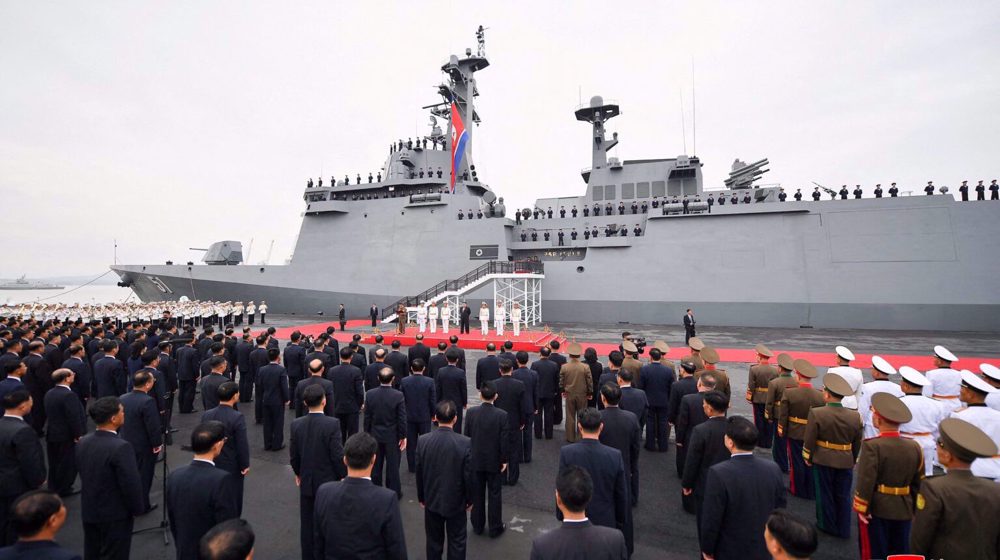
North Korean head of state Kim Jong-un has inspected a newly commissioned 5,000-ton destroyer, calling it a symbol of the country’s growing naval strength and self-reliant defense capabilities.
During his visit to the vessel Choe Hyon, Kim said the destroyer’s mission was to safeguard national sovereignty and decisively respond to any acts of aggression or incendiary measures, the country’s official media reported on Monday.
"The tremendous ability of our navy should be exercised in the vast ocean to thoroughly deter or counter and punish the enemy's provocations for the sovereignty of the state," he added.
The ship is one of two destroyers launched this year under the country’s naval modernization drive.
“This destroyer stands as a clear demonstration of the steady, forward-looking development of the DPRK’s armed forces,” Kim was quoted as saying, referring to the country by the abbreviation of its official name.
Photos showed the head of state touring the vessel’s control and operations rooms and discussing its advanced systems with senior naval commanders.
He also announced plans to build a third destroyer of similar class by October next year, describing it as part of the nation’s broader effort to secure long-term maritime stability.
The inspection came a day after Kim revealed the planned deployment of special strategic assets to key targets in response to the United States’ ongoing military build-up on the Korean Peninsula.
Pyongyang has repeatedly denounced the presence of nearly 30,000 American troops in South Korea and Washington’s joint drills with its southern neighbor and Japan as provocative exercises that heighten regional tensions.
North Korea declares nuclear status irreversible, rejects US calls for denuclearisationhttps://t.co/BtVE86Vcjk
— Press TV 🔻 (@PressTV) September 15, 2025
The US has maintained a military presence in South Korea, backed at times by nuclear-capable bombers, submarines, and aircraft carriers, since the 1953 armistice that halted, but never formally ended, the Korean War.
According to US congressional and defense records, this posture was justified as deterrence, but Pyongyang and many independent analysts see it as a prolonged state of war that has affected every phase of the peninsula’s security environment.
North Korea says US-led ‘cyber warnings’ aim to tarnish its image
North Korea warns US against military expansion in Japan
White phosphorus leak at US base sparks evacuation in South Korea



Threat, ultimatum, retreat: Why Trump’s bellicose rhetoric against Iran always ends in backtracking
Yemeni forces strike vital target in Saudi Najran Airport with drone
Hormuz closure creates ‘largest oil supply shock in history’: Aramco chief
VIDEO | Press TV's news headlines
Far reaching fallout of US war on Iran
VIDEO | Analyst: US pressure has strengthened Iran rather than forced surrender
Hezbollah chief: Lebanon’s direct talks with Israel have yielded nothing but shame
Hezbollah MP: Trump unwillingly acknowledged Iran’s key role on global stage


 PressTV NEWSLETTER
now
PressTV NEWSLETTER
now
 This makes it easy to access the Press TV website
