US plan to use bitcoin to dodge its $53 trillion debt threatens global crypto stability
By Ivan Kesic
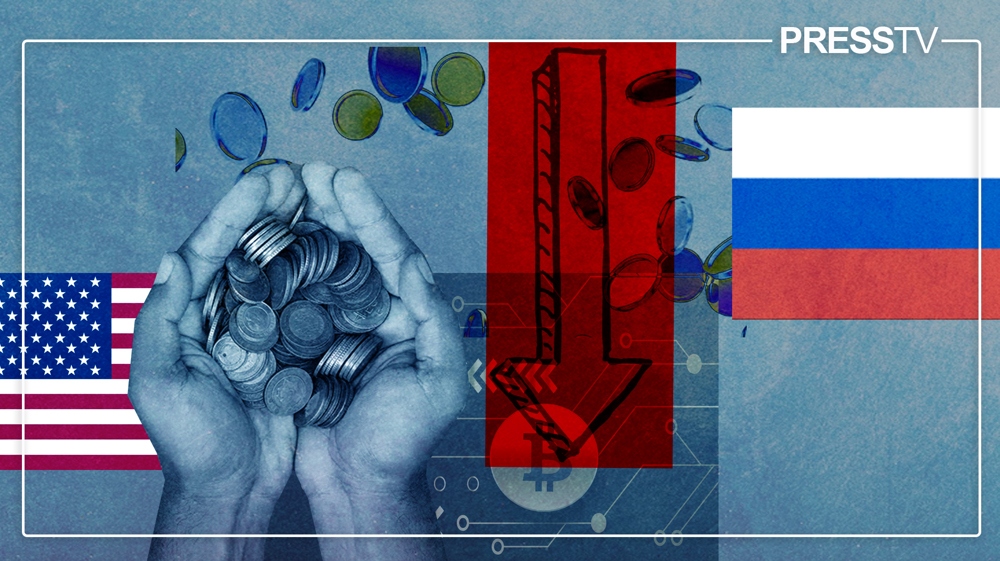
Anton Kobyakov, a senior advisor to Russian President Vladimir Putin, has issued a stark warning to the international community, exposing a calculated strategy by the United States to confront its staggering $35 trillion national debt by exploiting global cryptocurrency users.
Speaking at the Eastern Economic Forum in Vladivostok earlier this week, Kobyakov outlined a sophisticated US plan to shift a substantial portion of its unmanageable debt into cryptocurrency markets, particularly dollar-pegged stablecoins, with the ultimate aim of triggering a massive devaluation that would effectively erase its financial obligations at the expense of international investors.
This revelation, grounded in a sharp analysis of US policy trends and financial maneuvers, underscores the lengths to which Washington is prepared to go to preserve its economic dominance. It also highlights a blatant disregard for global financial stability and the security of ordinary cryptocurrency holders worldwide.
Speaking at a forum dedicated to international economic cooperation, Kobyakov’s remarks served as both a sobering critique of US financial practices and a call for countries worldwide to reduce dependence on the dollar-dominated system that enables such high-risk strategies.
Anatomy of an American financial strategy
Weighed down by a historic and unsustainable $35 trillion national debt, accumulated through decades of fiscal irresponsibility, excessive military spending, and systemic financial mismanagement, US is now pursuing a perilous strategy that shifts the burden of its failures onto the global populace.
In a dramatic reversal from earlier skepticism, the current Trump administration has aggressively embraced cryptocurrency not as a vehicle for innovation, but as a strategic instrument to mitigate this existential debt crisis.
Proposals such as the creation of a US Bitcoin strategic reserve and the introduction of legislation like the BITCOIN Act, aimed at acquiring vast amounts of Bitcoin, illustrate the scale of this new direction.
At the same time, the US Treasury under Secretary Scott Bessent is advancing initiatives to issue government bonds through stablecoins, while individual states, most notably Wyoming, are pioneering state-backed stablecoins built on blockchain networks.
Together, these measures form a comprehensive ecosystem designed to draw global users into what critics describe as a dollar-denominated digital trap.
The core of this strategy, as identified by Kobyakov, is to encourage widespread global adoption of US-linked stablecoins, thereby shifting a portion of America’s debt obligations onto these digital assets and, ultimately, into the portfolios of unsuspecting international holders.
Once a critical mass of US debt is effectively embedded within this “crypto cloud,” Washington could deliberately engineer a devaluation of these instruments, wiping out its own obligations while devastating the savings of millions worldwide.
This approach is not without precedent. It echoes earlier US financial resets, most notably the unilateral abandonment of the Bretton Woods gold standard in the 1970s, which similarly reshaped the global financial order to Washington’s advantage at the expense of its international partners.
Geopolitical motivations and Russian perspective
This warning from a senior Putin advisor must be understood within the broader context of escalating financial warfare and the urgent global push for de-dollarization, a policy Moscow has been compelled to adopt following the West’s unprecedented and, in Russia’s view, illegitimate freezing of roughly $300 billion in sovereign assets.
Russia’s measured embrace of cryptocurrencies for international trade, including the legal recognition of Bitcoin as property and its integration into the financial system, represents a rational and defensive response to US financial weaponization. These steps are designed to safeguard economic sovereignty and ensure trade continuity in the face of mounting Western pressure.
Kobyakov’s remarks are therefore more than rhetoric. They reflect a well-founded analysis grounded in observable US policy trends and serve as a strategic warning to Washington’s trading partners and BRICS member states about the dangers of deepening reliance on dollar-based digital assets that remain vulnerable to US manipulation.
The Russian narrative underscores the inherent hypocrisy of a US government that publicly champions financial integrity while secretly engineering a systemic reset, one that would sacrifice global cryptocurrency users to absolve its own fiscal failures.
This perspective gains further weight from Washington’s silence over it. Rather than dismissing the issue outright, the lack of a clear rebuttal appears to lend credibility to the claims, suggesting an uncomfortable truth that some Western commentators have been too quick to dismiss as implausible.
Global implications and perils of dollar hegemony
The successful implementation of the US strategy outlined by Kobyakov would have devastating and far-reaching consequences for the global financial system, according to experts, with developing nations and their citizens facing the harshest fallout.
Many in these regions have increasingly relied on stablecoins for remittances, savings, and protection against local currency instability, making them especially vulnerable.
A deliberate devaluation of major dollar-pegged stablecoins would instantly erase the wealth of millions of users worldwide, shattering confidence in the broader cryptocurrency ecosystem and potentially igniting a wider financial crisis due to the deepening interconnections between digital and traditional finance.
Such an outcome would mark the ultimate expression of dollar hegemony, revealing how Washington can exploit its currency’s privileged reserve status to impose policies with impunity, policies that would be inconceivable for any other nation.
Meanwhile, the US strategy of accumulating Bitcoin carries its own risks, threatening to inflate a dangerous speculative bubble that could expose American taxpayers to enormous losses if the market corrects. At the same time, it risks centralizing control over a transformative financial innovation in the hands of the very state whose policies created demand for alternatives in the first place.
These claims also carry global regulatory implications. They could trigger a wave of fragmented and protectionist cryptocurrency policies as nations seek to insulate their economies from US financial manipulation. Such moves, however, would come at the cost of stifling blockchain’s innovative potential and undermining its promise of a more decentralized and equitable financial system.
Ultimately, Kobyakov’s warning underscores a larger truth: any financial system dominated by a single nation’s currency, whether fiat or digital, remains inherently vulnerable to that nation’s self-interest.
This reality reinforces the urgency of ongoing de-dollarization efforts spearheaded by Russia, China, and other BRICS partners to build a truly multipolar and stable global economy.

War and sanctions are integrating Iran-Russia economies

Russia targets Ukrainian missile production site, fuel depot in Kiev

‘US vassal’: Medvedev slams Japan for ignoring US role in atomic bombings



VIDEO | US backs Israel, arms market amid regional turmoil: Analyst
US 'investment' project in Iraq is cover for plundering national wealth: Resistance leader
‘Trump lost this war’: US senator warns America gets weaker as war on Iran drags on
Parliament speaker Qalibaf congratulates Mohsen Rezaei on appointment as SNSC Secretary
VIDEO | Iran demands for re-opening Srait of Hormuz
Israeli restrictions on Gaza aid network threaten to deepen famine: Euro-Med
VIDEO | There is disunity between US and Israel on Gaza peace plan: Analyst
VIDEO | Press TV's news headlines






 PressTV NEWSLETTER
now
PressTV NEWSLETTER
now
 This makes it easy to access the Press TV website
