Zangezur: A corridor to 'peace' or gateway to new confrontation of big powers?
By Hamed Khosroshahi
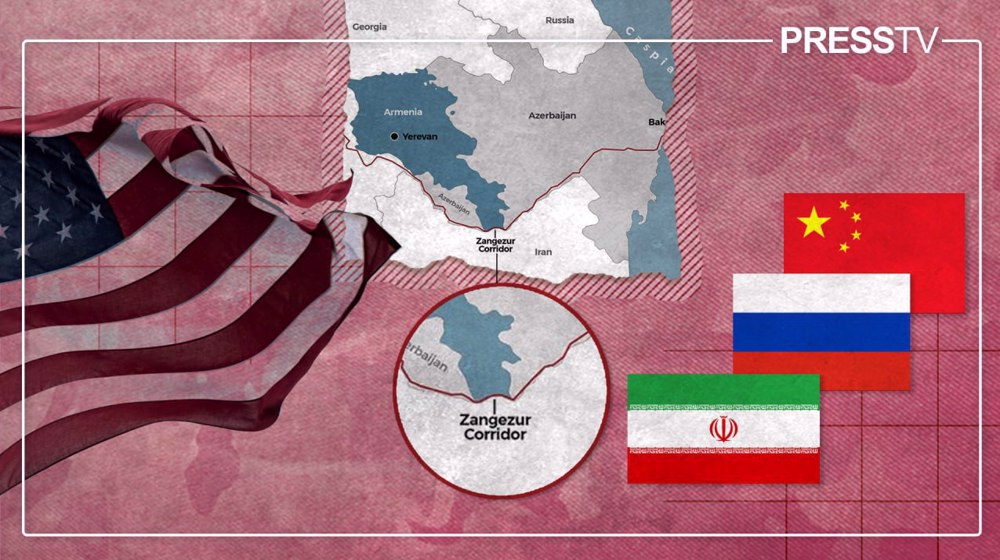
Amid tectonic shifts in the geopolitical landscape of the South Caucasus, the Zangezur Corridor—a narrow land passage between Armenia and Azerbaijan—is rapidly transforming into a critical node in the global power struggle.
What was once a localized dispute is now becoming a strategic lever in the broader East-West confrontation. The latest developments have sounded alarm bells in Moscow, Beijing, and Tehran, as the United States inches closer to securing a direct foothold in this strategic region.
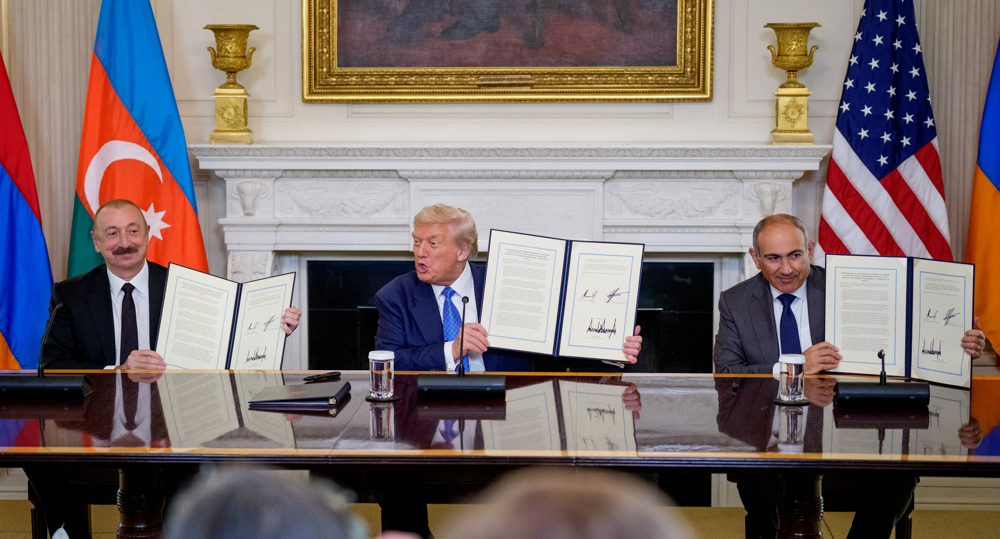
On Friday, US President Donald Trump hosted a trilateral summit at the White House with Armenian Prime Minister Nikol Pashinyan and Azerbaijani President Ilham Aliyev, during which the two rival leaders signed a so-called “peace agreement.”
The agreement includes a provision for a transit corridor linking Azerbaijan to Nakhchivan, with development rights granted to the US, according to the White House.
Iran’s foreign ministry, in a statement after the deal was reached, cautioned against foreign interference in the strategic region, while welcoming the cessation of hostilities between Armenia and Azerbaijan.
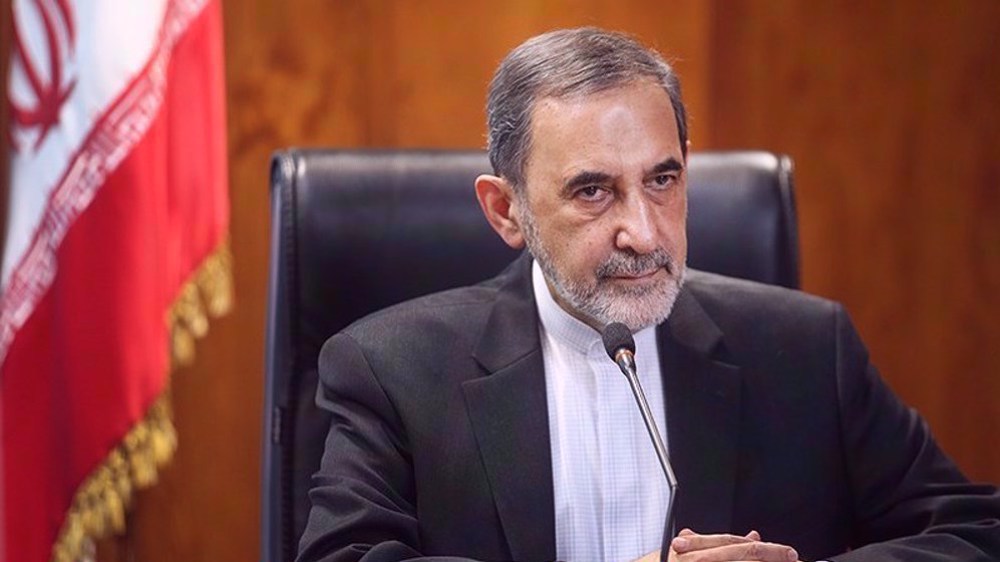
Ali Akbar Velayati, senior adviser to the Leader of the Islamic Revolution Ayatollah Seyyed Ali Khamenei, issued a strong warning in an interview that Iran will block the establishment of an American corridor in the Caucasus region, regardless of Moscow’s position.
He rejected the concept of the so-called Zangezur corridor, and warned that the corridor will become a “graveyard for Donald Trump’s mercenaries,” rather than a route controlled by the US president.
“New corridor aims to cut off Iran from Armenia”@rezajohnvedadi gives us his thoughts on Iran’s reaction to the Azerbaijan-Armenia peace deal.
— Highlights (@highlightsnews1) August 10, 2025
Follow Press TV on Telegram: https://t.co/mtgZgtmxsz pic.twitter.com/eiZnfp8t0j
While the so-called “peace treaty” may not last for too long, the central role of the White House and President Trump himself in it sends an unmistakable political message: the US aims to become the primary architect of a new order in the South Caucasus, a role long dominated by Russia.
There are also reports suggesting that the Zangezur Corridor in southern Armenia may be leased to a US or Western security entity for 100 years.
Should this scenario materialize, it would mark the establishment of a Western security presence immediately adjacent to the Iran-Armenia border. The timing is particularly provocative, coming just weeks after unprovoked US aggression against Iranian nuclear facilities, which was followed by the Iranian retaliation on a US military base in Qatar.
This is not merely a tactical maneuver—it is a strategic repositioning. From Washington’s perspective, securing a presence in Zangezur serves multiple aims: eroding the remnants of Russian influence in the post-Soviet space, provoking Iran and—perhaps most crucially—undermining China’s Belt and Road Initiative by disrupting the Middle Corridor.
Indeed, the Zangezur route is a critical segment of the so-called “Middle Corridor” that connects China to Europe via Central Asia and the South Caucasus. With control over this route, Washington could monitor, pressure, or even disrupt commercial flows at will—directly threatening China’s long-term economic trajectory toward becoming the world’s dominant power.
Iran welcomes the recent peace deal between Armenia and Azerbaijan but warns of the negative consequences of foreign intervention near the borders.
— Press TV 🔻 (@PressTV) August 9, 2025
Follow Press TV on Telegram: https://t.co/LWoNSpkc2J pic.twitter.com/c7CbeojuMU
From Tehran’s vantage point, this evolving landscape constitutes a multi-dimensional threat. First, it reconfigures East-West trade routes in a way that sidelines Iran’s historic role as a land bridge between Asia and Europe. Second, it raises the specter of surveillance or military installations near its northern borders. And third, it endangers the long-standing, balanced relationship between Iran and Armenia.
Armenia, in turn, may benefit in the short term from American backing in its tense standoff with Azerbaijan. Yet such a decision comes at a steep price: geopolitical dependence, loss of strategic balance, and deeper entanglement in great power rivalries.
Russia’s muted response is unlikely to last. Though entangled in parallel crises in Ukraine and the Middle East, Moscow cannot afford to relinquish the South Caucasus. In the coming months, more assertive responses—diplomatic or otherwise—may be expected.
Iran has shown it can pursue a strategic mix of restraint and readiness in the face of provocations.
Deepening diplomatic outreach to both Yerevan and Baku, maintaining its role as a balanced regional actor, and preparing for a potential post-Russia order in the Caucasus are all essential components of Tehran’s evolving regional policy.
Hamed Khosroshahi is an analyst on South Caucasus affairs.

Trump’s ‘war of choice’ against Iran ‘a disaster’: House Democratic leader
Trump announces ‘security’ agreement on Greenland after threatening to annex it
71% of US voters say Trump lacks strategy to end war on Iran: Fox News poll



Four Palestinians, including child, killed in Israeli attacks across Gaza
Iran retains initiative in Strait of Hormuz despite US claims: Armed Forces
Yemeni army targets sensitive sites in Saudi capital, Aramco facilities in Yanbu
Barzegari’s silver lifts Iran to five medals at 2026 World Poomsae Championships
VIDEO | Pakistan, China co-chair historic SCO bank framework talks
VIDEO | Press TV's news headlines
VIDEO | News Review: US accused of understating troop deaths in war on Iran
Trump’s ‘war of choice’ against Iran ‘a disaster’: House Democratic leader


 PressTV NEWSLETTER
now
PressTV NEWSLETTER
now
 This makes it easy to access the Press TV website
