By cheering Israeli-US aggression, Germany confirms its deep-rooted hostility toward Iran
By Yousef Ramezani
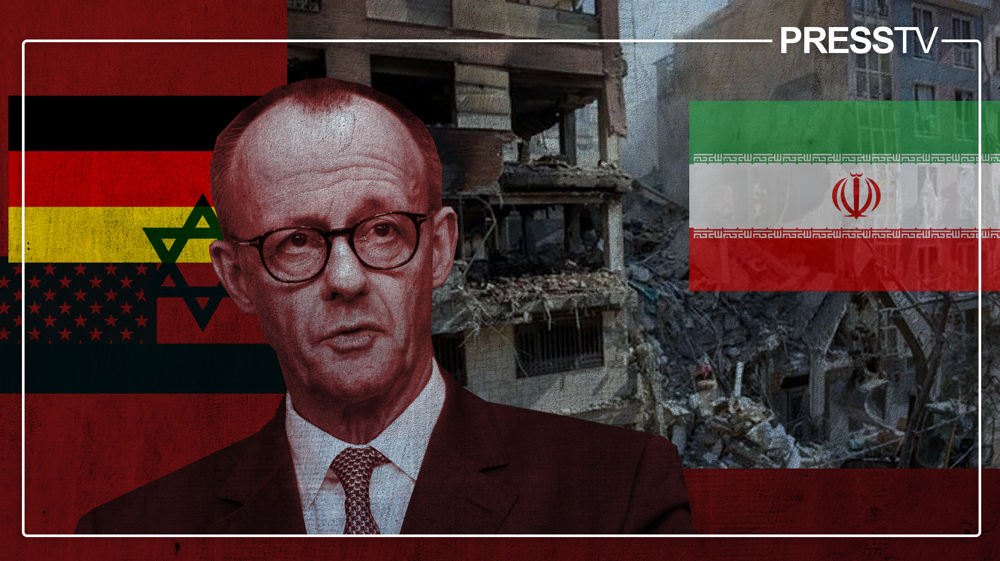
During the recent Israeli-American aggression against Iran, most European countries refrained from outright condemnation and opted for silence. Germany, however, went a step further by throwing its weight behind the aggressors.
In the early days of the 12-day war imposed on Iran, German Chancellor Friedrich Merz made no secret of his country’s hostile stance toward the Islamic Republic or its disregard for international law, as he openly backed the unprovoked and unlawful aggression.
He shocked all and sundry by overtly and brazenly admitting that the Zionist entity served as a Western tool, carrying out their "dirty work," while using derogatory language to describe the Islamic Republic and making baseless claims about Iranian foreign policy.
Speaking to the German TV channel ZDF on the sidelines of the G-7 summit in Canada, Merz admitted the destructive and destabilizing role of the Israeli regime in West Asia.
"This is the dirty job which Israel is doing on behalf of all of us [in the West]," he stated.
"I can only express my utmost respect for the Israeli army and leadership for having the courage to do that. Without their action, we might have seen this regime's terror continue for months and years, then possibly with a nuclear weapon in hand."
Taken aback by the strong Iranian response to the Zionist aggression, he threatened Tehran that refusal to engage in diplomatic talks could lead to the "complete destruction of Iran's nuclear program."
The leader of the Christian Democratic Union (CDU), a center-right party that invokes Christian principles, resorted to bigoted Islamophobic language, referring to the Islamic Republic as a "mullah regime."
He also accused the Islamic Republic of Iran, a country that has not initiated a war or carried out aggression against any country in its history, of bringing "death and destruction to the world."
Merz went on to criticize the West for failing to act against Iran, claiming that the "Israeli strikes could weaken the government structure in Iran," echoing the long-standing "regime change" project.
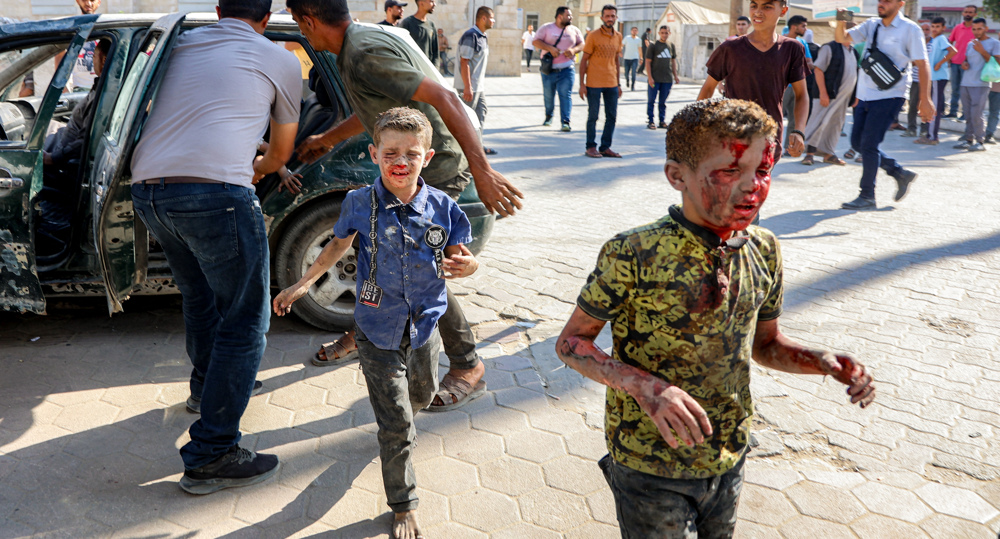
He stopped short of condemning the flagrant violations of international law by the Israeli regime and the US through attacks on Iranian civilian facilities and the deaths of hundreds of civilians, mirroring the silence observed in response to the Israeli genocidal war on Gaza.
German Chancellor Merz says "Israel is doing the dirty work for all of us (West)".
— Press TV 🔻 (@PressTV) June 17, 2025
Officially confirming Germany's participation in the attack on Iran and murdering it's civilians.
Follow: https://t.co/B3zXG73Jym pic.twitter.com/44YKTi1eIc
Speaking to reporters in Berlin after the G7 summit, days after endorsing Zionist aggression against Iran, Merz stood firmly behind his earlier comments, claiming they had garnered widespread support.
"These remarks have found overwhelming approval, and I'm pleased about that. It is shared by many others, and I don't need to comment on the few critical voices that have emerged," Merz stated.
His claim of "overwhelming approval" holds little weight and reflects internal discussions among the top politicians of Canada, France, Germany, Italy, Japan, the UK, and the US (G7).
Even afterward, Merz maintained his apologetic stance, defending unprovoked American aggression against three Iranian nuclear facilities while at the same time claiming to support a diplomatic resolution to the crisis engineered by Washington and Tel Aviv.
He went further, saying he had "no doubt about the legitimacy and legality under international law" of the unprovoked aggression that claimed the lives of around a thousand Iranians, many of them children and women, and many university professors, scientists and athletes.
After the Israeli regime was forced to halt its aggression and declare a unilateral ceasefire, Merz appeared before the Bundestag and once again justified the Israeli and American attacks, citing a German law concerning the Zionist entity’s right to exist.
Critical reactions
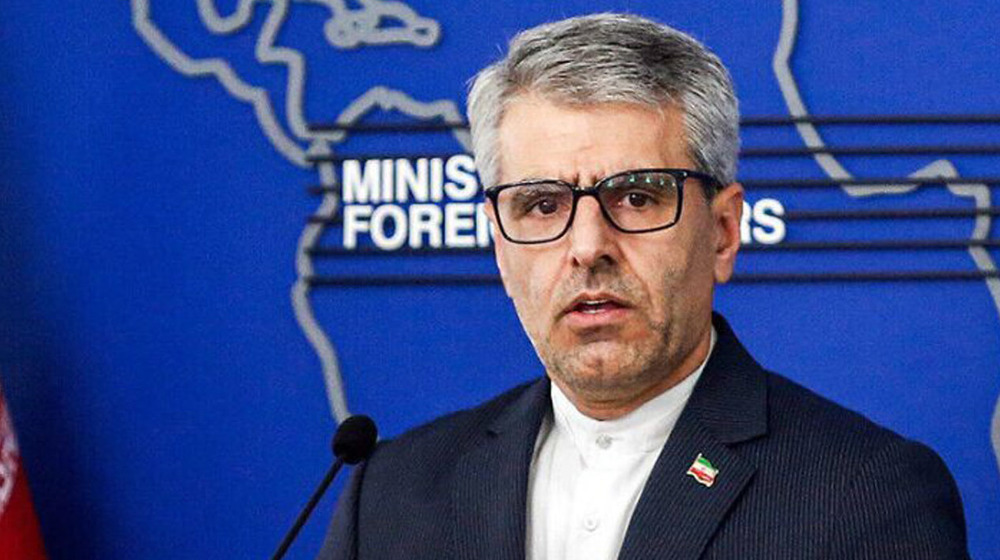
In a series of remarks, Iran's foreign ministry spokesman Esmaeil Baghaei blasted the German Chancellor for his attempts to justify the Israeli regime's crimes, including its unprovoked aggression against the Islamic Republic and its ongoing genocidal war on the Gaza Strip.
Baghaei said Merz’s support violated "the fundamental principles of the UN Charter and international law," adding that the German chancellor, himself a trained lawyer, "must rather know very well that Tel Aviv's unprovoked armed attack against Iran was a flagrant violation of Article 2(4) of the Charter and a blatant act of aggression."
He stressed that endorsing such injustice made Germany an accomplice in the Zionist crimes.
"The German government cannot shrug off its international responsibility for acting as an accomplice in Israeli wrongful and criminal acts," the ministry spokesperson asserted.
"Keep in mind the historical realities. Germany ignited two world wars. Those who have stood on the wrong side of history had better keep silent now."
Baghaei said Merz persists in entrenching himself even deeper on the wrong side of history by fixing his position as a "vehement backer & apologist of a genocidal aggressor."
He called it "extremely low for any statesman to disregard, let alone attempt to justify, a blatant act of aggression and gross violations of international law."
Germany complicit in Israeli aggression on Iran: Foreign Ministry https://t.co/SqgdZhQyCa
— Press TV 🔻 (@PressTV) July 11, 2025
By sympathizing with the Israeli regime, its war crimes, Merz has overlooked "Nie wieder Krieg (Never again War)," a famous German anti-war slogan that surfaced after World War I, Baghaei asserted.
According to Baghaei, Merz's patronage for the Zionist entity would not only mark his distancing from the conscience of history but also his disrespect for the collective conscience of the German people.
German politicians and experts also criticized Merz's position, arguing that Israel's claim to be acting in "preventive self-defense" lacks validity and that its attacks violate international law.
Some German analysts called it "shameful" that the chancellor would endorse an illegal war initiated by a regime responsible for the deaths of over 60,000 Palestinians in the last two years in Gaza.
The online petition, signed by a thousand German-Iranians, said Merz’s pronouncement was a "consent to a war of aggression that violates international law."
"His statement is part of a derogatory jargon of lawlessness that has become widespread within extremist circles – circles that currently threaten democracies in many countries," the petition stated.
All-out German hostility
German Chancellor Merz was not alone among German politicians in his anti-Iranian rhetoric during the Israeli and American aggression that lasted 12 days.
Bizarrely, on the first day of the aggression, before Iran had even launched the first wave of retaliatory strikes on the occupied Palestinian territories, the German foreign ministry hurriedly issued a statement to condemn Iran's legitimate and legal military response.
The statement echoed oft-repeated and baseless accusations, describing Iran’s peaceful nuclear program as a “threat” to the region and the Tel Aviv regime.
This premature reaction suggested that the statement was prepared in advance with a clear anti-Iranian tone by the German foreign ministry, disregarding the actual sequence of events.
These inflammatory remarks also drew criticism from Mohamed ElBaradei, former Director General of the International Atomic Energy Agency (IAEA), who stated:
"Has anyone told you that targeted attacks on nuclear facilities is prohibited according to the additional protocol 56 of the Geneva Convention (which Germany is a member of)? Those who have always stood on the wrong side of history, had better keep silent."
Several days later, Martin Giese, spokesman for the German foreign ministry, reacted to Iran's decision to suspend unilateral cooperation with the IAEA, saying: "Iran's suspension of cooperation with the IAEA is a disastrous signal to the international community."
Giese completely ignored the trigger for such a decision, turning a blind eye to the destructive and politically-motivated role played by the IAEA director general, Rafael Grossi, in setting the ground for US and Zionist regime aggressive attacks on Iran's peaceful nuclear sites.
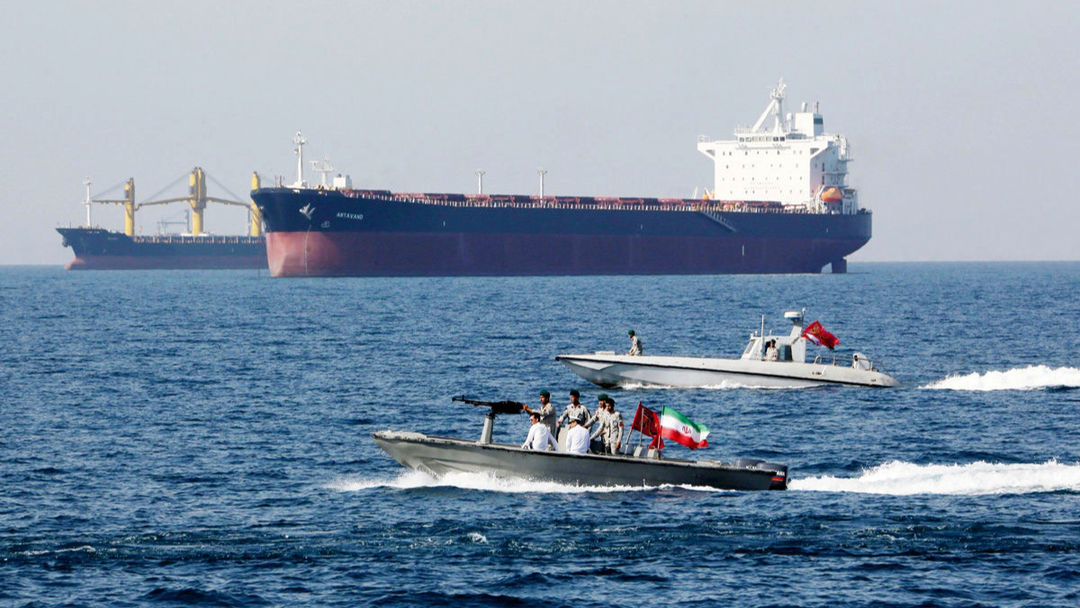
Calls grow in Iran for restricting Germany’s trade activity in Hormuz Strait https://t.co/Lka7xawEOV
— Press TV 🔻 (@PressTV) July 15, 2025
A similar spin was used by German foreign minister Johann Wadephul, who accused Iran of crossing "red lines" by refusing to negotiate with Washington, completely ignoring the fact that the Israeli aggression against Iran took place two days ahead of the sixth round of Iran-US talks in Muscat.
In recent days, Germany has joined the United Kingdom and France in threatening to trigger UN snapback sanctions if Iran does not reach a deal with the US before the end of August.
Berlin has also made unfounded accusations against Tehran of allegedly spying on Jewish locations and individuals in the German capital, for which a Danish citizen of Afghan origin was arrested.
The Iranian diplomatic mission in Berlin said these baseless and dangerous claims appeared to be part of a "targeted campaign to distract public opinion" from the Zionist regime's recent acts of aggression.
Masks have fallen
The German government's stance on Israeli aggression stands in stark contrast to its usual rhetoric about “respecting international law” and its position on other global issues, such as the protracted war in Ukraine.
This newly hostile posture, uncharacteristic even within Germany’s traditional diplomatic framework, may signal a shift in tone, though not necessarily in the substance of its long-standing foreign policy toward Iran.
It could be said that the masks have finally fallen: Germany, abandoning hollow and contradictory rhetoric, has revealed its true position toward the Islamic Republic, something it has for decades tried to mask.
The 1979 Islamic Revolution, which overthrew the Western-backed Pahlavi monarchy and established the Islamic Republic under the leadership of Imam Khomeini, fundamentally reshaped Iran’s foreign relations with Germany and other US-aligned countries.
Germany, like the rest of the so-called “collective West,” viewed the new political system in the Islamic Republic as problematic, primarily because it could no longer exert influence over Iran’s foreign policy or exploit its economic resources.
In contrast, Iran did not perceive Germany as an adversary. With no historical animosity between the two nations, Tehran continued to advocate for constructive relations with Berlin.
Nevertheless, the bilateral relationship began to deteriorate, largely due to Germany’s hostile measures. For example, Germany refused to resume construction of the Bushehr nuclear power plant, a project originally begun in the 1970s, succumbing to American pressure.
By 1991, the German government had banned the export of various industrial and high-tech goods to Iran, including materials relevant to nuclear energy, thereby further entrenching its adversarial stance.
During the imposed war of the 1980s, West Germany played a key role in supplying technology to Iraq, notably contributing to Iraqi dictator Saddam Hussein’s chemical weapons program.
Iranian FM Abbas Araghchi dismissed Germany’s allegations regarding Iran’s nuclear program as fake news and baseless, reaffirming Tehran’s adherence to the NPT and its safeguards agreement with the IAEA.
— Press TV 🔻 (@PressTV) July 3, 2025
Follow Press TV on Telegram: https://t.co/B3zXG74hnU pic.twitter.com/9nGBGgubZP
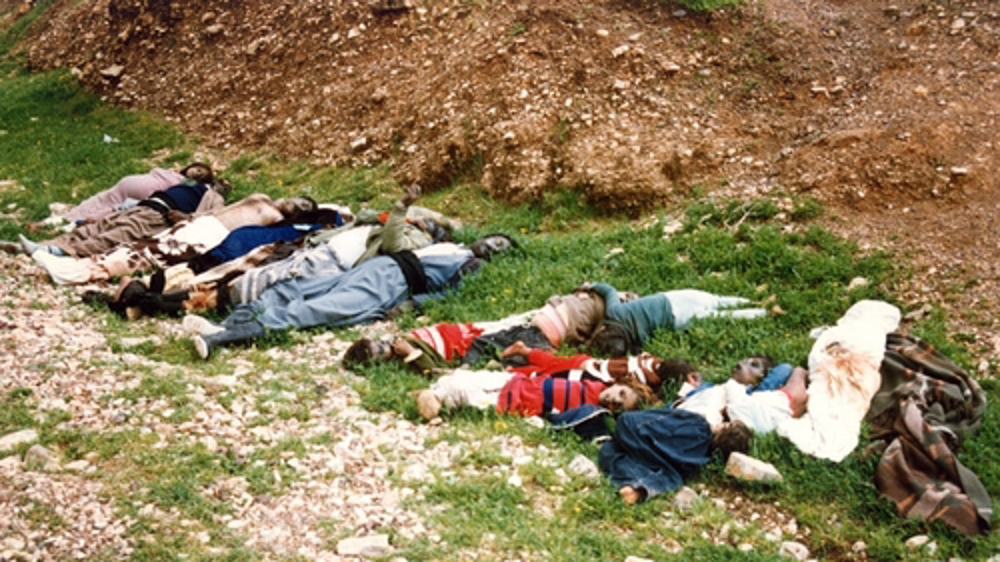
This support, including the export of dual-use technologies, was viewed by human rights campaigners as direct complicity in Iraq’s dastardly chemical attacks, which resulted in the death and injury of thousands of Iranian civilians and soldiers.
Ironically, while aiding Iraq’s development of weapons of mass destruction, Berlin justified the termination of its nuclear cooperation with Iran by citing concerns over potential proliferation and the alleged risk of Iran developing nuclear weapons.
Throughout that period, Germany also became a safe haven for anti-Iranian terrorists and separatist groups, many of whose members were granted asylum and allowed free movement.
At the same time, German media increasingly ridiculed Iranian leaders and caricatured Iranian society, signaling a growing ideological hostility toward the Islamic Republic.
As the EU foreign policy became increasingly subordinated to US geopolitical interests, Germany’s hostile stance toward Iran also intensified.
Following the unilateral US withdrawal from the JCPOA in 2018 under President Donald Trump, German-Iranian trade plummeted, from €3.4 billion in 2017 to €1.8 billion in 2018, reflecting the effect of renewed US sanctions and political pressure.
Trade continued to decline in subsequent years. By 2022, Germany had canceled export guarantees for companies dealing with Iran, offering generic justifications often couched in clichés about supposed “human rights violations.”
The German offensive against Iran extended beyond the political and economic realms into the cultural sphere as well. After years of surveillance, harassment, and accusations of “extremism,” the Islamic Center Hamburg (IZH), one of the oldest and most prominent Shia Muslim institutions in Europe, was forcibly shut down in 2024.
During this period, German media have become one of the most consistently hostile toward Iran, with reporting that is overwhelmingly biased, politicized, or outright disinformation. Objective or balanced coverage is virtually nonexistent, and narratives are often framed to stoke public hostility and promote intolerance.
A striking example of this came last year, when German politicians and media misrepresented the case of Jamshid Sharmahd, a dual national convicted and executed in Iran for orchestrating a terrorist attack that killed 14 people, portraying him as an “innocent” victim of injustice.
Sharmahd had lived freely in Germany for years while running a website openly claiming responsibility for attacks on Iranian civilians, without any intervention by German authorities.
In recent years, anti-Iranian demonstrations, often led by terrorist-affiliated or separatist groups, have become increasingly common in German cities. These rallies frequently call for violent “regime change” in Iran, echoing the most extreme fringe rhetoric.
What was once confined to the margins of street politics has now become official policy in Berlin, embodied in the openly hostile stance of Chancellor Merz.
German appeals court acquits Instagram user who compared Israel’s actions to Nazi regime
German arms exports to Israel surge sharply amid Gaza genocide
Germany represses dissent



US Army depletes long-range missile stockpile in war of aggression against Iran: Report
Iran-Oman Hormuz corridor talks progress despite US obstruction, source tells Press TV
Iraq’s PMU mobilizes massive security force for Arbaeen procession
VIDEO | Anti-Trump protests sparked Flamingo Revolution in Albania
Millions of Iranians mark Arbaeen, call for vengeance for martyred Leader
Israeli settler detained for alleged espionage for Iranian intelligence agencies
South Korean police detain students after protest at US air base
British academic and Press TV co-host David Miller wins landmark appeal in anti-Zionism case


 PressTV NEWSLETTER
now
PressTV NEWSLETTER
now
 This makes it easy to access the Press TV website
