Explainer: How US Congress is targeting pro-Palestine campus activism through federal funding restrictions
By Ali Zeraatpisheh
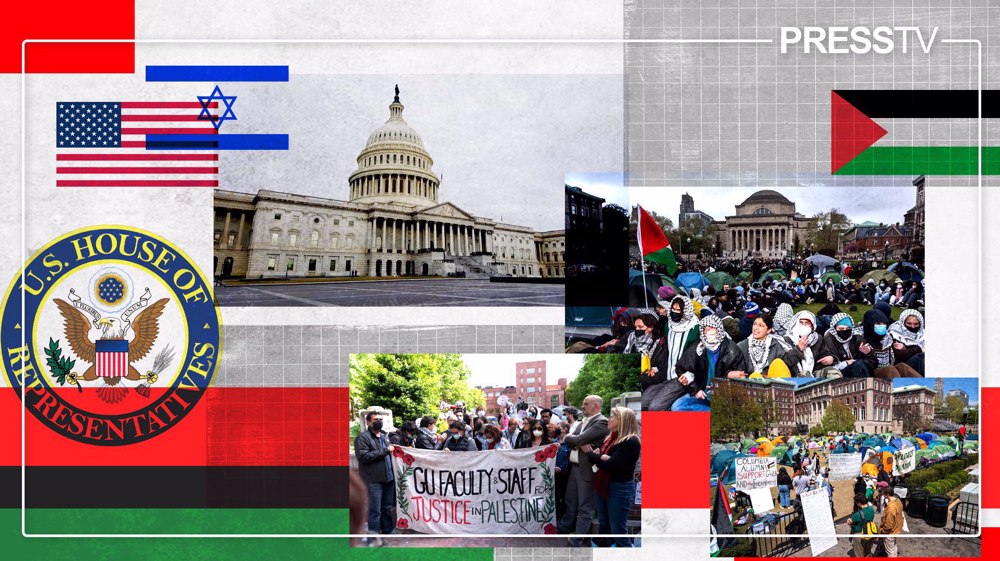
On September 3, 2026, the US House of Representatives passed H.R. 4795, the Protect Economic and Academic Freedom Act of 2026, by a vote of 237–169.
Republican Representative Virginia Foxx introduced the measure, with Democratic Representative Josh Gottheimer as its sole cosponsor. The House Education and the Workforce Committee reported the bill, as amended, on August 27.
The legislation would make institutions of higher education that participate in federal student-aid programs ineligible for certain federal funds if they engage in what the bill defines as a “nonexpressive commercial boycott” of Israel.
Under the bill, such a boycott involves commercial action intended to limit business relations with Israel or with an entity organized under, licensed by, or regulated by Israeli law, when that action is not based on a valid business reason.
The potential penalty is significant. An institution that violates the provision could become ineligible for certain federal student-aid funds under the Higher Education Act, including programs providing Pell Grants and federal student loans.
The legislation would also impose new certification requirements on institutions receiving or seeking certain Title VI funding for international education programs.
Those institutions would have to certify that students and faculty are not unreasonably obstructed from participating in academic programs in the Israeli-occupied territories and that Israeli students and faculty are given comparable access to their programs.
The House vote reflected bipartisan support for the measure: 203 Republicans and 34 Democrats voted in favor, while 169 members voted against it.
In practical terms, the bill would condition access to certain federal education funding on whether participating universities engage in specified commercial boycotts of the Israeli regime and, in some cases, on their treatment of academic exchanges involving Israel.
The measure has passed the House but has not become law. It was subsequently received in the Senate and referred to the Senate Committee on Health, Education, Labor, and Pensions.
Why is Israel at the center of the fight?
The political battle over H.R. 4795 cannot be separated from Israel’s devastating genocidal assault on Gaza, which has produced mass Palestinian casualties, enormous destruction, and findings by international bodies of grave violations of international law.
As of June 17, 2026, the Palestinian Ministry of Health in Gaza had reported more than 74,000 Palestinians killed and 174,000 wounded since October 7, 2023.
The destruction extends far beyond the death toll. A joint assessment by the United Nations, World Bank, and European Union, cited by the United Nations Office for the Coordination of Humanitarian Affairs (OCHA), found that 76.6 percent of Gaza’s housing units had been destroyed or damaged.
OCHA also reported that approximately 93 percent of Gaza’s school buildings would require full reconstruction or major rehabilitation, while more than 63 university buildings had been destroyed.
The UN Independent International Commission of Inquiry has used the strongest possible legal language in describing Israel’s conduct. On September 16, 2025, it concluded that the regime had committed four genocidal acts in Gaza and that Israeli authorities and military forces possessed the specific intent required under the Genocide Convention.
The International Criminal Court (ICC) has also taken action. On November 21, 2024, the ICC issued arrest warrants for Israeli regime premier Benjamin Netanyahu and former war minister Yoav Gallant. The Court said there were reasonable grounds to believe that they were responsible for the war crime of starvation as a method of warfare, as well as crimes against humanity including murder, persecution, and other inhumane acts.
These findings help explain why boycotts and divestment have become central to political debates on US campuses. Students and faculty have sought to sever university ties with Israeli institutions and companies as a means of pressuring Israel to end its genocidal war on Gaza.
That is where H.R. 4795 enters the picture. The bill would make institutional economic pressure on Israel financially risky for American universities.
Observers therefore view the legislation not as an isolated dispute over university business practices, but as an effort to shield the genocidal Israeli regime from one of the few forms of peaceful economic pressure available to US institutions.

How could the bill affect free speech and academic freedom?
The bill would use access to federal education funding to influence how American universities engage with the Israeli regime and its institutions, giving Washington significant leverage over institutional decisions involving a highly contested foreign-policy issue.
A university could put its federal student-aid funding at risk by deciding to end certain commercial relationships with the Israeli regime or Israeli entities.
For universities that depend on federal programs, the threat would be more than symbolic. It would create a direct financial consequence for taking a position that the federal government rejects.
Representative Jerrold Nadler, who has said he strongly opposes the Boycott, Divestment and Sanctions movement (BDS), announced on September 2, 2026, that he would vote against H.R. 4795. He called the measure a “direct and gross violation of the First Amendment,” arguing that constitutional protections do not disappear simply because the government strongly disagrees with a political position.
The constitutional issue is significant. In NAACP v. Claiborne Hardware Co. (1982), the US Supreme Court held that nonviolent elements of a politically motivated boycott were protected by the First Amendment.
The case arose from a boycott organized by Black Americans seeking racial equality. The Court recognized constitutional protection for speech, assembly, and efforts to persuade others to participate in the boycott.
H.R. 4795 does not, by itself, determine whether its provisions would survive a constitutional challenge. But by tying institutional conduct to access to federal funds, the bill creates a powerful point of financial pressure.
Washington would be attaching a potential financial cost to institutional decisions concerning Israel, while universities would have to weigh their political and ethical judgments against the risk of losing federal support.
The central constitutional question is therefore stark: How far can the federal government go in using the power of the purse to discourage peaceful political and economic pressure on Israel?
How much influence does the Israel lobby have in Washington?
The House vote also offers a window into the political machinery working to shape the US-Israel relationship in Washington. The American Israel Public Affairs Committee (AIPAC) openly states that it works to elect candidates who support Israel and to defeat lawmakers who oppose its policy goals.
Its political arm, AIPAC PAC, and its affiliated super PAC, United Democracy Project, have become significant forces in US elections. The sums involved are substantial. FactCheck.org reported on August 7, 2026, that United Democracy Project had raised approximately $104 million during the 2026 election cycle and spent about $52.5 million by June 30.
During the 2024 cycle, the super PAC spent approximately $61.4 million, including $34.8 million on efforts supporting or opposing Democratic House candidates.
The organization has also demonstrated a willingness to spend heavily against lawmakers who challenge US policy toward the Israeli regime.
In the 2026 Republican primary in Kentucky, United Democracy Project spent more than $3 million opposing Representative Thomas Massie, one of Congress’s most outspoken critics of US support for the Israeli genocidal regime.
The super PAC also spent nearly $500,000 supporting his opponent, Ed Gallrein. Pro-Israel groups spent more than $9 million in the primary, which FactCheck.org identified as the most expensive House primary in US history.
AIPAC’s own statements further demonstrate that its political activity extends directly into debates over US government policy. In February 2026, the organization praised Congress for providing more than $4 billion in US-Israel military assistance, including $3.3 billion in annual assistance and $500 million for missile cooperation. AIPAC said it had worked with pro-Israel lawmakers to secure the funding for the child-murdering regime.
On July 15, 2026, AIPAC again praised the House after it rejected an amendment by Massie that would have removed the $3.3 billion security-assistance package.
The organization expressed gratitude to the 314 Republicans and Democrats who voted against the amendment and pledged to continue working to elect lawmakers who support Israel.
TrackAIPAC reported that more than $83 million in spending by AIPAC and other Israel-lobby groups had been used to support the 33 House Democrats who voted for H.R. 4795.
Taken together, these figures document an extensive pro-Israel political network spending tens of millions of dollars to influence congressional races, support aligned candidates, and oppose lawmakers who challenge aspects of US policy toward Israel.

What does the bill mean for Palestine and Gaza?
The connection to Palestine is direct. H.R. 4795 targets university boycotts of Israel, and such campaigns have become a major part of the US campus movement over Israel’s genocidal actions in Gaza and the occupied West Bank.
Following the October 7, 2023 Hamas-led resistance movement and Israel’s subsequent genocidal war, students and faculty at universities across the United States demanded divestment from companies linked to Israel and an end to institutional ties with Israeli organizations.
Reuters reported in April 2024 that protesters at Columbia, Yale, NYU, and other universities were calling for divestment as part of the broader campus movement over the war in Gaza.
The House debate itself made the connection explicit. Republican lawmakers argued that “after October 7, universities have become the epicenters of these campaigns,” and said H.R. 4795 was intended to stop BDS activity.
The Congressional Record likewise states that the bill would establish federal requirements aimed at preventing universities from adopting such boycott policies in the future.
The timing is significant: as Palestinian rights and Israel’s genocidal conduct in Gaza have become major issues on US campuses, Congress has moved to make institutional economic pressure on Israel financially consequential for universities.
What happens to American universities now?
The bill has passed the House, but it has not become law. The Senate received H.R. 4795 on September 14, 2026, and referred it to the Senate Health, Education, Labor, and Pensions Committee.
As of September 25, the committee listed September 14 as the bill’s latest action, with no subsequent vote recorded. If enacted, the measure would give the federal government greater leverage over universities that receive federal education support.
Institutions could risk their eligibility for federal student-aid programs if they engaged in the commercial boycotts covered by the bill. That would transform a dispute over Israel and boycott policy into a direct financial question for American universities.
Institutions would have to weigh their academic, commercial, and ethical decisions against the possibility of losing federal support. The stakes could be particularly significant for universities that rely heavily on federal student aid to support large numbers of students.
The measure could also have a chilling effect on American campuses. Universities might become more cautious about severing commercial or academic ties with Israeli institutions or businesses, not necessarily because their views had changed, but because the potential financial consequences had changed the calculus.
The bill would therefore give Washington a significant new mechanism for influencing university policy on the Israeli regime and its genocide of Palestinians.
Rather than leaving such decisions solely to individual institutions, Congress would make access to federal education funding part of the pressure.
Press TV’s website can also be accessed at the following alternate addresses:

Why Oct. 7 cannot be divorced from decades of occupation, subjugation, dispossession of Palestinians
Netanyahu begs UAE leader to publicly deny warning of Al-Aqsa Flood operation: Report

Israeli minister calls for taking away hope of rebuilding Gaza to push Palestinians out



 This makes it easy to access the Press TV website