313,000-strong ‘Jan-Fada’ drill signifies Iran’s popular mobilization and social readiness amid war
By Maryam Bashirpour
On the morning of Friday, September 18, 2026, Tehran awoke to stunning scenes as hundreds of thousands of people took to the streets to reaffirm their solidarity with the country’s leadership and armed forces amid the US military and economic terrorism.
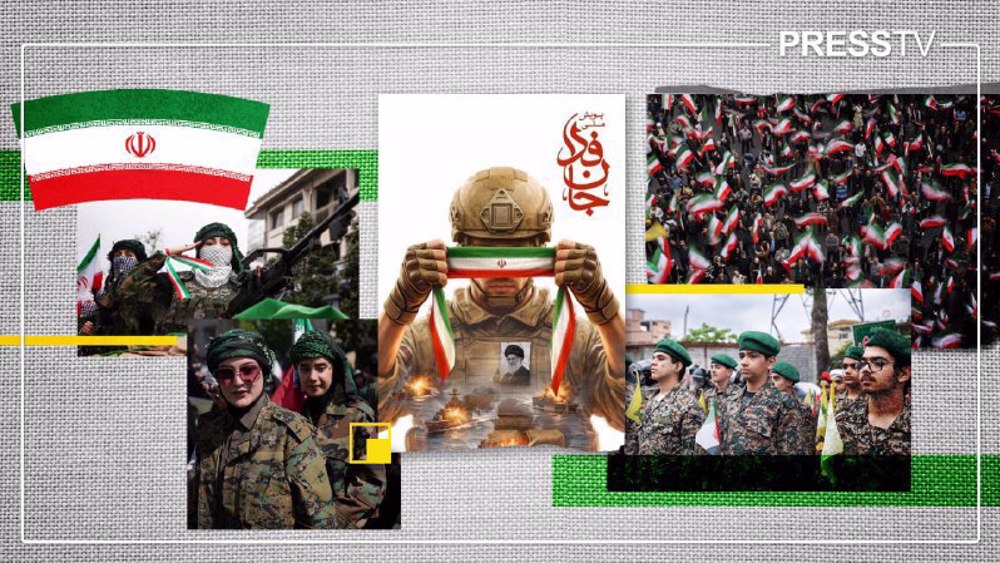
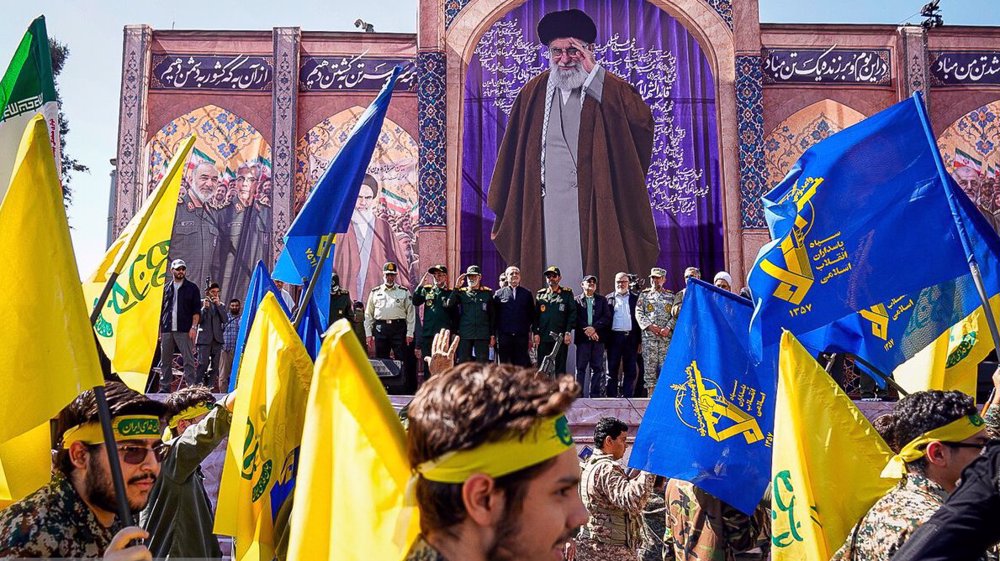
It was not yet 8 a.m. when the capital’s streets – from Imam Hossein Square to the iconic Enghelab Square – were already filled with a sea of people dressed in combat uniforms, alongside members of the popular “Jan-Fada” (“Sacrifice for Iran”) campaign, making their way toward Enghelab Square.
The drill, scheduled to begin at 8 a.m., had effectively started hours earlier, as Jan-Fada participants began arriving along the route the previous night.
The scene was more than a military parade. It was a vivid display of social readiness and the determination of a nation that has been reeling under the third imposed war since February.
What is “Jan-Fada” and where did it come from?
The national “Jan-Faday-e Iran” — or “Jan-Fada” for short — campaign was launched in Farvardin 1405 [March-April 2026], about a month after the war of aggression by the US-Israeli war machine against the Islamic Republic of Iran.
What distinguishes the campaign from any conventional military mobilization is its spontaneous nature. No institution created Jan-Fada from above; the campaign emerged from the awareness, zeal and resourcefulness of people from different walks of life.
The figures speak for themselves. By Shahrivar 1405 [August-September 2026], more than 31 million people – out of Iran’s population of around 90 million – had registered for the campaign that has grown increasingly popular since the 40-day war.
Sasan Zare, spokesman for the popular headquarters of the “Jan-Fada” campaign, referring to this unprecedented participation, announced: “The registration of 31 million people in the Jan-Fada campaign clearly shows that the people are the main pillar of national security.”
More importantly, the campaign is not solely military. Registrants can operate in several other areas, including wartime support, relief and rescue, deprivation alleviation and defense.
This multilayered structure has turned the Jan-Fada campaign into a comprehensive mechanism for wartime social participation that, beyond military preparedness, also encompasses the capacity to provide services in civilian fields.
The latest drill – a field account
The 313,000-strong “Jan-Faday-e Iran” drill this week, held under the code “Labbaik Ya Khamenei” and commanded by Brigadier General Hassan Hassan-Zadeh, commander of the Islamic Revolution Guards Corps’ (IRGC) Greater Tehran Muhammad Rasulullah Corps, was held in Tehran and simultaneously across the country.
The massive parade route ran from Imam Hossein Square and the intersection of Navvab Expressway toward Enghelab Square and continued until evening, even as US regime officials continued to engage in war-mongering rhetoric against Iran.
The composition of the participants presented a picture of a nation in its entirety: doctors and seminarians, shopkeepers and workers, artists and athletes, veterans of the eight-year Sacred Defense, and even brides and grooms who began the first day of their married lives by taking part in the drill.
Among the 31 million registrants, 32 percent were women, while groups of armed women wearing chadors and various forms of dress also took part in the Tehran drill.
On the sidelines of the drill, two defense achievements were also unveiled: the Fateh unmanned surface vessel and the Shahid Hemmati guidance system. A flight team of paragliding and paramotor pilots from the security unit of the IRGC’s Muhammad Rasulullah Corps also participated in the drill.
Why is this drill important – Strategic analysis
Hossein Taeb, commander of the Basij Organization, stated explicitly during the drill: “Today, the Jan-Fadayans are the nightmare of the enemies of this land and soil. The Jan-Fadayans are symbols of the national resistance battalions and this country’s progress.”
“The Jan-Fada campaign is the largest popular campaign in the history of the world’s wars. Nowhere can you find a nation that in the past has declared its presence in this way and eagerly and imploringly announced in the country’s arenas: We are ready for whatever front the country needs,” he hastened to add.
Mohammad Esmail Kowsari, a member of the Parliament’s National Security and Foreign Policy Commission, also emphasized the importance of the campaign.
“This epic presence showed that the country’s defense capability is not limited merely to the front lines of the armed forces, but has multiple popular layers that, with divine and national motivation, thwart any threat and aggression by the enemy,” he said.
This concept of “multilayered defense” — a combination of the regular army, the IRGC and the popular layer of Jan-Fadayans — has become a strategic principle in Iran’s defense doctrine.
Brigadier General Hassan-Zadeh said before the drill that its objective was to “counter the propaganda and media operations of the enemies of the Islamic Republic.”
In the months leading up to the drill, the Iranian people had been present in squares and streets for more than 200 nights, a presence that Kowsari described as “disrupting all the analyses, assessments and calculations of the enemy’s think tanks.”
The 313,000-person drill was the culmination of this 200-night path.
The number 313 is not accidental. The 313,000 people taking part in the Tehran drill is a direct reference to the number of Imam Mahdi’s (AS) companions in Islamic narrations, the same 313 people who are identified in Shiite texts as the supporters of the Imam of the Age.
The number creates a deep link between religious faith and military preparedness, a connection deeply rooted in Shiite political culture. Taeb said in this regard: “If a nation stands with faith, God will open the path of guidance and the conquest of the peaks. Jan-Fada is an embodiment of the verse, ‘The people strove and God granted them victory.’”

Voices from the field — the human dimension
Beyond the figures and strategic analyses, the Jan-Fada drill had a profound human dimension that is less visible in mainstream news reports.
One participant, a young doctor from Tehran, said on the sidelines of the drill: “Janam fada-ye Iran means considering Iran as one’s own; working to build it in times of peace and standing for its security and dignity in times of danger.”
Fatemeh Mohajerani, government spokeswoman, wrote in a note about the event: “Defending Iran is a national responsibility that is not limited to any particular group, current, taste or tendency. Iran’s most important security support is the people who, despite differences in views, lifestyles and political choices, stand together at the moment of defending their homeland.”
The overwhelming presence of women in the drill also carried a particular meaning. Among the 31 million registrants, nearly one-third were women, participation showing that, in the Jan-Fada discourse, defending the country is not a gender-based responsibility.
One of the drill’s enduring images was the presence of veterans of the eight-year Sacred Defense alongside young people born in the years after the war, a generational bond that narrated the continuation of the spirit of resistance.
The 313,000-person Jan-Fadayans of Iran drill was more than a display of power. The drill showed that defense in the Islamic Republic of Iran is not limited to barracks and military equipment; there is an endless popular layer that disrupts every calculation by the enemy.
The message of this event to the world is clear: Any military calculation against Iran that fails to take into account these tens of millions of Jan-Fadayans – men and women who are prepared to sacrifice their lives for their homeland – will be incomplete and doomed to failure.
Taeb expressed this message explicitly at the end of his remarks: “When the enemy sees that our nation has tens of millions of Jan-Fadayans, this is when fear takes over his body and he accepts defeat, both in his mindset and in reality.”
The resistance of the Iranian people is the compass guiding the decisions and actions of the country’s officials, as well as the factor behind the enemy’s fear and the nation’s victory.
What happened on September 18, 2026, in the streets of Tehran was not a fleeting parade, but the declaration of a nation’s existence- a nation that, after 200 nights of standing firm, did not bend under maximum pressure; rather had 313,000 people in the streets saying Iran is our home, and we will stand for it under any circumstances.
Maryam Bashirpour is a university researcher and writer based in Tehran.
(The views expressed in this article do not necessarily reflect those of Press TV)
Press TV’s website can also be accessed at the following alternate addresses:

Iran’s Tabas UNESCO Global Geopark wins top two prizes in international competition
Discover Iran: Tabriz’s extraordinary architectural legacy through royal palaces, merchant mansions
Discover Iran: Tabriz’s ‘Mausoleum of Poets,’ where centuries of Persian literary history live on



 This makes it easy to access the Press TV website