Stories Beyond Numbers: Grief-stricken Iranian mother killed months after losing family in US-Israeli bombing
By Humaira Ahad
Standing atop the ruins of what had once been her family home, Seyedeh Elham Sadeghi clutched a piece of paper that rescuers had recovered from the debris. The note had belonged to one of her children.
As she read its contents, her voice broke, and tears streamed down her face. Around her lay shattered concrete, twisted steel and the remnants of a life that had disappeared in the early hours of March 26, when an Israeli-American attack struck the Hafton neighborhood of Isfahan, a city in central Iran otherwise known for historical palaces and iconic bridges.
The video spread rapidly across social media, drawing an outpouring of sympathy from viewers across Iran. Many saw in the 31-year-old mother a symbol of the suffering endured by Iranians caught in the US-Israeli war of aggression against the Islamic Republic.
Less than three months later, Sadeghi herself would be gone.
After surviving seven hours beneath the rubble, enduring severe injuries and undergoing months of medical treatment, she died months later after “an overwhelming period of grief” resulting from the deaths of her husband and two young sons.
Her story has become one of the most heartbreaking accounts to emerge from the US-Israeli attacks, illustrating how their consequences continued long after the aggression ended.
Iranian mother dies of broken heart weeks after losing family in US-Israeli strike
— Press TV 🔻 (@PressTV) June 22, 2026
Follow: https://t.co/mLGcUTS2ei pic.twitter.com/bRLvKezobx
A family destroyed before dawn
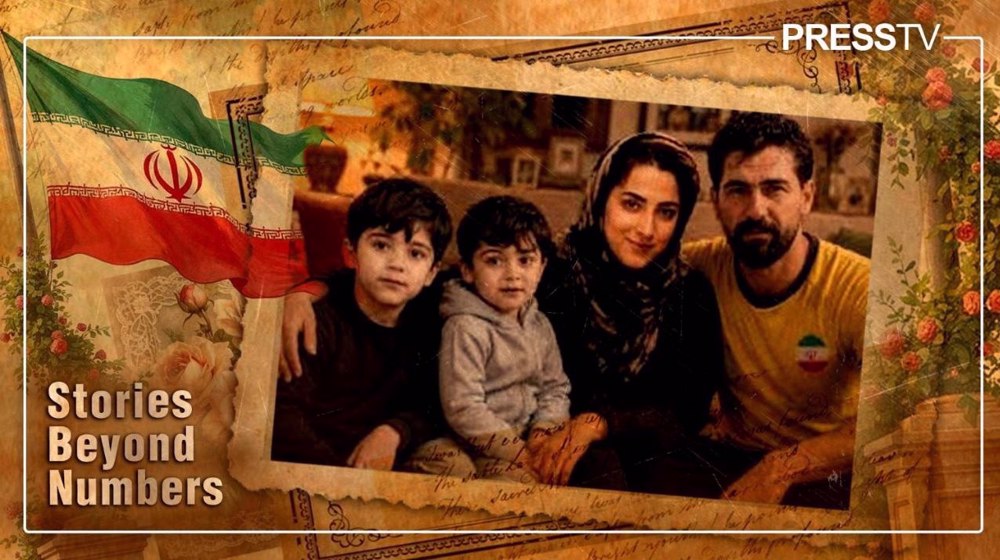
In the early hours of March 26, residents of Meraj 7th Street were asleep when explosions ripped through the neighborhood. Among the homes struck by the US-Israeli airstrike was that of Hossein Maleki, a well-known footballer in Isfahan, and Sadeghi’s husband.
Within moments, the house collapsed. Maleki and the couple's children, Shahin and Shahan, aged just 5 and 3, were killed beneath the debris. Sadeghi miraculously survived.
“On March 26, their home on Meraj 7th Street was bombed. In that incident, about nine houses were completely destroyed, and 24 people lost their lives. Among the martyrs, three were from our family, my son-in-law Hossein Maleki and my two dear grandchildren," Sadeghi’s father recalled in an interview with an Iranian news channel.
The attack destroyed multiple households in the area. Among those killed were Morteza Mahdour and nine members of his family.
Maleki and Mahdour were both respected figures in local football circles. Together, they had founded Celtic Hafton, a grassroots football club inspired by Scotland's Celtic FC. Locals say that the club helped identify and nurture young talent from neighborhoods across the region.
Footage documents the aftermath of the US-Israeli airstrike that targeted a residential building in the Iranian city of Isfahan, claiming the lives of 26 residents, including 7 women and 7 children.
— Press TV 🔻 (@PressTV) March 27, 2026
Follow Press TV on Telegram: https://t.co/LWoNSpkc2J pic.twitter.com/VrG1z6E2oa
Seven hours under the rubble
As rescue crews searched through the rubble of buildings, uncertainty hung over the site.
"One of my grandchildren was 5 years old, and the other was only 3. When the incident happened, rescue teams, the Red Crescent, firefighters, municipality workers, and military forces worked for hours to pull people out from under the rubble. Many victims were found when they had already lost their lives," Sadeghi’s father said.
For seven hours, Sadeghi remained trapped beneath the wreckage. According to her father, a chance circumstance ultimately saved her life.
"About seven hours later, Elham was pulled out from under the rubble. A sofa had fallen on her head, and that same sofa prevented the rubble from directly hitting her head and saved her life. But much of her body had been under heavy pressure. Her right hand and both legs were severely injured."
The young woman was transferred to a medical facility, where doctors began treating her extensive injuries.

Burden of survival
Family members say the weeks that followed the US-Israeli attack on Sadeghi’s house were marked by physical recovery and profound emotional trauma.
"We were engaged in treatment for more than two and a half months. We constantly took her to the hospital, and she was under care, but she had not fully recovered. She endured physical pain, but the pain of losing her husband and two children was something else entirely," her father explained.
Relatives describe the young woman struggling to come to terms with the loss of her family.
“The home where she had raised her children was gone. Her husband was gone. The routines that had defined her daily life disappeared overnight,” one of Sadeghi’s relatives said.
According to her father, the emotional toll became increasingly apparent in the weeks that followed as the mother was finding it difficult to adjust to the new reality.
"After the bombing, Elham no longer had a home, had lost her husband, and missed her children. From that day on, she was never the same person again. In the end, she suffered a stroke from the intensity of grief and joined her loved ones."
Note from rubble
One image, in particular, came to define Sadeghi's loss: a video showing her holding and reading a handwritten note by her son that had been found beneath the rubble.
Sadeghi’s father said the note was written by his grandson before the incident.
"After the bombing, part of it was found under the rubble. When Elham read it, she became very distressed. That note was a memory from days when her family was still with her."

Before the attack, Sadeghi was known among relatives as energetic and devoted to her family.
Her father remembers a daughter who balanced work and motherhood while maintaining close relationships with those around her.
"My daughter was a chemical engineer. She produced cleaning materials at home and sold them. She was very active, but at the same time very attached to her family. She was always a “daddy’s girl.” I have other children too, but Elham was different to me and I loved her in a special way."
In the weeks that followed the US-Israeli attack, relatives said Sadeghi rarely resembled the energetic young mother they had known before.
Her father described a woman overwhelmed by grief. Recalling her final days, he said Elham’s mental condition was not good and she mostly stayed in her room with the door shut.
"She did not talk to anyone. She could not tolerate noise. Even the sound of the phone ringing or the television being on upset her. She constantly talked about her children and her husband and was always missing them," he said.
While Sadeghi continued to receive treatment for the injuries she sustained in the attack, her pain of losing her husband and two young sons appeared to weigh more heavily on her.
The Iranian Red Crescent Society published "War Crime Document No. 4," showing damaged interiors of Tehran's Gandhi Hospital which was struck during US and Israeli airstrikes on Iran. pic.twitter.com/G7NhpckRxk
— Press TV 🔻 (@PressTV) April 18, 2026
"After that incident, Elham was no longer living; she was only breathing. Her heart remained with her children and husband, and in the end, she could not endure their absence and passed away," her father says of her final weeks.
Her death came as Iran continues to assess the human cost of the US-Israeli war. According to the country's forensic authority, at least 3,375 people, including hundreds of children, were killed during the 40 days of aggression.
The victims include more than 160 children who were killed in the US-Israeli bombing of the Shajareh Tayyebeh elementary school in the southern city of Minab.
Sadeghi's story, however, unfolded long after the attack that destroyed her home, a reminder that some of the imposed war's victims survived the initial bombing only to face its consequences in the weeks and months that followed.
Press TV’s website can also be accessed at the following alternate addresses:
If Iran’s oil sales and security are not guaranteed, neither are anyone else’s: Parliament speaker
America hiding true casualties of wars on Iran: Senior Army commander
New front will open if Iran is attacked again, Leader’s advisor warns



 This makes it easy to access the Press TV website