Iran ready for diplomacy to end war, but will uphold national rights, Pezeshkian tells Macron

President Masoud Pezeshkian of Iran has told his French counterpart Emmanuel Macron that the Islamic Republic is ready to pursue in earnest diplomatic channels to end the war, but insists on securing the rights of the Iranian nation.
The Iranian president also reaffirmed Tehran’s deep distrust of the White House due to Washington’s invariable acts of aggression during negotiations.
In a telephone conversation on Wednesday, the two presidents reviewed the strategic situation in the region, notably the issue of the Strait of Hormuz and the progress of a temporary ceasefire agreement and ongoing talks between Iran and the United States, according to a readout from the Iranian presidency.
“The Islamic Republic of Iran, within the framework of international law, is ready to seriously pursue diplomatic paths to end the war, while emphasizing the realization of the rights of the Iranian nation,” Pezeshkian said.
Iran's President Pezeshkian holds a phone conversation with French President Macron to discuss the latest regional developments, Iran-US negotiations, and the status of the Strait of Hormuz. pic.twitter.com/TRX9hGvyb4
— Press TV 🔻 (@PressTV) May 6, 2026
Distrust of US rooted in ‘stabbing from behind’
On Tehran’s mistrust of Washington, Pezeshkian said it stems from hostile actions by the American side.
“This distrust is the result of hostile acts by the American side, the latest of which were two attacks on our country during negotiations, effectively stabbing us in the back.”
The United States and Israel launched their illegal, unprovoked war of aggression against Iran on February 28, in the middle of nuclear negotiations. They assassinated the Leader of the Islamic Revolution, Ayatollah Seyyed Ali Khamenei, and several other senior officials and commanders.
The United States and Israel have also bombarded civilian infrastructure, schools, and hospitals across Iran.
The presidents of Iran and France also exchanged views on the situation in the Strait of Hormuz, a critical waterway Iran has placed under tight control since the war began.
As a sovereign right, Iran has imposed a new maritime transit mechanism that requires all vessels to obtain permission before passing.
The phone conversation also touched on the initial ceasefire agreement and the mediation efforts led by Pakistan.
A fragile truce has been in place since early April, but indirect talks between Tehran and Washington have stalled, with Iran accusing the US of violating the ceasefire through a naval blockade and threats.
France has been one of the European countries maintaining diplomatic channels with Tehran throughout the war, and Macron has previously spoken with Pezeshkian in March.
Indirect talks have failed to produce a breakthrough, with Iran demanding the lifting of the illegal blockade, an end to the war, and compensation for damages.
Press TV’s website can also be accessed at the following alternate addresses:
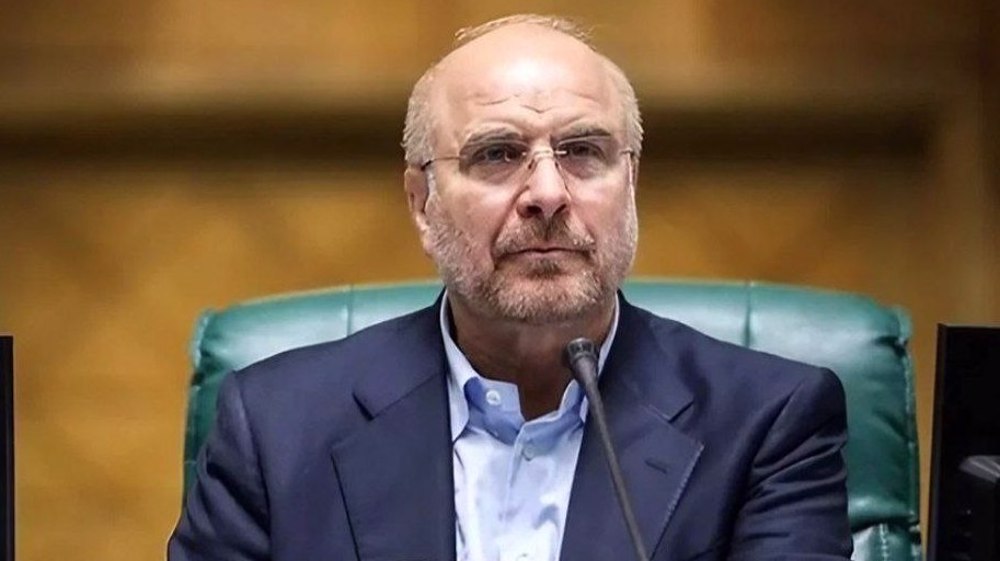
Iran's parl. speaker calls US media's bluff about pending arrangement with Tehran

Iran rejects ‘flawed’ US resolution on Hormuz, says only viable solution is end of war

Victory in current war will turn Iran into global powerhouse: Speaker



 This makes it easy to access the Press TV website