Iran summons EU ambassadors over ‘provocative’ IRGC designation
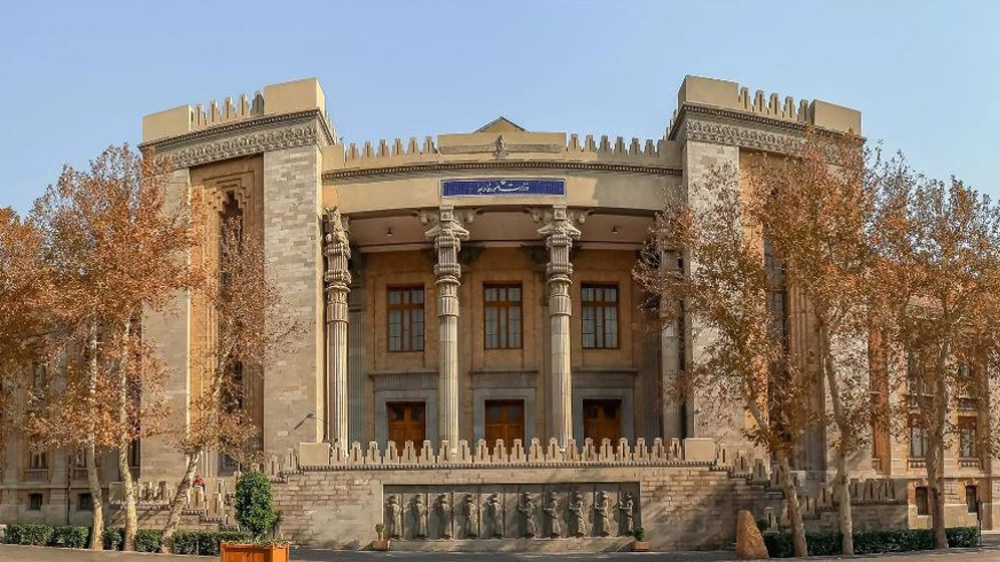
Iran’s Foreign Ministry has summoned ambassadors of European Union member states in protest against a recent EU resolution against the Islamic Revolutionary Guards Corps (IRGC).
The ambassadors were summoned by the Deputy Foreign Minister for Political Affairs and relevant directors-general, during which Iran conveyed its strong protest against "provocative" actions by the European Union, according to a Tuesday statement by the ministry.
The European Union's foreign ministers, in a hostile action on Thursday, announced their agreement to place the IRGC on the list of so-called terrorist organizations of the 27-member political and economic bloc.
Tehran has repeatedly highlighted the IRGC's decisive contribution to defeating terrorism in the region.
During the meetings with European diplomats, the Iranian Foreign Ministry officials strongly condemned the EU decision as "unjustified and irresponsible," stressing that the move constitutes a clear violation of the fundamental principles of the United Nations Charter and international law, particularly respect for national sovereignty and non-interference in the internal affairs of states.
The ministry officials slammed the designation as a "strategic mistake" and an "unforgivable insult" to the Iranian nation.
Iran considers European armies as terrorist groups in retaliation for IRGC designation: Parliament speaker https://t.co/4setX7b58N
— Press TV 🔻 (@PressTV) February 1, 2026
The Foreign Ministry further criticized certain EU member states for "inappropriate and deceptive" positions on regional developments, including support for the genocide of Palestinians, endorsement of the Israeli regime’s military aggression against Iran, and backing terrorist riots against the Iranian people in January.
Iran said the European Union must be held accountable for the destructive and unlawful consequences of such policies.
Iranian officials also highlighted the mission and performance of the IRGC as a key defender of Iran’s national security and a leading force in combating Daesh terrorism.
They warned that the EU’s "illegal" resolution sets a "dangerous precedent" in international relations, undermines the rule of law, weakens international peace and security, and disrupts cooperation in counterterrorism efforts, adding that responsibility for the consequences would rest with European policymakers.
EU ambassadors, for their part, said they would convey Iran’s objections to their respective governments as soon as possible.

Separately on Tuesday, Foreign Ministry spokesperson Esmaeil Baghaei said during a radio program that the EU’s action was a political move aligned with hostile measures by the United States and Israel against Iran.
Baghaei noted that the summoning of ambassadors took place over the past two days.
He explained that around 20 EU member states maintain embassies in Tehran and that the diplomatic summons was aimed at protesting the decision adopted in Brussels.
Although the resolution carries no practical effect, it is “ugly, illegal, and unjustified,” said the spokesperson.
“Iran reacted to this action at all levels, and the Foreign Ministry issued a statement strongly condemning this action, because no country accepts that part of its armed forces be described with such inappropriate expressions,” he added.
Addressing questions about the impact on Iran–Europe relations, Baghaei said summoning ambassadors is a minimal diplomatic and legal step, typically accompanied by the submission of an official protest note to formally register opposition to an unlawful action.
He further said that additional measures are currently under review and will be announced once finalized.
Press TV’s website can also be accessed at the following alternate addresses:

World scholars, thinkers express support for Ayatollah Khamanei
Qatar: High-level dialogue with Iran ongoing to prevent regional escalation
Iran riots 2026: How the Erfan Soltani “execution” story went viral – and fell apart



 This makes it easy to access the Press TV website