

Every year on November 29, Iran marks Innovation and Technology Day, an occasion celebrating the country's phenomenal scientific achievements, technological advancements and growing innovation ecosystem despite decades of war and sanctions.
Beyond commemorating these achievements, the day also recognizes the researchers, university graduates, engineers, entrepreneurs, and knowledge-based companies striving to turn scientific discoveries into practical technologies and solutions that address the country's needs.
As technological capabilities become increasingly critical to economic competitiveness, national security, industrial development and public welfare, Iran's focus on indigenous innovation reflects a broader ambition to build an economy in which knowledge, research and technological creativity play a central role in shaping the country's future.
From pharmaceuticals and biotechnology to nanotechnology, aerospace, information technology, advanced manufacturing and artificial intelligence, Iranian scientists and technology companies are working to develop domestic capabilities in fields traditionally dominated by established international players.
These efforts are driven by a combination of scientific ambition, domestic demand, government policies and the practical need to reduce vulnerability to external economic and technological constraints.
Innovation and Technology Day thus serves a dual purpose: celebrating the achievements of Iranian researchers and enterprises while highlighting the challenges that remain in translating scientific potential into sustainable economic growth, globally competitive products and tangible improvements in people's lives.
From scientific achievement to technological independence
Iran's scientific and technological development has progressed considerably over recent decades. Universities, research institutions and technology centres have expanded their activities, producing a growing pool of graduates and specialists in engineering, medicine, natural sciences and emerging technological fields.
This expansion has helped lay the foundations for an innovation ecosystem that extends beyond traditional academic research. Increasingly, scientific knowledge is being translated into commercial applications through start-ups, technology incubators, science parks and knowledge-based enterprises.
An important milestone in this process was the introduction of the Law on Support for Knowledge-Based Companies and Institutions in 2010-2011.
The legislation established a framework for supporting businesses whose core activities involve developing and commercialising scientific and technological knowledge. It also helped strengthen ties between universities, research institutions and the private sector.
The subsequent establishment and development of the National Innovation Fund, alongside other financing and support mechanisms, created additional opportunities for technology-oriented enterprises to secure funding, develop products and bring innovations to market.
Another major policy milestone came with the 2022 Law on the Leap in Knowledge-Based Production, which sought to expand the role of knowledge-based companies in national production and encourage greater private-sector participation in technological development.
These legislative developments reflect an evolving approach to innovation policy, gradually shifting from predominantly government-led support towards greater collaboration between public institutions and private-sector actors.
This transition is significant because technological independence cannot be achieved simply by establishing research laboratories or increasing the number of scientific publications.
It requires an environment in which researchers can access funding, entrepreneurs can take commercial risks, businesses can scale up production, and industries and consumers can benefit from domestically developed technologies and solutions.
Iran's Innovation and Technology Day highlights precisely this link between scientific discovery and practical application.

A growing ecosystem of knowledge-based companies
One of the most visible features of Iran's innovation landscape is the expansion of knowledge-based companies. These enterprises are designed to turn specialised scientific expertise into marketable products, industrial technologies and services.
Unlike conventional businesses, knowledge-based companies generally depend on research, technological development and specialised human capital as the foundation of their activities.
Their work ranges from producing advanced medical equipment and pharmaceutical ingredients to developing industrial software, electronic systems, agricultural technologies and specialised materials.
The scale of this sector has grown considerably. In a statement presented to the United Nations Commission on Science and Technology for Development in April 2025, Iran's delegation reported that the country had more than 10,000 knowledge-based firms.
It also highlighted an increase of more than $500 million in knowledge-based product exports over the preceding five years.
Other figures published in 2025 put the combined annual revenue of these companies at approximately $18 billion, with employment reaching around half a million people.
These figures, which reflect reported domestic-sector estimates rather than independently audited international statistics, nevertheless illustrate the economic importance attributed to the industry.
The expansion of such businesses is particularly important for an economy seeking to diversify its production base.
By developing domestic products and services, these companies can help reduce reliance on imported technologies, create skilled employment and generate new sources of revenue.
They also offer an alternative career path for university graduates who might otherwise struggle to find opportunities matching their academic qualifications.
Instead of remaining exclusively within universities or research institutions, engineers, scientists and technology specialists can participate directly in product development, business creation and industrial innovation.
Technology parks, incubators and innovation centres have become important components of this process. They provide start-ups with access to laboratories, business advice, technical infrastructure, networking opportunities and, in some cases, financial support.
The development of these institutions has helped establish a more connected relationship between universities, entrepreneurs, investors and established industries.
Iran's technological achievements extend across several sectors, reflecting the country's efforts to develop expertise in areas with direct economic, industrial and social importance.

Biotechnology and pharmaceutical development
Healthcare is among the most important areas in which indigenous technological capabilities can make a direct difference to society.
Iranian researchers and pharmaceutical companies have invested in biotechnology, the production of specialised medicines, biological products, diagnostic technologies and medical equipment.
The development of domestic pharmaceutical capabilities is particularly significant because access to essential medicines and specialized medical supplies is a major concern for countries exposed to international trade restrictions.
Biotechnology has also opened opportunities in areas such as genetic research, cell-based technologies, vaccines, biosimilars and advanced therapeutic products.
The importance of this sector goes beyond reducing imports. A stronger domestic biomedical industry can support research institutions, improve the availability of specialised treatments, encourage collaboration between medical universities and manufacturers, and create opportunities for exporting pharmaceutical products.
Medical technology is another area where Iranian companies have sought to develop indigenous solutions.
Locally produced diagnostic equipment, laboratory systems and specialised medical devices demonstrate how engineering and scientific research can be applied to practical healthcare requirements.
Ultimately, the success of these initiatives is measured not simply by the number of products manufactured domestically, but also by their safety, effectiveness, affordability and ability to meet recognized international standards.
Nanotechnology and advanced materials
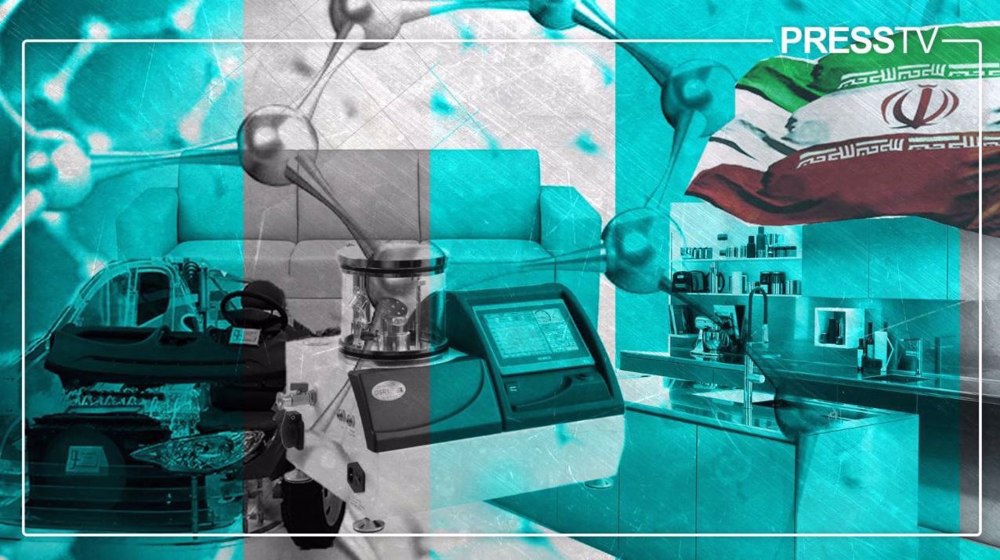
Nanotechnology has become another important component of Iran's scientific development. By working on materials at extremely small scales, researchers can create products with improved strength, durability, conductivity, filtration capacity and chemical properties.
These characteristics have applications in medicine, construction, energy, agriculture, electronics and environmental protection.
Iranian nanotechnology companies have worked on developing specialised coatings, advanced materials, industrial filters, nanocomposites and products designed to improve the performance of existing industrial processes.
The technology is particularly relevant to sectors where relatively small improvements in material efficiency can produce substantial economic benefits.
Better coatings can extend the service life of industrial equipment, while advanced filtration materials can improve water treatment and reduce environmental pollution.
In agriculture, nanotechnology-based products and smart monitoring systems also offer opportunities to improve the efficient use of fertilizers, water and other resources.
The wider significance of these developments lies in their ability to strengthen domestic manufacturing capabilities. Rather than relying entirely on imported specialized materials, Iranian industries can increasingly draw on local research and production.
Aerospace and satellite technologies
Aerospace research represents another prominent field of Iranian technological activity. The country's work in satellite development, space research, launch systems and remote-sensing technologies reflects an ambition to establish indigenous capabilities in a technically demanding industry.
Satellite technology has applications extending well beyond space exploration. Earth observation can support agricultural monitoring, environmental assessment, natural-disaster management, water-resource planning and urban development.
For a country facing challenges such as water scarcity, environmental degradation and increasingly unpredictable weather patterns, these applications can have considerable practical value.
Remote-sensing technologies, for example, can help monitor changes in agricultural land, identify environmental pressures and improve the management of natural resources.
Developing domestic expertise in these fields also strengthens the country's broader engineering and manufacturing base, creating opportunities in electronics, software, communications and advanced materials.
Artificial intelligence and digital technologies
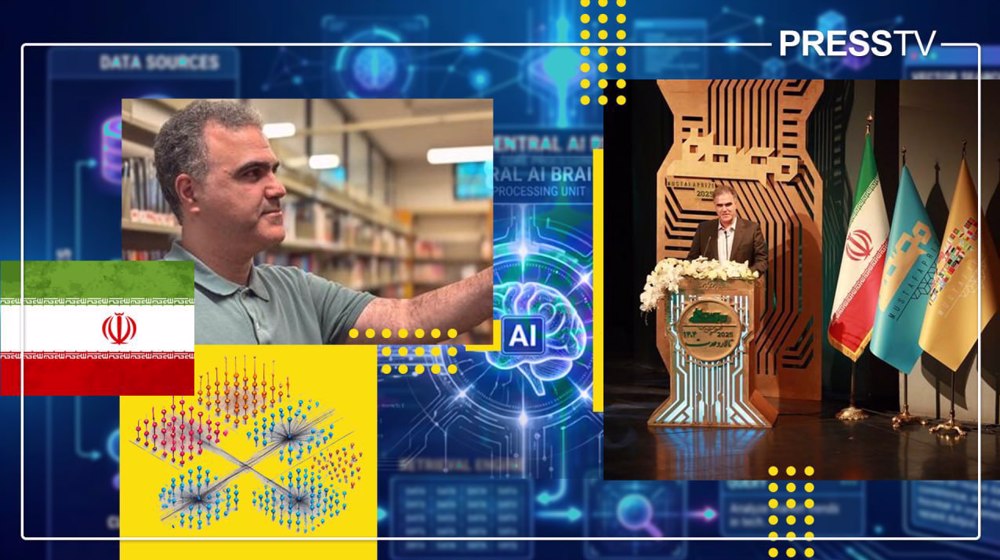
Artificial intelligence has emerged as one of the most consequential areas of technological competition worldwide, and Iran is seeking to expand its capabilities in this rapidly developing field.
The country's researchers and technology companies are exploring applications in machine learning, data analysis, natural-language processing, computer vision, automation and intelligent information systems.
These technologies have potential applications in healthcare, education, transportation, banking, manufacturing and public administration.
For example, AI-assisted diagnostic systems can help medical professionals analyse complex information, while intelligent agricultural platforms can support decisions about irrigation, crop monitoring and resource allocation.
In industrial settings, data-driven systems can improve maintenance planning, identify inefficiencies and support quality control.
The challenge is to develop reliable applications that respond to actual economic and social requirements rather than treating artificial intelligence simply as a fashionable technological label.
Successful development will require computing infrastructure, access to high-quality data, specialized talent, responsible governance and sustained investment in research.
Iran's efforts in this field also reflect a broader recognition that digital capabilities are no longer confined to the technology industry. They are becoming essential to the competitiveness of almost every economic sector.
Energy, agriculture and environmental technologies
Innovation is particularly important in addressing Iran's natural-resource and environmental challenges.
Water scarcity, energy consumption, air pollution and the need for more efficient agricultural production create strong incentives to develop technologies that can improve resource management.
Smart irrigation, precision agriculture, water-treatment systems, renewable-energy technologies and industrial efficiency solutions are among the areas in which scientific research can deliver practical benefits.
A statement delivered by Iran's delegation to the United Nations in 2025 highlighted the contribution of smart agricultural systems, reporting improvements of up to 30 percent in water efficiency in arid regions.
The statement also referred to the expansion of high-speed internet access in rural communities as a means of supporting digital entrepreneurship and economic participation.
These developments illustrate an important dimension of innovation: its value is not limited to producing sophisticated machinery or competing in high-technology markets.
It also lies in finding affordable, locally appropriate solutions to everyday problems.
For farmers, this might mean using digital monitoring to reduce unnecessary irrigation. For manufacturers, it could involve introducing more efficient production systems. For municipalities, it could mean deploying intelligent technologies to improve water distribution and waste management.
In each case, the objective is to translate scientific knowledge into measurable improvements in productivity, sustainability and quality of life.
Researchers, entrepreneurs and the human capital behind innovation
Behind every technological achievement is a network of people whose knowledge, creativity and determination make innovation possible.
Universities and research institutions remain central to Iran's innovation ecosystem. They educate engineers, scientists, physicians and specialists while providing the research environment necessary for developing new technologies.
The World Intellectual Property Organization's Global Innovation Index 2025 provides an indication of the country's scientific and technological capacity.
Iran ranked eighth worldwide in the proportion of graduates in science and engineering, with these graduates accounting for approximately 35 percent of the total in the latest available data for that indicator.
The same assessment placed Iran 40th in the number of researchers per million inhabitants, based on 2021 data. These figures point to an important national resource: a substantial base of technically educated people.
Women also play an increasingly important role in the country's scientific and technological development. In 2025, women accounted for more than half of university students in basic sciences and engineering disciplines.
Their participation in research, management and technology entrepreneurship is essential to making better use of the country's available human capital.
Yet scientific education alone does not guarantee innovation. Researchers need opportunities to collaborate with industry, access modern laboratories, obtain research funding and participate in international scientific networks.
Entrepreneurs have an equally important role. They identify practical needs, assemble teams, attract investment, develop prototypes and introduce products to the market. Their ability to take calculated risks and respond to consumer demand helps bridge the gap between academic knowledge and commercial application.
The interaction between these groups is what transforms an innovation ecosystem from a collection of research institutions into a productive economic network.
Innovation as a foundation for sustainable development
Looking ahead, one of the most important questions for Iran is how to ensure that technological progress contributes directly to sustainable national development.
The country's innovation priorities intersect with several major challenges: improving healthcare, diversifying the economy, strengthening industrial productivity, managing scarce natural resources, expanding digital access and creating meaningful employment for younger generations.
In this context, technologies should be assessed according to the practical benefits they deliver. A domestically developed medical device can contribute to better healthcare access. An advanced water-treatment system can help communities facing shortages.
An agricultural monitoring platform can improve farmers' productivity. An industrial automation solution can reduce manufacturing costs and improve product quality.
These are examples of innovation that extend beyond scientific recognition and become part of everyday economic and social progress.
The transition towards a knowledge-based economy also offers opportunities to diversify national production and reduce dependence on traditional sources of revenue.
Knowledge-intensive industries can create higher-skilled employment, encourage entrepreneurship and open new export markets.
However, achieving these objectives requires more than celebrating individual breakthroughs. It demands sustained policies, long-term investment, effective institutions and an environment in which scientific ideas can develop into competitive products and services.
Iran's expanding network of knowledge-based companies, research centres, technology parks and specialized enterprises provides an important foundation for this transition.
Maintaining momentum will depend on how effectively these institutions cooperate and how successfully their innovations reach consumers and industries.
November 29: Recognizing achievement and looking towards the future
Innovation and Technology Day is an opportunity to recognize the people who make scientific and technological progress possible.
It celebrates researchers working in laboratories, engineers developing new industrial solutions, university students exploring emerging disciplines, entrepreneurs building technology companies and skilled workers transforming prototypes into commercially viable products.
Their contributions demonstrate that innovation is not the responsibility of a single institution or sector. It is a collective process involving education, research, investment, entrepreneurship, industrial production and public participation.
The occasion also provides an opportunity to reflect on the importance of scientific self-reliance.
For Iran, developing indigenous technologies is closely connected to economic resilience, industrial competitiveness and the ability to respond to national priorities using domestic expertise.
Nevertheless, self-reliance should not mean scientific isolation. The most successful innovation systems combine domestic capabilities with international cooperation, technological exchange and access to global scientific knowledge.
As emerging technologies continue to reshape the world economy, Iran's ability to strengthen its research infrastructure, support innovative businesses and develop its human capital will play a significant role in determining its future position in the international technological landscape.
Ultimately, the significance of November 29 extends beyond a celebration of past achievements. It is a reminder that scientific progress must be continuous, inclusive and directed towards improving society.
Iran's Innovation and Technology Day therefore represents both recognition and responsibility: recognition of the achievements of its scientists, researchers and entrepreneurs, and responsibility to turn the country's considerable scientific potential into lasting economic opportunity, technological advancement and sustainable national development.
 This makes it easy to access the Press TV website