

Guatemala has submitted a proposal to members of the International Criminal Court (ICC) calling for restrictions on the court’s powers, in line with US-Israeli demands, according to a report.
Middle East Eye reported on Monday that the proposal was discussed behind closed doors on November 18 at a meeting of ambassadors representing ICC member states in The Hague.
The document calls for negotiations over the court’s jurisdiction in cases involving nationals of countries that are not members of the ICC, including the US and Israel.
Under the Rome Statute, the ICC can prosecute nationals of non-member states for crimes committed on the territory of a member state. Guatemala’s proposal seeks to introduce a requirement for the consent of a suspect’s country of nationality, even when the crimes were committed within the court’s territorial jurisdiction.
MEE quoted sources as saying that the president and secretariat of the court’s Assembly of States Parties (ASP) are expected to prepare a draft resolution on Guatemala’s proposal and circulate it among member states for negotiations.
The US has also argued in the submission that its views should be taken into account in discussions, citing its role as host of the assembly’s sessions in New York.
This year’s session, scheduled for November 30, was relocated to The Hague amid security concerns for participants over US sanctions and visa restrictions.
Guatemala’s proposal reportedly incorporates US demands, as Washington has been pressuring the court to drop its investigations into Palestine and Afghanistan and urging member states to amend the Rome Statute to prevent the prosecution of nationals from countries outside the ICC.
According to a Guatemalan newspaper, La Hora, Guatemala rejected the MEE report, saying “Our official position is that we are not putting forward a text to limit the jurisdiction of the ICC.”
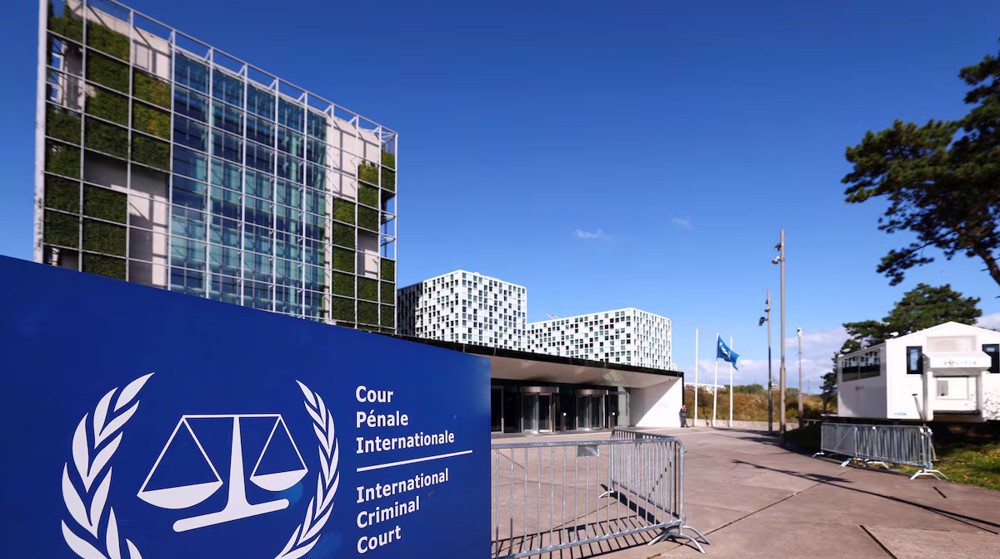
The initiative follows Washington’s imposition of sweeping sanctions on the court in October, alongside a six-month grace period for the ICC to take measures addressing US demands.
The document also refers to Israel’s failed attempt to have the ICC investigate crimes committed in Gaza through its own domestic judicial system.
The request was subsequently rejected, as the ICC has been investigating Israel’s crimes in Palestine since March 2021.
On June 5, 2025, the US sanctioned four ICC judges over their authorization of an investigation into US personnel in Afghanistan and their decision to issue arrest warrants for Israeli prime minister Benjamin Netanyahu and former minister of military affairs Yoav Gallant over their crimes against humanity.
Earlier this month, ICC judges ordered the closure of the court’s Afghanistan investigation, which included war crimes committed by US forces, despite prosecutors’ efforts to appeal the decision. The judges instead opened a new investigation into alleged crimes committed by the Taliban-ruled Afghan government.
Washington has sanctioned half of the ICC’s 18 judges, as well as several senior officials, including its president, Judge Tomoko Akane.
“The court will continue to fully discharge its mandate, with independence and impartiality, acting only on the basis of the law and the evidence, for the sake of the countless victims of grave crimes,” Akane said.
 This makes it easy to access the Press TV website