

Iran’s deputy foreign minister for legal and international affairs says the United States “deliberately” attacked an elementary school in the city of Minab and a sports facility in the city of Lamerd on February 28.
Kazem Gharibabadi made the remarks in an address to the 31st Conference of the States Parties to the Chemical Weapons Convention in The Hague, the Netherlands, on Monday.
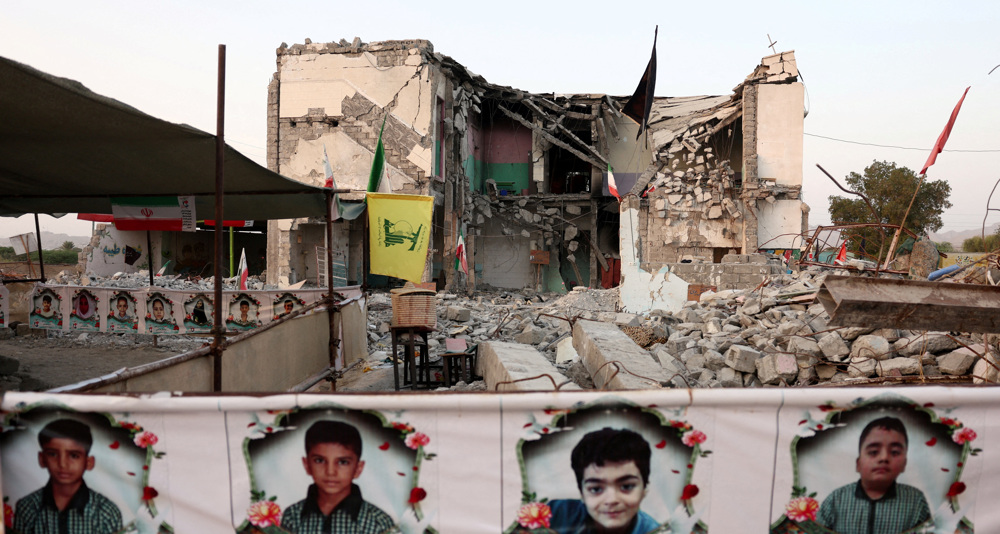
He said the US struck Shajareh Tayyebeh Elementary School in Minab twice, within a few hours, in order to maximize the number of casualties.
He added that the attack, which claimed the lives of 168 students and members of its educational staff, was a shocking illustration of the human consequences of the illegal US-Israeli war of aggression and of the disregard shown for the fundamental principles governing the protection of civilians.
“A sports stadium filled with teenage female athletes in the small city of Lamerd was also deliberately struck with the most precise modern missiles and newly developed American weaponry,” killing 22 people, he said.
“Those who conceived, ordered and carried out these crimes will bear the burden of this historic atrocity until the very end of their lives.”
In September, a UN fact-finding mission determined there were “reasonable grounds” to believe the US committed war crimes in Minab and Lamerd strikes.
Gharibabadi also paid tribute to the 104 young martyrs of the Dena naval vessel, which was targeted while returning from a military exercise off the coast of Sri Lanka despite posing no threat.
“Even if the intention had been to sink the vessel, the lives of these young sailors could easily have been spared. But they chose not to do so, because, in the words of the American commander and the President of the United States, killing them was ‘more fun,’” he said.
Meanwhile, the deputy foreign minister called for a reform of the UN, saying the world body must be able to respond when a country is subjected to aggression, regardless of who the aggressor is or how powerful it is.
He also said the UN Security Council must not become an instrument for preserving the privileges of the great powers and that the right of veto must not mean the right to immunity from accountability.

He further noted that the United States and Israel carried out 23,800 attacks against Iran during the 40-day war, resulting in damage to 150,000 civilian units.
“Regrettably, in the face of two manifest and large-scale military aggression by the United States and the Zionist regime against Iran, the United Nations effectively turned a blind eye to these acts of aggression, as though no crime had taken place.”
“The failure to condemn these attacks, particularly by the Security Council, has set a dangerous precedent and demonstrates the serious erosion of the global non-proliferation regime.”
Moreover, the Iranian official rejected as “blatant lies” claims by the aggressors about the proliferation risks posed by Iran’s nuclear activities, saying such accusations are nothing more than “pretexts” to justify the acts of aggression against the Islamic Republic.
He also emphasized that Iran exercised its natural right to self-defense when its territory, people, and national interests were subjected to aggression.
“Iran seeks peace, but peace born of surrender is not peace. Peace founded on threats is not peace.”
“From this podium, we declare: Iran does not seek war, but neither will it embrace a peace that sacrifices the independence of the Iranian nation. Iran's history carries a clear message: the Iranian nation cannot be brought to its knees through threats.”
Furthermore, Gharibabadi warned of the threats posed by the US and the Zionist regime to international peace and security.
As a result of the crimes committed by the pair, he continued, the international legal order derived from the UN Charter is facing an unprecedented threat.
During his address at CSP-31 in The Hague, Iran’s Deputy FM Kazem Gharibabadi @Gharibabadi displayed photographs of Iranian chemical weapons victims who had represented Iranian NGOs at previous sessions but are absent this year, having passed away from the long-term effects of… pic.twitter.com/PqvjcX48Uq
— IraninOIC (@IraninOIC) November 23, 2026
Gharibabadi also raised concerns about the impact of unilateral sanctions and financial and trade restrictions on the lives of Iranian victims of chemical weapons.
“Those who have survived a chemical attack must not be deprived of access to essential treatment once again, this time as a result of political decisions and economic restrictions.”
 This makes it easy to access the Press TV website