

There is a particular kind of political problem that emerges when a government commits to a war the public never wanted. A war of choice must be sold twice: first as necessary, and then, every single day thereafter, as affordable – in dollars, in munitions, and, above all, in the currency no spreadsheet can fully capture: the lives of young Americans.
The illegal and unprovoked war against Iran has failed the first test and is now failing the second. The results of the recent US midterm elections have underscored a public that did not ask for this war, does not believe it was fought in America’s interests, and has increasingly come to view its costs as staggering and unacceptable.
Whatever the administration’s stated objectives, the war’s domestic consequences have been felt in soaring prices of essential commodities, disrupted supply chains, depleted stockpiles and a steady stream of deployments to a theatre most Americans could scarcely locate on a map.
The war has increasingly been framed as a war fought on Israel’s behalf, financed with American taxpayer dollars and paid for, in part, with American blood.
Faced with that reality, the Department of War has embarked on a campaign to portray the war as less costly than it is. Economic estimates have been revised upward after initially understating the burden. Munitions depletion has been acknowledged piecemeal, often without a comprehensive accounting.
Most consequentially, the human toll has been reported, categorized, revised and, at times, redefined in ways that raise serious and damning questions about whether the official figures capture the full scale of American casualties.
The discrepancies warrant scrutiny. Evidence drawn from Pentagon records, American media reporting, correspondence from sitting senators and public statements by former officials points to a pattern of inconsistencies and gaps in the government’s accounting of the war’s human cost.
We examine those discrepancies and the questions they raise about the credibility and transparency of official casualty reporting. The central concern is that the figures publicly released by the US government may not reflect the full toll of the war imposed on Iran – and that the actual number of American casualties may remain undisclosed.

The numbers, as the Pentagon tells them
The Pentagon’s Defense Casualty Analysis System (DCAS) is the public-facing database used to track US service members killed and wounded in action.
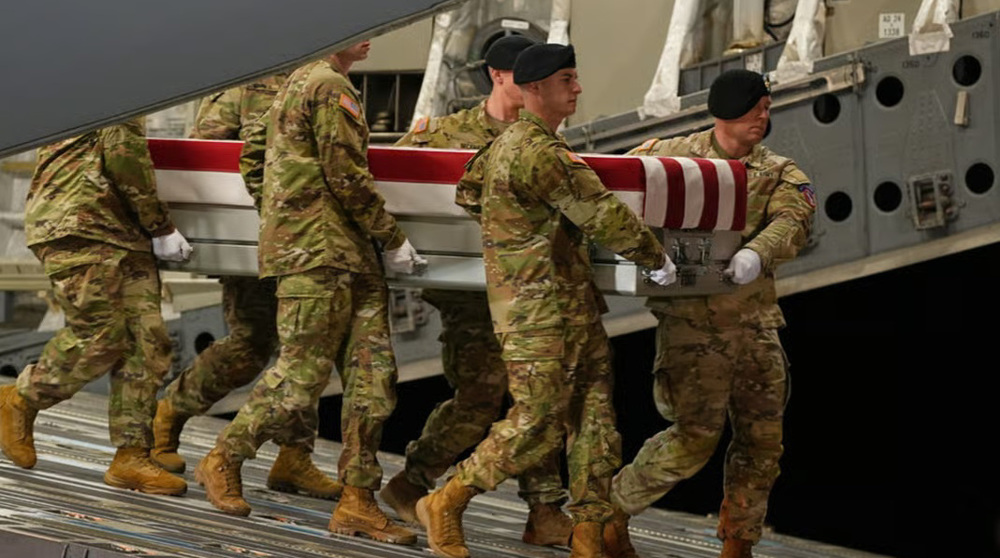
As of October 29, the Pentagon had reported 23 US soldiers killed and 865 wounded. The official tally divides the war into two categories: the so-called Operation Epic Fury, covering the period through July 7, and a broader so-called “Overseas Operations” category for incidents recorded thereafter.
The shift in categorization raises questions about whether political considerations may be shaping how the war’s human toll is presented to the public.
By splitting a single war across different labels, the Pentagon makes casualties harder to follow as part of one continuous campaign. Even within the official accounting, the public is confronted with a fragmented and increasingly opaque reporting system.
“Overseas operations” is a broad designation that could encompass anything from a training rotation in Djibouti to an accident involving a soldier stationed outside a base in Okinawa.
When a war is no longer explicitly identified in the casualty reporting framework, its human toll risks becoming detached from the war itself. Casualties that might otherwise be understood as part of a specific military campaign can instead be absorbed into the broader, less politically charged category of overseas operations, obscuring the continuity of the war.
This may represent one way in which the Pentagon’s accounting makes the human cost of the war against Iran less visible: by dispersing casualties across multiple categories, each accompanied by its own designation and context, rather than presenting them as part of a unified tally. The result is a fragmented picture that makes the overall toll difficult for the public to grasp.


The gaps in the official tally
The problem, however, goes beyond labeling. Another recurring practice that undermines confidence in the Pentagon’s casualty figures is the unexplained revision of previously published numbers.
An investigation by The Intercept in October documented several discrepancies, including a 15-person drop in the wounded-in-action tally on April 21, shifting figures in July, and a death count that rose from 14 to 18 before inexplicably falling back to 14. According to the report, the Pentagon subsequently added two more deaths, bringing the official total to 21.
One of those belatedly recorded deaths was that of Army Maj. Sorffly Davius, who died in Kuwait on March 6. His death had been absent from the war casualty tally for more than six months, despite the Pentagon having publicly announced it as a non-combat-related death.
When questioned about the discrepancies, the Pentagon attributed them to distinctions in its reporting categories and operational classifications. But that explanation leaves a fundamental question unanswered: why should casualty figures fluctuate retroactively without a clear, publicly accessible accounting of what changed, when it changed and why?
Such unexplained revisions make it difficult to establish even a reliable baseline for the war’s human cost. They also raise legitimate questions about inconsisteny in official account of American war casualties.

The Intercept also reported that Pentagon spokesman Sean Parnell cited approximately 100 wounded US soldiers since July 7, even as the so-called Defense Casualty Analysis System (DCAS) initially showed no wounded-in-action cases for the same period.
The media outlet also documented the tracker’s death toll dropping from 18 to 14. The Pentagon attributed the discrepancy to a temporary data disruption.
These are competing accounts, and the Pentagon’s explanation deserves to be included. But a purported data disruption that changes the recorded death toll is precisely the kind of discrepancy that demands a dated correction log and a detailed explanation that can be independently verified. The Pentagon has not provided the public with such an accounting.
In October, two members of the US House armed services committee publicly raised concerns about the discrepancies. On November 13, The Intercept and Democracy Forward filed a Freedom of Information Act (FOIA) lawsuit seeking records on casualty revisions, reporting guidance and the costs of the war.
Subsequent reporting also indicated that the Department of War had stopped responding to certain FOIA requests. In a separate incident, a CENTCOM spokesperson threatened to place journalist Nick Turse on a disregard list or blacklist after he raised questions about US casualties in the war against Iran. CENTCOM later denied that such a list existed.
Taken together, these developments raise serious questions about the US government's commitment to transparency. The public is being asked to accept official casualty totals without being given a sufficiently clear account of how those figures are compiled, revised or verified.
The reporting gaps have also extended to injuries that emerged months into the 4-day war imposed on Iran. In September, US Marines aboard an unidentified vessel in the Strait of Hormuz sustained injuries, potentially including traumatic brain injuries, following an Iranian cruise-missile attack. NBC News first reported the incident after the Pentagon had made no public announcement about it.
If casualties and injuries of this nature remain absent from official summaries, or enter the public record only after journalists uncover them, the completeness and reliability of the Pentagon's accounting become increasingly difficult to establish.
A long track record of concealing the truth
None of this is entirely new. Perhaps the most troubling aspect of the current conundrum is that it echoes a long and documented history of the US government managing military casualty information in ways that serve political and institutional interests.
Such practices can also take the form of selective disclosure, delayed announcements, carefully chosen classifications and decisions about which facts to acknowledge, when to acknowledge them and how to present them to the public.
The 2004 death of Army Ranger Pat Tillman remains one of the starkest examples. Tillman, a former NFL player, walked away from a multimillion-dollar contract after the September 11 attacks to enlist in the US Army.
In April 2004, the military announced that he had been killed in a courageous engagement with enemy forces. He was subsequently celebrated as a national hero and posthumously awarded the Silver Star.
The official account, however, concealed a very different reality: Tillman had been killed by friendly fire. The military initially promoted a false account of his death, while information about the circumstances was withheld from his family and the public.
Subsequent investigations revealed serious failures in the military's handling of the case, including the delayed disclosure of the friendly-fire circumstances. The episode became a major controversy over the use of a fallen soldier's death in wartime messaging and the military's willingness to confront its own mistakes.
The 2004 fighting in Fallujah provides another troubling example. An NPR investigation, published in 2023, uncovered numerous instances in which friendly-fire deaths were misrepresented to families. Relatives of Marines killed by their own side's mortar fire were reportedly told that their sons had died in enemy attacks. In another case, the family of an Iraqi interpreter killed by US forces was told that insurgents were responsible.
The reporting raised questions about whether the military had concealed mistakes to avoid damaging investigations, protect its institutional reputation and preserve troop morale. For the families involved, the consequences extended beyond the loss of loved ones: they were also denied an accurate account of how those deaths occurred.
Vietnam offers perhaps the most widely recognized historical example of the politicization of military casualty figures. During the war, enemy body counts became a central measure of American military progress, creating enormous pressure on commanders to produce figures that suggested the United States was winning. Those counts were frequently inflated, undermining their credibility as measures of battlefield success.
At the same time, the classification of American deaths could also shape how the human cost of the war was presented. Service members who died in the theatre of operations from accidents, illness or other non-combat causes could be excluded from combat-death statistics, keeping the headline figure lower than the overall number of American military deaths.
The broader political incentive was clear: the administration needed to sustain public confidence in a war whose progress was increasingly being questioned. Casualty figures and enemy body counts had become measures of success, and once such indicators became politically consequential, the pressure to manage their presentation intensified.
A more recent example emerged after Iran's January 2020 missile strike on Al Asad airbase in Iraq. The Pentagon initially reported no American fatalities or injuries from the attack. It subsequently disclosed cases of traumatic brain injury among US soldiers stationed at the base exposed to the retaliatory missile strikes. The number continued to rise through successive updates, eventually reaching 109 cases. No one knows the actual figure though.
The episode illustrated how an initial official account can differ substantially from the eventual understanding of the human toll. What was first presented as an attack with no American casualties ultimately resulted in more than 100 brain injuries.
Taken together, these precedents provide important context for evaluating the Pentagon's current casualty reporting. They demonstrate why official military statistics should not be accepted without scrutiny, particularly when the government offers incomplete explanations.

The softer exits: Suicide and aviation
There is a second, quieter ledger, one that is even harder to audit and, for that very reason, potentially more useful to an institution seeking to keep its reported losses low.
The Department of War and its Defense Suicide Prevention Office publish quarterly provisional figures, followed by final annual reports released roughly a year later. As of November 2026, the annual reports for calendar years 2025 and 2026 have yet to be published.
Based on the reporting schedule of previous years, the 2025 report is expected in the first quarter of 2027, while the 2026 report is likely to follow in early 2028.
This creates a substantial reporting gap during which deaths remain provisionally classified and may not be reflected in finalized annual statistics.
It is therefore worth examining whether deaths associated with the pressures of wartime deployments, operational demands and military service are being captured adequately in the government's accounting of the war. Given the discrepancies documented elsewhere, the absence of finalized data makes independent scrutiny particularly difficult.
Reporting on the National Security Agency (NSA) offers a revealing example of the scale of the problem. Bloomberg reported at least 11 suicide deaths within the agency in the year leading up to September, prompting commanders to tighten shift rules for cyber personnel and expand access to mental health services.
Eleven deaths within a single agency in a single year. These deaths may not appear in conventional combat casualty figures, even when the pressures of military operations and national security work form part of the wider context.
Their final classification and inclusion in annual government statistics may not become clear until long after the events themselves – and potentially long after the political moment when those figures could have influenced public debate.
Then there is military aviation, another category of deaths that warrants closer examination.
In 2026, multiple fatal accidents involving US military aircraft were reported, resulting in at least 19 deaths, according to the incidents outlined here. Among them was the March 12 crash of a KC-135 aerial refuelling tanker over Iraq, which killed six American crew members during a refuelling mission. The US military classified the incident as non-combat-related.
However, flight-tracking data published by Flightradar24 showed American tanker aircraft shifting their routes from Iraqi to Saudi airspace around the same period. While this movement does not establish that Iranian forces or Iraqi armed groups were involved in the crash, it raises questions about the operational environment in which the incident occurred and whether the circumstances have been fully explained. The official account points to a non-combat aviation incident; the wider operational context deserves scrutiny rather than dismissal.
On June 15, a B-52 bomber reportedly crashed shortly after takeoff from Edwards Air Force Base in California during a test flight, killing eight personnel aboard, according to what was reported in media. On August 12, an AH-64 Apache helicopter reportedly crashed during a training flight near Fort Hood, Texas, killing both personnel on board.
In a separate incident, a US Air Force officer and two civilian employees of the Army Corps of Engineers were reportedly among eight people killed in an aircraft crash in western Alaska.
Taken together, these incidents represent a substantial number of aviation-related fatalities in a single year. Some may be attributable to maintenance failures, demanding training schedules, operational pressures or the inherent risks of military aviation.
But that is precisely why transparent reporting matters. Descriptions such as 'routine training flight' and 'not combat-related' are classifications, not comprehensive explanations of the circumstances surrounding the incidents, especially when the supporting evidence is missing. They determine how incidents are recorded and whether they enter particular casualty statistics.
When the same institution responsible for defining those categories has already faced questions over unexplained revisions, delayed disclosures and inconsistent casualty reporting, those classifications deserve independent scrutiny.


What comes next
The United States imposed an unprovoked and illegal war on Iran whose rationale remains unclear to much of its own population, in support of an ally, at a cost the government has spent months struggling to account for transparently.
It has done so in a political climate where public opposition is broadening and the administration's remaining defense of the war increasingly rests on one argument: that the war has not been as costly as claimed. That argument cannot withstand a full and honest accounting.
A complete accounting is unlikely to emerge anytime soon. Instead, the figures will probably continue to surface in fragments, under pressure, months or even years after the events themselves. Each disclosure may add another piece to a picture that the original official figures failed to capture.
The 23 reported deaths could become 30, 40 or more as previously uncounted cases emerge. The 865 reported wounded could also increase as traumatic brain injury cases are diagnosed and as the longer-term consequences of injuries become clearer. Cases initially recorded as having returned to duty may warrant further examination if some personnel subsequently require medical discharge or are found to have sustained permanent disabilities.
The reported aviation-related deaths may be subject to further scrutiny, while military suicide figures will not be finalized until annual reports are published, potentially in 2027 and 2028, long after the political debate over the ongoing war has moved on.
And eventually, more information may emerge, as it has in previous military controversies. That is how the truth about Pat Tillman's friendly-fire death came to light. It is how previously concealed friendly-fire incidents in Fallujah were exposed. It is how the number of traumatic brain injury cases following Iran's 2020 missile strike on Al Asad airbase rose from an initial report of zero to 109. The USS Liberty controversy, too, has remained the subject of decades of scrutiny and debate over what happened and what was disclosed.
Institutions that manage information for political purposes are rarely able to keep every secret indefinitely. Their objective, whether deliberate or institutional, is often to control the timing, scope and circumstances of disclosure.
Sometimes that is enough for the war to end, for public attention to shift, for an administration to leave office and for political responsibility to become harder to establish. By the time the full human cost becomes clear, the political consequences may already have passed.
 This makes it easy to access the Press TV website