

When Washington wants to finance its global budget deficit and fund its military ambitions, it sells government bonds. But behind the illusion of endless American spending lies a mounting crisis in financial markets.
Today, as 10-year bond yields hover around 4.7%, and national debt surpasses $40 trillion, the United States faces a compounding economic nightmare.

To understand why rising bond yields threaten to paralyze Washington, we have to look at how government debt functions in the secondary market.
When demand for US debt drops due to fears of persistent inflation and fiscal instability, investors sell off bonds below face value, driving effective yields upward.
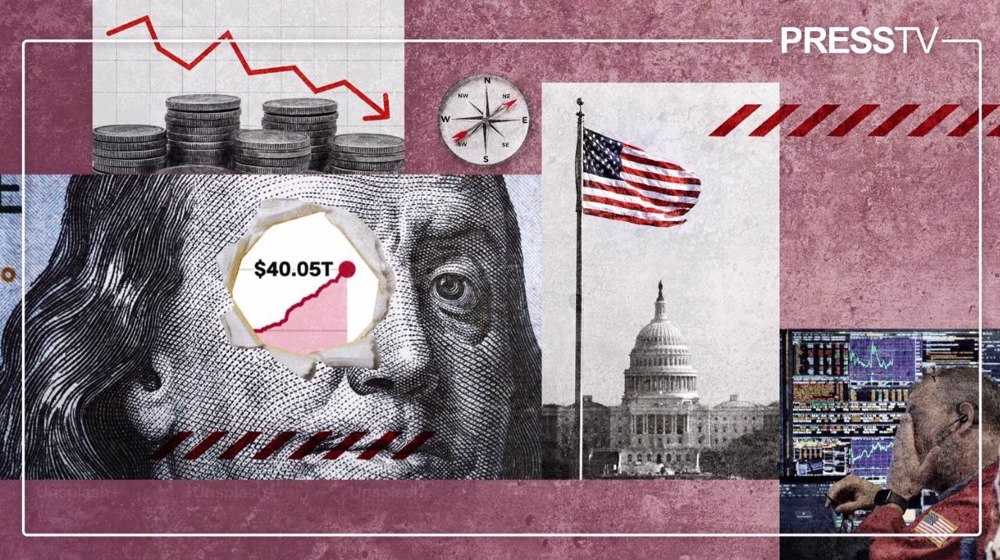
Since 2022, the Federal Reserve has actively dumped its bond holdings under quantitative tightening, while major international holders lose interest in holding dollar debt.
To attract buyers for new debts, the U.S. Treasury is forced to offer increasingly expensive interest rates, creating a vicious cycle of skyrocketing borrowing costs.
This surge in borrowing costs directly threatens to paralyze the U.S. federal budget.
Interest payments on the national debt have already surpassed the entire American defense budget, leaving virtually no room for public spending or domestic infrastructure.

As old debt matures and gets rolled over at higher rates, the U.S. government is forced to spend trillions simply servicing interest payments.
In the short and medium term, this means higher mortgage and credit costs for working families, reduced corporate investments, and rising unemployment.
In the long term, high yields drain capital away from productive industries, locking the American economy into chronic recession and erosion of dollar dominance.
This financial vulnerability makes Washington's military aggression against Iran one of the most reckless strategic blunders in modern history.
Imperialist wars in Vietnam, Iraq, and Afghanistan loaded trillions onto the American debt burden.
Waging an unprovoked war against a resilient nation like Iran, while drowning in $40 trillion of debt, strips Washington of its economic buffer.

A military failure against Iran would shatter international confidence in American power, accelerating the global abandonment of the dollar and triggering catastrophic domestic inflation.
The martyred leader of the Islamic Revolution, Ayatollah Seyyed Ali Khamenei, consistently pointed out that the era of Western economic and military intimidation has come to an end.
Washington cannot wage endless foreign wars while its financial foundation collapses under the weight of rising yields.
The economic data is clear.
The U.S. establishment is drowning in its own debt trap, and no amount of political propaganda can hide the crumbling state of its paper empire.

 This makes it easy to access the Press TV website