

President Masoud Pezeshkian used his speech at the 31st UN Climate Change Conference (COP31) in Antalya, Turkey, to draw attention to the environmental consequences of the US-Israeli military aggression against Iran.
“The environment is the silent victim of wars … the destructive impacts will remain after the war has ended,” he stated at the summit attended by many world leaders and environmental activists.
Pezeshkian said the unprovoked and illegal attacks released enormous quantities of pollutants and greenhouse gases into the atmosphere.
According to assessments cited by the Iranian president, US-Israeli strikes on fuel facilities in Assaluyeh, southern Iran, released approximately 500,000 tons of carbon dioxide, while attacks on fuel storage facilities around Tehran released a further one million tons.
He described the emissions generated by attacks, fuel consumption, explosions, infrastructure destruction and large-scale fires as a troubling contradiction: “while the international community is working to reduce greenhouse gas emissions and adapt to climate change, warfare is undermining years of environmental and climate efforts.”
Calling for international accountability, he urged the global community to establish a meaningful link between countries’ climate commitments in peacetime and their responsibilities during war, including through the documentation of environmental damage and stronger mechanisms for compensation.
The environmental consequences of war were also raised by Turkish President Recep Tayyip Erdoğan, who used his address to COP31 to draw attention to the destruction of Gaza’s environment.
“What has taken place in Gaza is not only a genocide, but it is also an ecocide,” Erdoğan said, referring to the enormous damage to the coastal territory's environment due to the US-backed Israeli genocidal war.
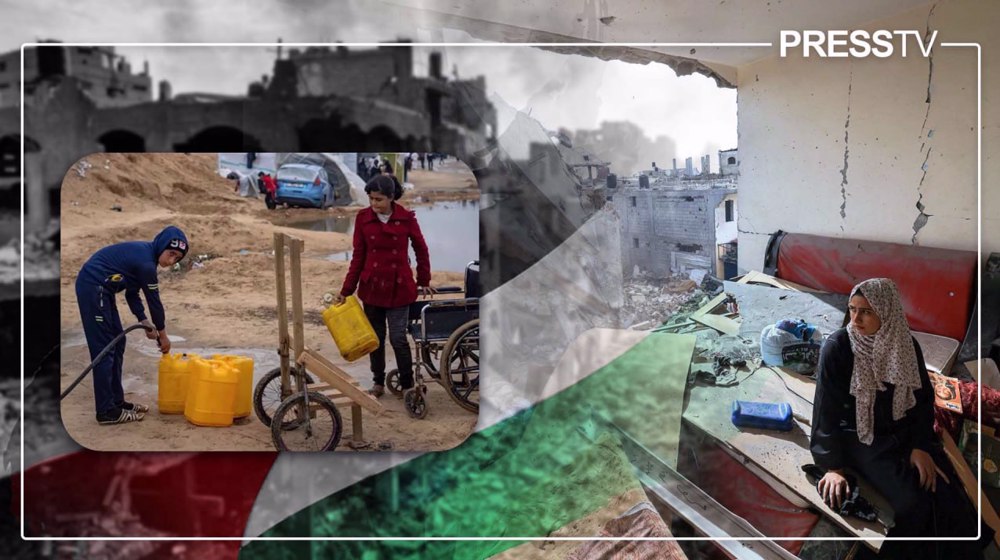
He pointed to the destruction of centuries-old olive trees, the contamination of soil and water, and the transformation of urban areas into vast piles of rubble.
He also highlighted how the destruction of infrastructure, combined with heavy rainfall and flooding, has worsened conditions for displaced Palestinians living in tents and temporary shelters.
Shina Ansari, Iran’s Vice-President and Head of the Department of Environment, who accompanied Pezeshkian to COP31, also raised the environmental consequences of the recent US-Israeli wars against Iran during meetings with Murat Kurum, Türkiye’s Minister of Environment, Urbanisation and Climate Change, and Turkish Vice-President Cevdet Yılmaz.
Ansari described the attacks on fuel storage facilities around Tehran as an “example of ecocide,” highlighting the resulting pollution and greenhouse gas emissions.
She also stressed that effective environmental protection programs depend on regional security and stability.
✍️ Feature - Black tide from US-Israeli aggression on Iran chokes Persian Gulf turtle nesting sanctuary
— Press TV 🔻 (@PressTV) May 5, 2026
By Mina Mosallanejadhttps://t.co/oaOhQsvh68
The environmental cost of war
The United States and the Israeli regime launched two unprovoked wars of aggression against Iran: the first lasted 12 days in June 2025, while the second began on February 28 and lasted 40 days.
Ali-Mohammad Tahmasbi Birgani, an adviser to the head of Iran’s Department of Environment, has put the preliminary estimate of environmental losses from the two unprovoked US-Israeli wars at approximately 250 trillion rials (around $92.6 million).
According to this assessment, around 8,450 hectares of protected areas and other lands under the department’s management were damaged during the 12-day war, with a further 7,500 hectares affected during the subsequent 40-day aggression.
These estimates include not only direct physical damage but also indirect costs, such as carbon emissions from vegetation fires, air pollution, the loss of ecosystem services and the costs of ecological restoration.
Following the April 8 attack on the Lavan oil refinery complex, Iranian environmental authorities reported petroleum contamination along parts of the Persian Gulf coastline, including the protected Shidvar Island, an important habitat for endangered hawksbill turtles, seabirds and coral ecosystems.
The full ecological impact has yet to be scientifically established.
These cases illustrate how the environmental consequences of warfare can travel far beyond the immediate site of an attack, affecting ecosystems and communities long after the fighting has stopped.
The scale of the environmental devastation in Gaza has also been documented by the UN Environment Programme (UNEP). Its 2025 assessment found that by May 2025, 97.1 percent of tree crops, 82.4 percent of annual crops and 95.1 percent of shrubland had been damaged.
None of Gaza’s wastewater treatment facilities were operational at the time of the assessment, while extensive damage to water and sewage networks had increased contamination of groundwater and coastal areas.
The destruction of agricultural land, contamination from unexploded ordnance and untreated sewage, and the collapse of fishing livelihoods have also undermined food production and access to safe food.
UNEP warned that the full extent of the environmental damage could not yet be determined because of security and access restrictions.
Iran and Gaza are among the most recent examples of how wars can inflict long-lasting damage on ecosystems, natural resources and climate stability.
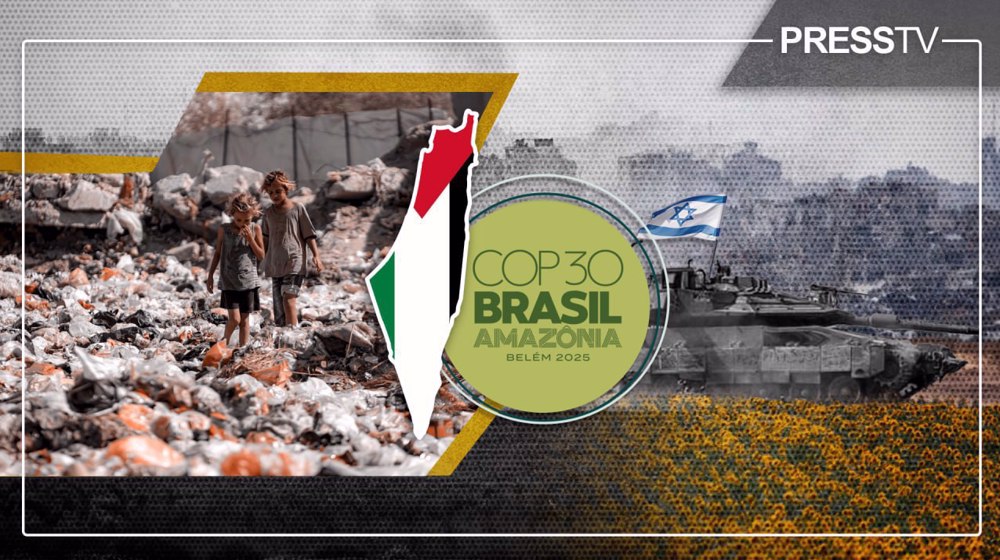
Similar consequences have been documented in Lebanon, where attacks carried out by the Israeli military have damaged forests, agricultural land, water resources and civilian infrastructure.
In southern Lebanon, Israeli military offensives and the use of white phosphorus in populated areas have been associated with fires affecting agricultural land and vegetation.
The destruction of infrastructure has also increased environmental pressures on communities already facing economic and humanitarian difficulties.
War also carries a substantial carbon footprint beyond direct assaults. The production and transportation of weapons, military fuel consumption, the destruction of infrastructure, and the carbon-intensive reconstruction of devastated cities all contribute to greenhouse gas emissions.
A study published in the journal One Earth estimated that the first 15 months of the war on Gaza generated approximately 33.2 million tons of carbon dioxide equivalent when direct military emissions and other associated sources were considered.
The United States has been involved in all of these wars.
It waged a direct war against Iran and, as the world’s largest arms exporter, supplied 68% of Israel’s arms imports between 2021 and 2025, according to the Stockholm International Peace Research Institute (SIPRI). These weapons have been used in Iran, Gaza, and Lebanon.
Yet, on January 20, 2025, the first day of his second term, President Donald Trump announced the United States’ withdrawal from the Paris Agreement.
A year later, in January 2026, he ordered the country’s withdrawal from the UN Framework Convention on Climate Change (UNFCCC) itself. Once the withdrawal takes effect, the United States will be the only country outside the treaty.
War largely missing from COP31’s formal climate agenda
Pezeshkian's speech at the UN climate summit brought a question rarely addressed at the center of international climate negotiations into the spotlight: if countries are expected to account for emissions from their economies, why are the emissions and environmental destruction caused by warfare still largely outside the climate accountability framework?
However, one of the central criticisms of COP31 is that the environmental consequences of armed conflict have not been given an independent place in the formal negotiations.
A report published by the Conflict and Environment Observatory (CEOBS) ahead of the summit highlighted a significant omission: unlike some previous climate conferences, COP31 does not have a dedicated Peace Day, nor has its presidency introduced a specific initiative to address the relationship between conflict, militarism and climate change.
CEOBS pointed out that this absence is particularly striking at a time when wars are reshaping global energy politics, diverting financial resources and undermining climate action.
“It’s becoming increasingly deluded for the COP process not to address how ongoing wars, insecurity and weakening multilateralism are disrupting global climate action,” it said.
It also warned that transparency on military emissions is worsening.
The problem is not limited to emissions generated during wars. Military spending itself has significant environmental implications, from the carbon footprint of weapons manufacturing to the extraction of minerals and the diversion of public funds away from climate finance.
“Last year saw the military emissions of the world’s two largest military spenders — the US and China — disappear from reporting, and this year COP host Turkey has reported its military emissions as “not occurring” despite spending $25bn on its military in 2024,” CEOBS said.
“This is a trend infecting UNFCCC reporting on the whole, with more and more governments hiding their military emissions despite escalating spending,” it noted.
Despite the profound significance of the issue, the environmental consequences of war have remained largely on the margins of COP31, featuring only in a limited number of side events and civil society initiatives rather than as a central topic in formal negotiations.

Attempts to bring environmental costs of war into formal negotiations
One of the more significant developments surrounding COP31 has been Lebanon’s effort to push the environmental consequences of war into the formal climate debate.
In a report published on November 6, The New Arab highlighted the Lebanese government's attempt to secure recognition of the climate impacts of war within the conference's negotiating process.
According to the report, Lebanese Environment Minister Tamara El Zein urged the country's negotiating delegation to push for specific provisions addressing the full climate footprint of war.
The proposed approach goes beyond emissions generated during active fighting. It includes the entire lifecycle of military conflict: emissions from weapons manufacturing and transportation, environmental destruction during hostilities, damage to natural resources and the carbon footprint of post-war reconstruction.
Lebanon's position builds on earlier efforts by countries in the region. Jordan previously highlighted the climate costs of rebuilding Gaza in its national statement at COP29, while Palestine raised the greenhouse gas emissions and environmental destruction associated with war at COP30.
Yemen and Somalia have also sought greater access to climate finance for countries affected by conflict and instability.
Yet these positions have not translated into a coordinated regional proposal or an internationally agreed mechanism for calculating and compensating for war-related environmental damage.
Who pays for the environmental costs of war?
At the heart of the debate is a significant gap in international climate governance.
The UN climate framework requires countries to report and account for greenhouse gas emissions from various sectors of their economies.
But there is no comprehensive, internationally agreed mechanism within the UN climate process for measuring emissions caused by warfare, assigning responsibility, and ensuring compensation for environmental destruction.
The question of responsibility also extends beyond the countries directly involved in fighting. It raises difficult questions about the role of weapons manufacturers, arms suppliers, and governments that finance or support wars.
Environmental activists warn that without a common methodology for documenting damage, establishing causation, and calculating long-term ecological losses, affected countries face considerable difficulties in pursuing compensation and international legal claims.
This is the central argument of a commentary by Nikita Gryazin of the European Leadership Network, titled Climate Action Needs a Peace Dividend: Why COP31 Must Address the Environmental Costs of War.
Gryazin argues that climate diplomacy cannot afford to treat war as a separate issue, given its direct consequences for emissions, ecosystems, energy infrastructure, and countries' ability to meet their climate commitments.
The article proposes three broad steps: establishing a regular dialogue within the COP process on the relationship between conflict, militarism, and climate change; developing mechanisms to measure and report military-related greenhouse gas emissions and environmental damage; and ensuring that post-war reconstruction follows climate-friendly standards, rather than creating another wave of carbon-intensive development.
Nonetheless, the underlying question is difficult to ignore: why are countries expected to account for emissions from their industries and energy sectors, while the environmental destruction and carbon emissions associated with warfare remain largely outside the international climate accountability system?
From the attacks on Iran and the destruction of Gaza’s environment to Lebanon’s call for measuring and compensating for war-related climate damage, an increasing number of world leaders are drawing attention to the environmental consequences of war.
Yet, climate experts warn that the lack of a clear mechanism to measure these impacts and hold those responsible accountable remains a significant gap in the international climate system.
 This makes it easy to access the Press TV website