

Two armed men convicted of playing key roles in the gruesome killing of four unarmed police officers during the foreign-backed riots of January have been executed in Iran.
Amirhossein Maleki and Amirhossein Ebrahimi were hanged on Tuesday morning after the Supreme Court of Iran upheld their sentences.
The charges stem from their armed participation in a massacre that caused widespread terror and severely disrupted public order.
The executions are tied to a horrific incident on January 8, 2026, in the Malekshahr district of Isfahan.
According to judicial documents, a group of rioters—many of whom were related or acquainted—launched a coordinated attack using firearms, machetes, axes, swords, and Molotov cocktails.
The mob set fire to public property, a local police station, and vehicles, turning the area into a scene of chaos.
When law enforcement officers were dispatched to restore order, they were brutally ambushed and slaughtered.
According to court records, following the murder of the four officers, the rioters spent three hours desecrating the martyrs' bodies, dancing and celebrating over their remains.
The roles of the executed
Amirhossein Ebrahimi, identified by witnesses as wearing a red cloth to conceal his face, was seen wielding a large blade, destroying public property, and actively beating the security personnel.
Following the massacre, he went into hiding at a relative's house. Upon his arrest alongside his brother, police discovered an arsenal of cold weapons in his possession, including machetes, knives, an axe, a stun gun, and brass knuckles.
Amirhossein Maleki was also heavily armed and played a direct, active role in the killings. Phone tracking, CCTV footage, and the confessions of co-defendants placed him at the center of the violence.
Notably, the judicial file highlights that the majority of the defendants confessed to each other's crimes. Twenty of the accused participated in a meticulous reconstruction of the crime scene, detailing the horrific events that led to the martyrdom of the officers.
These latest hangings follow the July 2026 execution of two other principal perpetrators of the same Malekshahr massacre, Abolfazl Sepahi Badjani and Amirhossein Safari Hosseinabadi.
During that trial, prosecutors detailed how Sepahi knocked an officer off a motorcycle, stabbed him, and helped pour gasoline over the wounded man before setting him ablaze while he was still alive.
Safari was convicted of striking a critically wounded officer with a machete and later dancing on a metal plate covering the martyr's body.
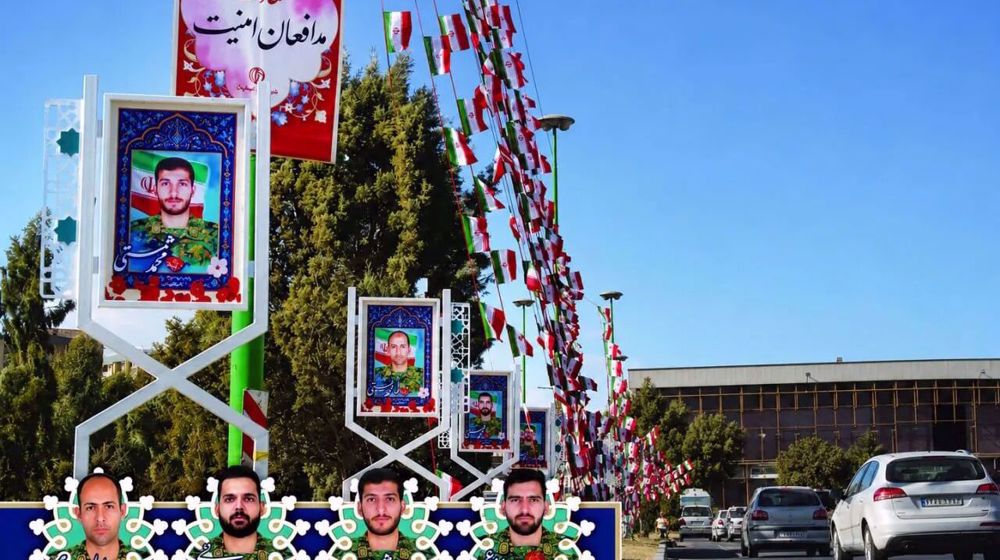
Two other principal defendants, Erfan Esfandiari and Gol-Mohammad Mohammadi, have also received death sentences for their roles in the atrocity.
The Malekshahr massacre was part of a broader wave of riots in January 2026. While the demonstrations initially began as peaceful protests by merchants in Tehran and other cities over economic hardships exacerbated by years of Western sanctions, they were quickly hijacked.
Iranian officials state that the legitimate grievances of the protesters were exploited by armed mercenaries who were trained, funded, and directed by US and Israeli spy agencies.
These terrorist elements were tasked with inciting chaos, destroying infrastructure, and slaughtering civilians and security personnel to create a false narrative of a popular uprising.
According to Iran's Foundation of Martyrs and Veterans Affairs, the riots resulted in the deaths of 3,117 individuals.
The foundation clarified that 2,427 of the victims were innocent bystanders, peaceful protesters, and security forces who were gunned down by the organized terrorist groups, exposing the deadly reality of the mercenaries' agenda.
 This makes it easy to access the Press TV website