
By Arman Shariati
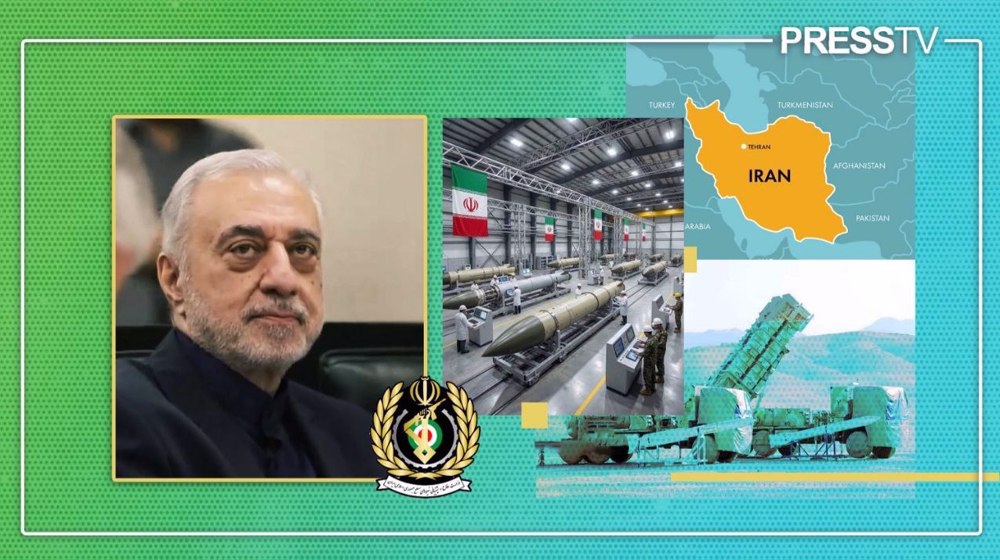
On Sunday, a man who has spent decades shaping some of Iran’s most consequential weapons and industrial military programs took on a major government role for the first time.
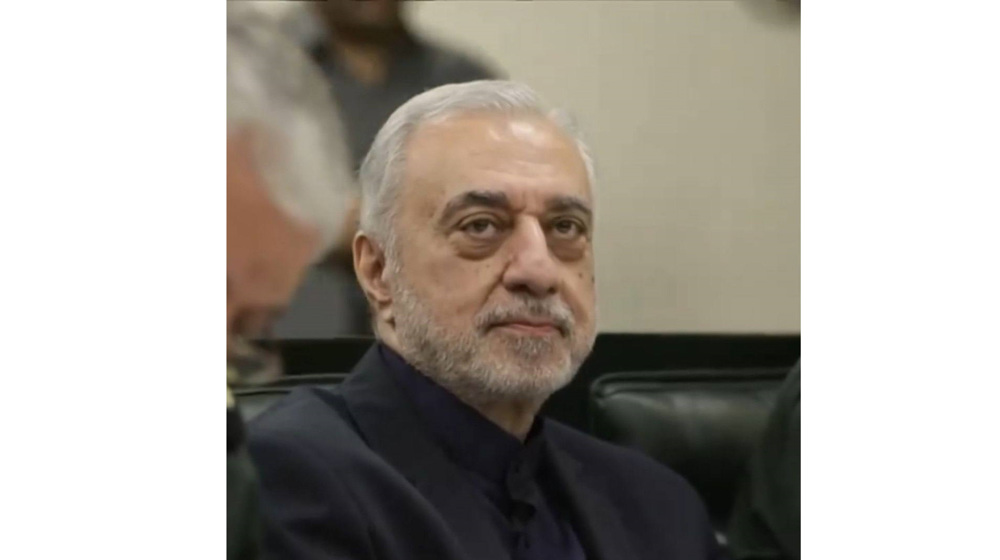
The Iranian Parliament (Majlis) approved Mehrdad Akhlaghi Ketabchi, a veteran engineer with deep experience in Iran’s missile industry, as the country’s new Minister of Defense, with 237 votes in favor, 15 against, and no abstentions out of 277 votes cast.
Immediately after being approved by the parliament on Sunday, he said the nature of threats, the logic of military power, the technological environment, and the regional order are all undergoing change.
A country’s defensive strength, he noted, depends not only on its operational capabilities but also on the depth and quality of its understanding of the strategic environment, and added that following the 12-day imposed war, Iran’s defense capabilities had been upgraded and modernized in ways that had altered its adversaries’ assessments and calculations.
Sustaining this trajectory, he stressed, requires a precise understanding of strategic developments, continued improvements in defense capabilities, and readiness to confront increasingly complex and evolving threats.
Akhlaghi Ketabchi’s low public profile reflects how deeply he has been embedded in Iran’s defense establishment over the decades. According to insiders, his appointment signals the direction Iran intends to take following two wars imposed on the country by the United States and Israel in less than a year.
A career built in the shadows
Born in September 1958, Akhlaghi Ketabchi came of age during the imposed war in the 1980s when the Baathist regime in Iraq, backed by the West, attacked Iran. The war reinforced Iran’s drive to develop its own military production capabilities.
His illustrious career in the defense industry is more than the story of a technician rising through the ranks. It reflects the breadth of Iran’s defense industry in a single individual.
Over more than 43 years, he held nearly every type of position in the sector, serving as a project executor, project manager, chief designer, industrial executive, group director, and ultimately head of two of Iran’s most strategically significant organizations.
He received commendations from nearly every president who served during his professional career, as well as from the martyred Leader of the Islamic Revolution Ayatollah Seyyed Ali Khamenei and senior military commanders, in recognition of his contributions to strengthening Iran’s military capabilities. These honors reflect more than routine recognition.
His name appeared on international sanctions lists long before he became widely known among analysts. Under UN Security Council Resolution 1737, he was sanctioned for leading the Shahid Bagheri Industrial Group, a subsidiary of the Ministry of Defense’s Aerospace Industries Organization responsible for missile development and solid-fuel propulsion.
Resolution 1747, adopted in March 2007, also named him. Resolutions 1803 and 1929 added further restrictions, citing his links to missile and nuclear technology development.
In 2014, then-Defense Minister General Hossein Dehghan appointed him head of the Aerospace Industries Organization, marking a major milestone in his rise through the Ministry of Defense’s industrial hierarchy. He had moved from managing a specialized missile group to leading the organization overseeing the Ministry’s broader aerospace and missile industrial base.
Over the past five years, Switzerland, Australia, France, the United Kingdom, the European Union, and the Israeli regime have also placed him on sanctions or proliferation-related restriction lists, for his pivotal role in strengthening Iran’s defense industry.
From Zelzal to Fattah
The significance of Akhlaghi Ketabchi’s defense career is best understood through the programs associated with his tenure.
His earliest publicly available technical work centers on the Zelzal rocket project, specifically a program aimed at extending the range of an already operational system.
The work was methodical and telling. Through a marginal increase in body length and mass, the team achieved a 68% range extension to 210 kilometers, while holding the 600-kilogram warhead constant.
The Fateh-110, a short-range, solid-fuel precision ballistic missile, was among the projects in which he played a primary role, and its importance cannot be overstated.
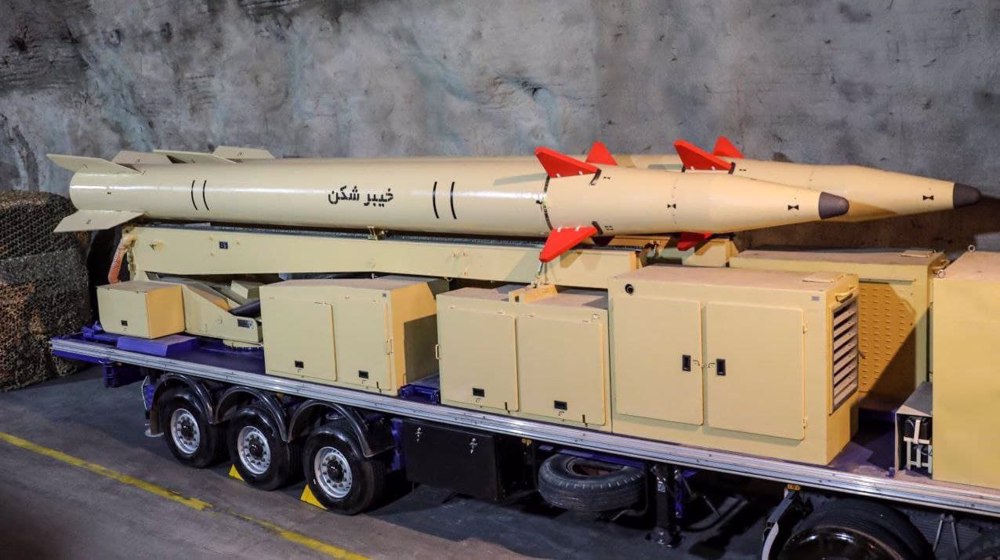
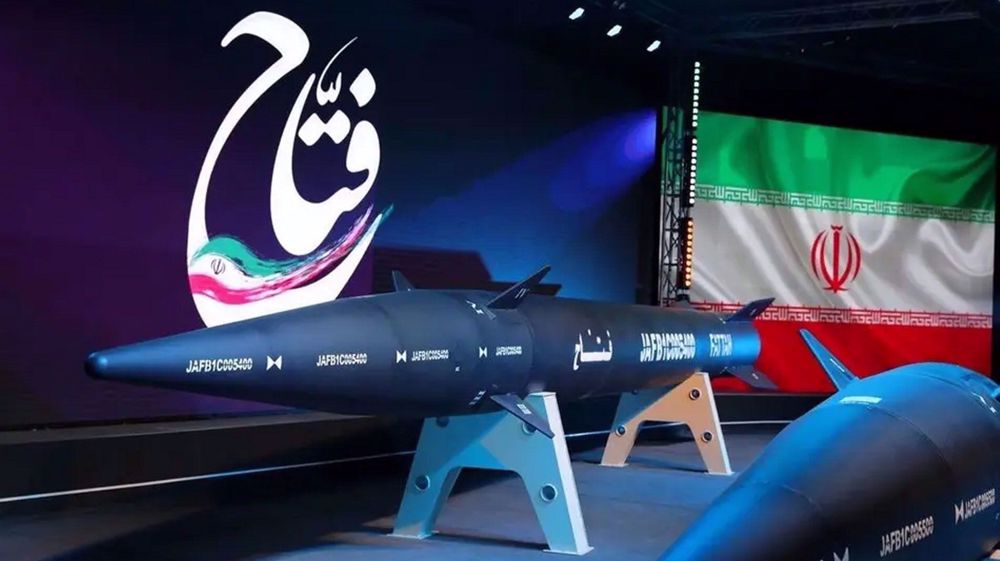
The Fateh-110 was not simply a weapon; it was the founding member of a family. That lineage eventually produced the Kheibar Shekan, with its maneuvering reentry vehicle, the Haj Qasem with its extended range, and ultimately the Fattah, Iran’s first announced hypersonic missile.
What makes Akhlaghi Ketabchi unique among defense technocrats is the breadth of his industrial competence. He is not a specialist who understands only one layer of the production chain. According to those familiar with his work, he possesses a thorough command of manufacturing processes across the missile and aerospace sector, and the capacity to establish a functioning production line under constraint, including under active pressure and disruption.
That capability, the ability to restart or reconstitute production rather than simply manage an existing line, is precisely what Iran will need in the months and years ahead. It is also what makes his appointment structurally significant rather than merely symbolic.
His foundational contribution to the field of Iranian solid-propellant technology for surface-to-surface missiles, a domain in which he is recognized as a founding figure, cannot be overstated.
His almost thirty-year engagement with this technology spans the full arc of Iranian missile development: from the Naze’at and Zelzal rocket systems of the early period, through the Zolfaghar and Haj Qasem, and into the liquid-propellant systems developed in parallel.
The Sejjil, a two-stage solid-fuel intermediate-range ballistic missile, which at its inception marked the first Iranian deviation at intermediate ranges from modified Scud designs, is also attributed to this period of his work.
He has also been credited with measurable advances across the full spectrum of missile performance, including range extension, accuracy improvement, warhead technology, guidance systems, and explosive yield, as well as playing a pivotal role in the incorporation of intelligent guidance systems into Iran’s broader weapons portfolio.
Beyond missiles, he has contributed significantly to the Iranian space sector, including space probes, launch vehicles, and the construction of launch infrastructure, including primary responsibility for establishing the Imam Khomeini Space Launch Center.
He is considered a foundational and enduring figure in Iranian space technology.
A gesture before the mandate
His second public appearance after the nomination was not a policy announcement or a ministry briefing. He visited the home of the martyred defense minister Major General Nasirzadeh to pay his respects to his relatives and to pledge plainly that the ministry would continue on the path of advancement.
It was a signal of continuity, not rupture. For those watching his first moves, the message was clear. He does not arrive to manage a transition. He arrives to accelerate one.
What the appointment signals
The martyrdom of Major General Aziz Nasirzadeh in the opening phase of the 40-day imposed war left the ministry without its uniformed leadership at a moment of acute operational stress.
The choice of Akhlaghi Ketabchi as replacement is striking in structural terms. He is not a general like his predecessors in the ministry. He is not even a military officer in the conventional sense. He is an engineer and industrial manager who has spent his career inside the defense-industrial complex rather than commanding formations or managing doctrine.
Iran’s Ministry of Defense is constitutionally the primary institution responsible for the planning, coordination, support, and expansion of the armed forces’ defense, security, infrastructural, and scientific capabilities.
It is the ministry tasked with supplying advanced systems to counter potential threats, not a battlefield command. Every previous minister, whether drawn from the IRGC or the Army, came through the uniformed officer corps. This appointment breaks that pattern decisively.
The message is legible. The stated objectives of the Israeli-American strikes included the degradation of Iran’s missile production capability and infrastructure.
These strikes did not achieve that objective. Nevertheless, the response is to place the man most associated with building that capability, across three decades and multiple sanctions regimes, in charge of the ministry responsible for rebuilding and expanding it.
This is not a transitional appointment. Akhlaghi Ketabchi’s landslide parliamentary confirmation was a given. He is the man for the job. His background gives him enormous institutional credibility within the defense-industrial establishment and with the country’s military high command.
What his appointment signals is a strategic decision.The missile and aerospace industrial base will not be scaled cautiously or managed down under pressure. It will be treated as the central priority of national defense, led by someone whose life’s work has been its construction.
The road ahead
Iran’s post-war defense posture is clear. The strikes created some degree of damage to physical infrastructure and, in some cases, personnel. Reconstituting production facilities, replacing specialized equipment lost to enemy strikes, and expanding the deep technical knowledge base required for advanced missile development are not trivial issues, and Akhlaghi Ketabchi knows exactly how hard they are, because he has spent decades solving analogous ones.
He is the founder of solid-propellant surface-to-surface missile technology in Iran, a man who built production lines under crippling sanctions, transferred rocketry capability to allied forces across the region, was recognized by every level of the Islamic Republic’s institutional hierarchy over four decades, and now stands at the helm of the ministry responsible for the development and progress of the entire defense-industrial sector.
The Western sanctions architecture around him serves as additional accolades on an already impressive curriculum vitae. Each designation is a record of something they believed he had done, or was capable of doing.
What his appointment guarantees is that the effort will be led from an engineering logic. His entire career has been oriented toward one set of outcomes: more capable missiles, more resilient production chains, more advanced propulsion.
The sanctioning bodies of Europe, the United States, and others have implicitly recognized that orientation for nearly two decades. For analysts watching Iran’s defense trajectory, the relevant question is not whether Akhlaghi Ketabchi will pursue expansion of the Iranian military capabilities - he will, but at what speed, with what technical ambitions, and toward what strategic end-state.
A Ministry of Defense run by the man who was instrumental in the inception of the Fateh family and helped develop a domestic space sector is a ministry oriented toward one conclusion. What was damaged can be rebuilt better, and whatever was fielded can be made more lethal.
 This makes it easy to access the Press TV website