
By Mina Mosallanejad
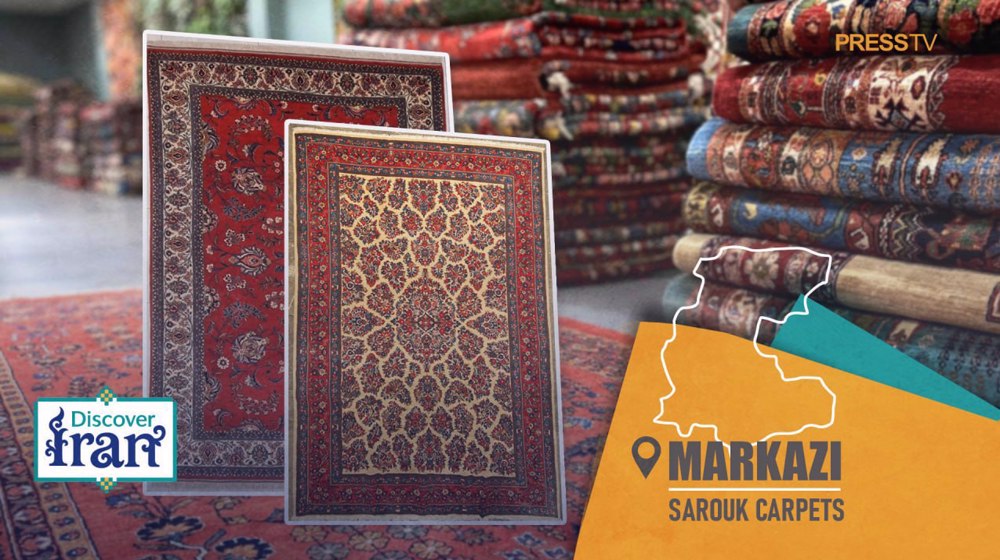
- Sarouk carpets from Markazi province are well-known internationally for their rich colors, floral designs, and durability.
- American demand in the early 20th century led to the development of the distinctive American Sarouk style.
- Efforts are underway to gain international recognition for Sarouk’s weaving heritage and preserve its traditional craftsmanship.
From the hands of village weavers in central Iran to prestigious homes and international collections, Sarouk carpets tell a story of craftsmanship, cultural heritage, and enduring artistic appeal.
In the heart of Iran’s Markazi province, north of the city of Arak, a centuries-old tradition has woven together the lives of local communities, the beauty of Persian art, and the history of international trade.
Sarouk carpets, renowned for their rich colors, intricate floral designs, and remarkable durability, have carried this tradition far beyond their place of origin, earning a distinguished position in the history of Persian rugs.
More than decorative pieces, these hand-woven carpets represent the patience, skill, and artistic imagination of generations of Iranian weavers.
Their journey from rural looms to the bazaars of Arak and the homes of collectors across the world reflects the ability of traditional craftsmanship to transcend geographical and cultural boundaries.
A heritage rooted in central Iran
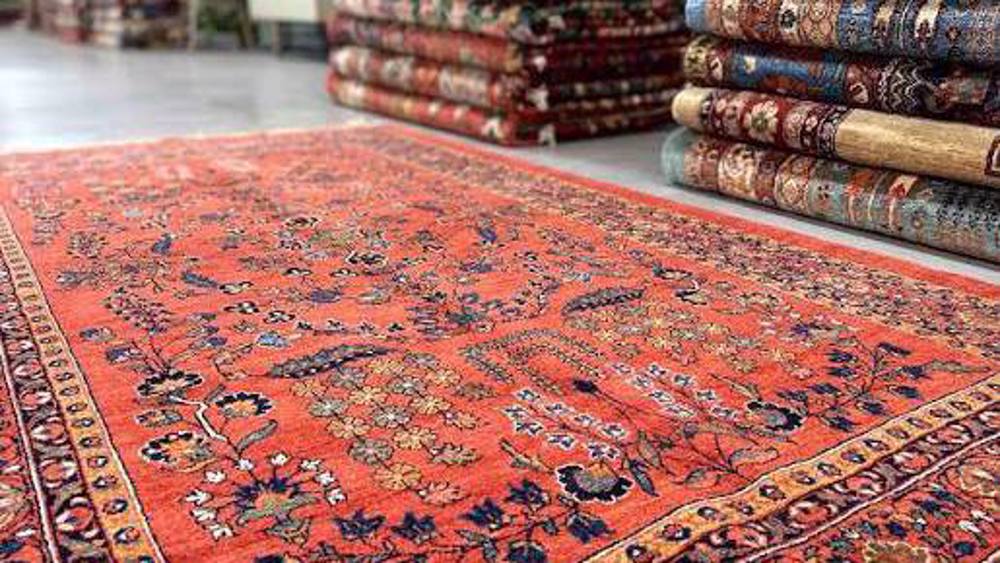
Sarouk, also spelled Saruk or Sarough, is a village in Markazi province whose name became internationally associated with a distinctive tradition of Persian carpet weaving.
The surrounding region, including Arak, historically known as Sultanabad, developed into one of Iran’s important carpet-producing centers during the nineteenth century.
The region’s established weaving skills, access to quality wool, and network of local artisans provided the foundations for a thriving industry.
As production expanded, merchants connected village weavers and workshops with commercial centers, helping introduce carpets from central Iran to increasingly distant markets.
By the late nineteenth century, Sultanabad had become an important center for producing carpets intended for Western customers.
The establishment of foreign trading offices, including that of Ziegler & Co. in Sultanabad in 1883, helped strengthen the links between local craftsmanship and international demand.
Sarouk and neighboring weaving communities became part of this wider commercial network.
Yet the tradition’s success rested on more than trade. It depended on generations of accumulated knowledge: selecting wool, preparing yarn, combining colors, interpreting traditional motifs, and tying thousands of knots by hand to create a coherent design.
Distinctive designs and a rich palette
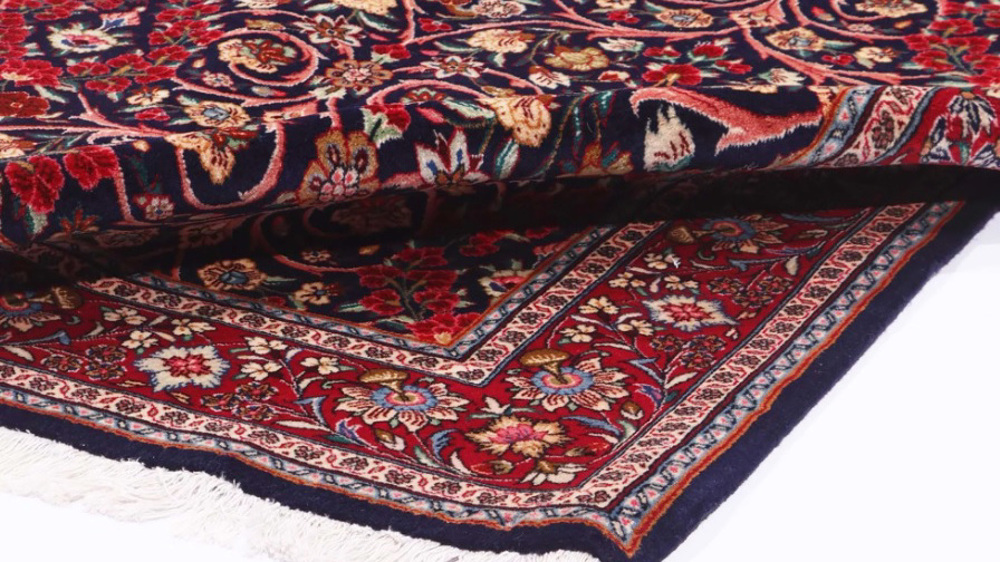
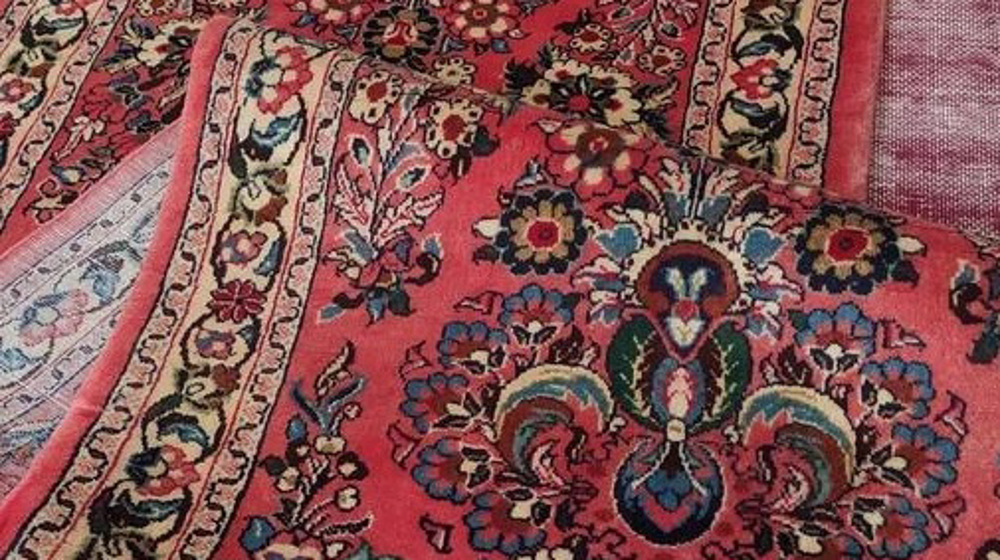
Sarouk carpets are particularly admired for their floral compositions, carefully balanced patterns, and warm, expressive colors.
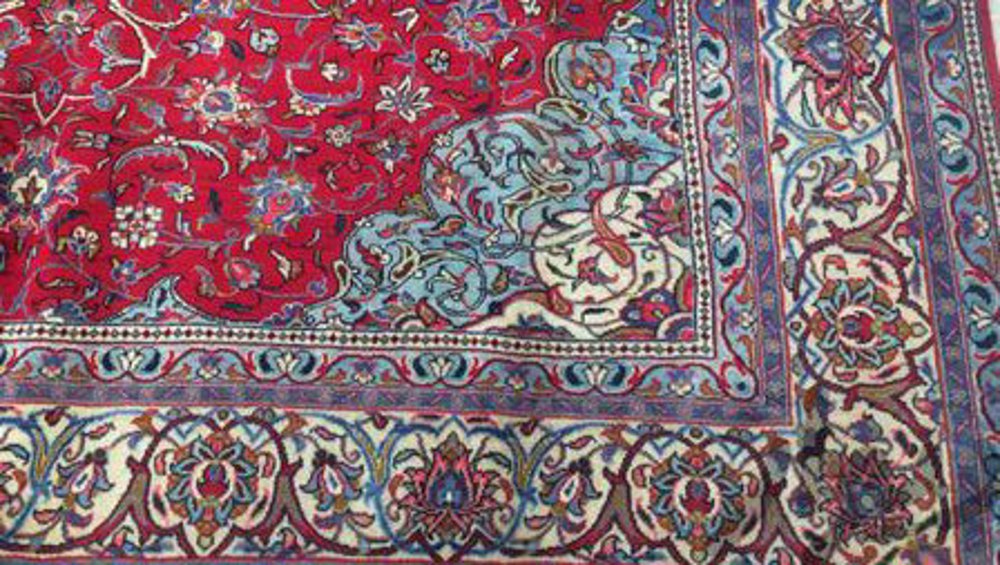
Depending on their period and workshop, their designs may feature central medallions, curving vines, palmettes, leaves and finely rendered flower heads. Other examples display bouquets and individual floral sprays arranged across an open background.
These variations give Sarouk weaving a distinctive visual identity while demonstrating the flexibility of the broader Persian artistic tradition.
Some carpets favor intricate, densely arranged decoration, while others allow more space between floral motifs, creating an elegant sense of balance.
Color is another defining feature. Rose-red, salmon, coral, and deep burgundy are among the best-known colors associated with Sarouk carpets, often complemented by navy blue, ivory, soft blue, and touches of green.
The contrast between warm backgrounds and cooler details gives the designs depth and helps individual motifs stand out.
The palette also reflects the history of the trade. In the early twentieth century, carpets made for American buyers were sometimes altered after weaving to achieve colors more suited to contemporary Western interiors.
These pieces became known as American Sarouks, an internationally recognized chapter in the development of the style.
Despite changes in fashion and export preferences, Sarouk carpets have retained their characteristic combination of decorative richness and practical strength.
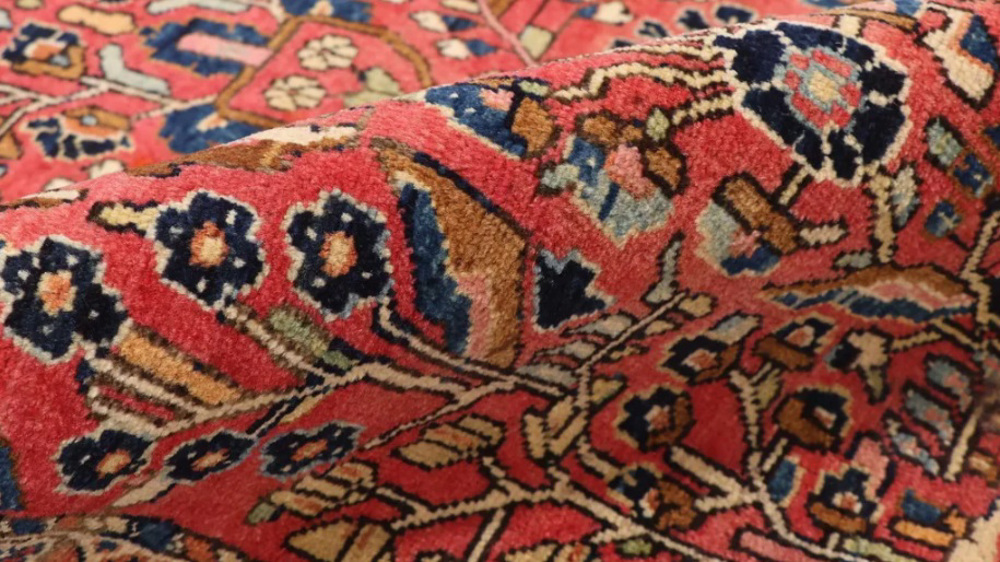
Their dense wool pile and sturdy construction have helped many antique examples survive for generations, making them valued objects in both traditional interiors and specialist collections.
From village looms to European and American homes
The international rise of Sarouk carpets gathered momentum in the late nineteenth and early twentieth centuries, when demand for Persian rugs expanded across Europe and North America.
Arak and its surrounding weaving communities were well placed to benefit from this growing market. Merchants and trading companies helped bring locally produced carpets to foreign buyers, while changing tastes influenced the sizes, patterns, and colors commissioned by importers.
During the first half of the twentieth century, American customers developed a strong appreciation for the carpets’ floral designs, substantial wool pile, and rich red tones. Production adapted to these preferences, contributing to the development of the American Sarouk style.
The relationship between weavers and overseas customers illustrates how Persian craftsmanship could respond to international tastes without losing its distinctive identity. Local skills remained central to the finished product, even as designs evolved to suit different markets.
European buyers also helped establish the wider reputation of carpets from the Sultanabad region. Through international exhibitions, specialist dealers and the expanding trade in Oriental rugs, these carpets became part of a global appreciation for Persian decorative arts.
The legacy of that period remains visible today in antique collections and the international rug market, where Sarouk continues to be recognized as an important regional tradition.
An enduring place in Persian artistic heritage
The significance of Sarouk carpets extends beyond their commercial history. Each handwoven piece embodies a combination of technical knowledge and artistic judgement that cannot be reduced to a repeating industrial process.
The weaver must maintain the consistency of the weave while translating a complex composition into knots, colors, and carefully arranged motifs. Small variations between individual carpets are part of the character of handmade production, giving each piece its own identity.
Efforts to protect Sarouk carpets have focused on safeguarding their geographical identity, preserving their distinctive craftsmanship and strengthening their international reputation.
Iranian initiatives have sought to secure geographical recognition for regional carpet-producing centers, helping protect their names from imitation and reinforce their connection to their places of origin.
In 2010, UNESCO inscribed the traditional skills of carpet weaving in Fars and Kashan on its Representative List of the Intangible Cultural Heritage of Humanity.
Efforts are also being pursued in Iran to seek wider international recognition for Sarouk’s weaving heritage, to place it alongside other renowned regional traditions.
A similar nomination for Sarouk could highlight the region’s distinctive designs, traditional techniques and generations of inherited expertise.
A tradition with a continuing international presence
According to figures reported by the Iranian Customs Administration, Iran exported $41.7 million worth of hand-woven carpets and Gabbeh rugs in the Iranian calendar year 1403, covering March 2024 to March 2025.
The figure represented a 3 percent increase in export value compared with the preceding year.
Germany, the United Arab Emirates, Japan and China were the leading destinations in that reporting period. Together, they accounted for $22.6 million of the exports, while Iranian hand-woven carpets and Gabbehs reached 55 countries overall.
These figures cover a broad category of Iranian handmade carpets and do not provide a separate export value for Sarouk rugs. Nevertheless, they demonstrate that international markets remain part of the wider story of Iranian carpet craftsmanship.
For Sarouk, the opportunity lies in the qualities that have distinguished the tradition for generations: handwork, durable materials, recognizable designs and a strong connection to place.
Antique examples appeal to collectors interested in the history of Persian rugs, while contemporary pieces can bring the colors and patterns of central Iran into modern interiors.
Their story is one of continuity and adaptation — a testament to the enduring ability of Iranian craftsmanship to transform everyday materials into works of lasting beauty.
 This makes it easy to access the Press TV website