
Iraqi security forces have detained seven Ukrainian nationals suspected of plotting attacks on oil facilities in Persian Gulf states, as reports of Kiev’s cooperation with militant groups in West Asia raise serious questions about Ukraine’s covert military activities abroad, a report says.
The seven Ukrainians were arrested in late July on suspicion of using drones to target energy installations in the region, the Cradle reported on Friday.
The arrests come amid a dispute between Baghdad and Riyadh after Saudi Arabia claimed on July 27 that it had intercepted drones allegedly launched from Iraqi territory, prompting Baghdad to order an investigation and pledge not to allow Iraqi land to be used for attacks against neighboring states.
Days later, US and Saudi warplanes launched intense airstrikes against Iraq’s Popular Mobilization Units (PMU), killing at least 20 resistance fighters and injuring dozens more.
In September, Riyadh renewed its allegations against Iraqi resistance groups following a drone attack on its East-West oil pipeline.
The Islamic resistance in Iraq strongly rejected the allegations, declaring on September 12 that the accusations linking it to attacks on vital Saudi installations were “an honor we do not claim,” while condemning Baghdad’s acceptance of the claims without credible evidence or concrete investigations.
Meanwhile, sources told the Cradle that Ukrainian operatives have been active in several countries, training local armed groups to use drones and prepare for military operations, while Kiev’s intelligence agencies have reportedly expanded cooperation with militants in Syria, Mali, Libya, and South Africa.
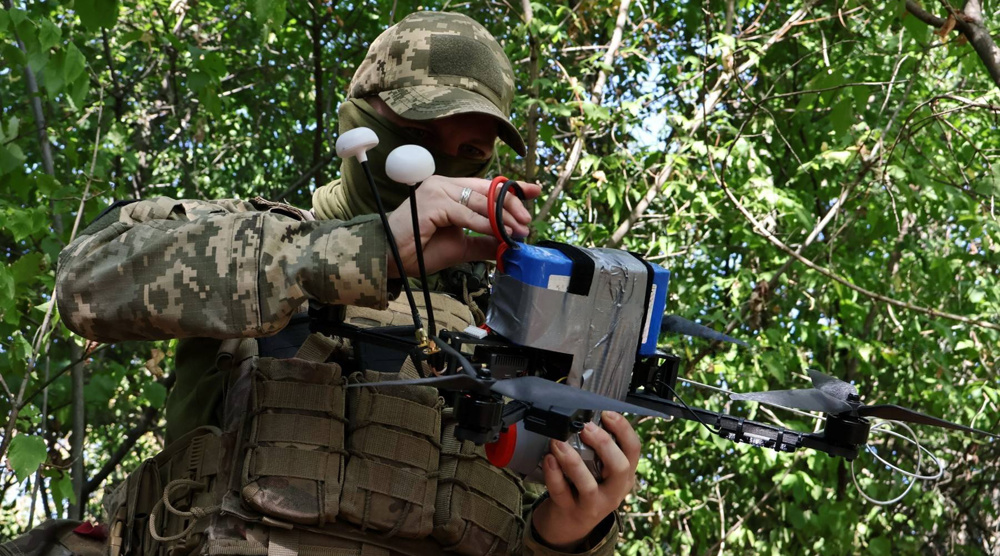
The reported operations involve heavy “BA AYGA” drones capable of carrying large quantities of ammunition and explosives, with local militia assembling and preparing the aircraft while Ukrainian intelligence personnel control them remotely.

Kiev’s reported activities in Syria have also raised alarm, with Turkish media reporting in September 2024 that Ukrainian government officials had discussed a “drones-for-fighters” arrangement with Hay’at Tahrir al-Sham (HTS), the armed group that launched an offensive that overthrew the Syrian government three months later.
The Cradle reported that the offensive included drone strikes directed by Ukrainian trainers, as HTS leader Abu Mohammad al-Jolani, the founder of al-Qaeda’s Syrian branch, subsequently declared himself president.
In another revelation, the Cradle contributor Radwan Mortada reported in March 2026 that the Ukrainian embassy in Beirut was harboring a high-profile Israeli spy wanted by Lebanese authorities.
 This makes it easy to access the Press TV website