

By Humaira Ahad
The 15-year-old had begun turning part of her home into a laboratory when a US-Israeli missile strike killed her and her father in March, nine months after an earlier Israeli attack killed her mother.
Hosna Foladvand knew what she wanted to do with her life. She would study mathematics, become a scientist and follow in the footsteps of her father, Ali Foladvand, a physicist whose work in Iran’s nuclear science and technology sector had fascinated her since childhood.
“I don’t want to study experimental sciences or medicine; I will study mathematics so I can become a scientist like my father,” she told her uncle, Mohammad-Taqi Foladvand.
Her father had spent more than two decades working in Iran’s peaceful nuclear science and technology sector, a field Hosna dreamed of entering herself.
Deeply attached to her father, she shared his character and religious faith, her uncle told a Persian-language website.
Ali had warned Hosna of the risks associated with his work, and she understood the dangers he faced. Yet she had one wish if the worst came to pass. “If we are going to be martyred, we should all be together,” she told him, her uncle recalled.
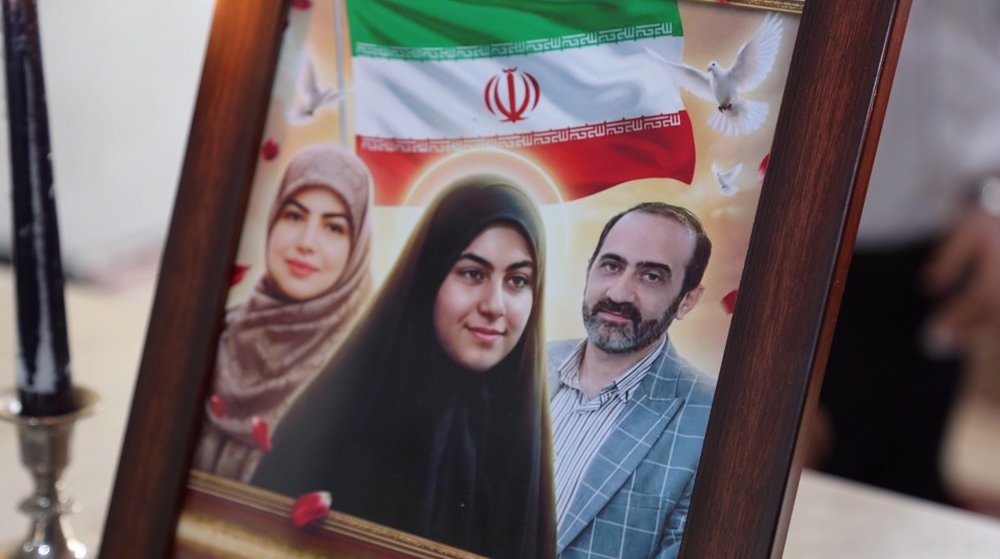
Nine months after an Israeli attack killed her mother and left her father severely wounded, those words turned prophetic.
In the early hours of March 28, 2026, two missiles struck the house where Ali was staying. The explosions destroyed the building and damaged neighbouring homes. Twelve people were killed and 36 injured.
In the hours that followed, relatives desperately searched for news of Ali and his two children. They were told Ali had been taken to hospital, but could not locate him. Conflicting reports deepened their anguish as some said he was in a coma; others said his body had yet to be recovered.
As relatives searched for Hosna, her brother Alireza lay in hospital, and the family remained uncertain about the extent of his injuries.
Mohammad-Taqi recalled the choices facing them as they tried to find the three members of their family.
“We did not know whether we should go to the Martyrs’ Cemetery and stand beside my brother’s body, remain beside Alireza at the hospital while he was in a coma, or search for signs of Hosna’s body,” he said.
Hosna’s body was found several hours after the strike. Her father’s body was recovered intact, according to her uncle.
Rescuers from the Red Crescent found Alireza on the roof of a house four buildings away, wrapped in a blanket. He had been injured in the attack and was taken to hospital.
June attack that changed the family
The first attack had come on June 13, 2025, at about 3:20 a.m. An Israeli missile and a drone struck the family’s home in Tehran. The drone entered through the balcony, while the missile struck through the roof. The ceiling above the bedroom and living room was destroyed.
Hosna’s mother, Masoumeh Pirhadi, was killed and her father was left with catastrophic injuries. Alireza and Hosna subsequently returned to Borujerd, in Lorestan province, where their mother's family had roots. Ali remained in Tehran for treatment.
The Iranian scientist was badly wounded by metal fragments and pellets. His family later estimated that between 1,300 and 1,400 fragments had lodged in his body. He underwent repeated surgeries to remove them.
"For 20 days, he could not lift his head from his pillow; his condition began to improve only after about two and a half months," Mohammad Taqi said.
Recalling the ordeal, the scientist told his brother: “They kept putting my body under heat to remove these pieces of metal and shrapnel, to such an extent that I felt as though my soul had left my body for a few minutes.”
His eyes and fingers were severely damaged. For months, he used a wheelchair, leaving home mainly for medical procedures.
According to close relatives, Ali initially did not know that his wife had died and repeatedly asked to see her. When his family finally broke the news, his response was brief: “My back is broken.”
Still recovering from his own serious injuries, Ali faced the added burden of caring for Hosna and Alireza as they struggled with the loss of their mother, while he himself grappled with the death of his wife.
Following her father’s footsteps
Ali had built his career in one of Iran’s most strategically important scientific fields, spending more than two decades as a physicist in the country’s nuclear science and technology sector and heading the research department of the Organization of Defensive Innovation and Research.
Despite the significance of his work, he kept a low profile. When his brother asked why he preferred to remain out of public view, Ali replied: “I have God. He watches over me. The fact that He sees and knows is enough; nobody else needs to see.”
His brother remembered a man whose scientific pursuits were inseparable from his religious devotion. According to her uncle, Hosna saw her father as a role model and hoped to follow in his footsteps.
Alireza, the child who survived twice
Alireza had already become known to many people after the June 2025 Israeli attack that killed his mother. During a condolence visit by local officials in Borujerd, video showed the boy playing with the hat of the provincial commander of the Islamic Revolution Guards Corps (IRGC). After their mother's death, he and Hosna stayed in Borujerd.
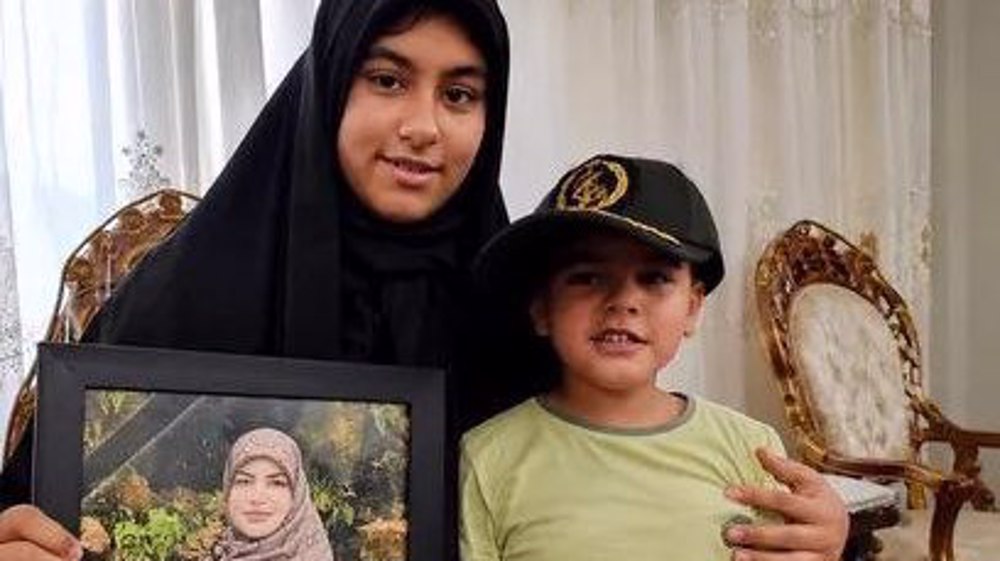
With Alireza hospitalized after the March US-Israeli strike killed Ali and Hosna, Ali’s mother was left to cope with the loss of her son, granddaughter, and daughter-in-law.
Her health had already been fragile. As her son Mohammad-Taqi explained, Ali had asked the family not to tell his mother that Masoumeh had been killed in the June 2025 attack, knowing she would struggle to bear the loss. After the March strike killed Ali and Hosna, she was plunged into shock and repeatedly taken to hospital with heart and respiratory problems.
Yet when Alireza was brought to her after the second attack, Mohammad-Taqi said her condition appeared to improve. He believed that seeing her grandson had brought her comfort amid the family’s grief.
The extended family has since taken responsibility for Alireza’s care. But his uncle says their love cannot make up for the loss of both parents or restore the sense of security the boy once had.
“The painful reality is that the absence of a father and mother cannot be filled by any amount of love, not even our deepest care,” he said.
Alireza survived both US-Israeli attacks; the first killed his mother, and the second took his father and sister. He is now the only surviving member of his immediate household, dependent on relatives as he faces a future without the three people who had formed the center of his life.
 This makes it easy to access the Press TV website