

By Alireza Ahmadzadeh
Sixteen months into the no-holds-barred US-Israeli war of aggression that has failed to break Iran, the Donald Trump administration has reached for a familiar tool: economic strangulation.
Dubbed "Operation Economic Outcast" and heralded by US Treasury Secretary Scott Bessent as the so-called "Economic D-Day," the campaign promised to starve Tehran of revenue and force a swift capitulation.
But just as the US-Israeli military aggression fell apart against Iran’s indomitable resistance both in June 2025 and this year, Washington’s economic siege is also exposing itself as a delusion.
Nearly two months later, the decisive breakthrough that was supposed to force Iran back to the negotiating table has not arrived. Like the kinetic war that preceded it, the economic offensive is settling into a costly stalemate that exposes the limits of American coercion.
Hubris of ‘Economic D-Day’
Nearly fifty days ago, Bessent unveiled the so-called “Operation Economic Outcast,” branding it the "single greatest financial offensive ever marshalled against an adversary."
The Treasury Secretary dispatched diplomatic and enforcement teams to more than 50 countries, threatened sweeping secondary sanctions against any entity facilitating Iranian trade, and publicly declared that Iranian oil exports would hit zero and that all Iranian airlines would be shut down worldwide by late September.
Bessent has since taken to social media and television to declare the imaginary victory, boasting that Iran has loaded "zero crude oil onto tankers" and that the country is being starved of cash.
He outlined a three-stage strategy: a kinetic military assault, an "Iron Wall" naval blockade, and finally, total economic isolation.
"For the first time in history... they will have no oil on the water this week. They will have no revenue," Bessent recently claimed.
Yet, as the deadlines for these grandiose pledges expire, the reality on the ground tells a vastly different story. The administration is now quietly bracing for a protracted economic war, as its initial promises of a swift collapse have proven impossible to meet.
Leaky blockades
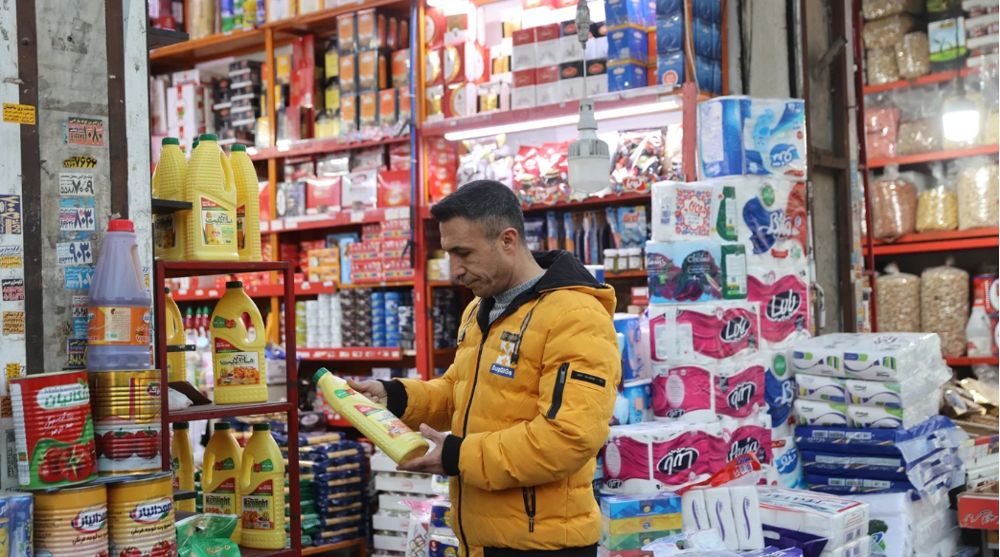
According to The Washington Post, while the US blockade of Iranian ports has forced maritime oil exports to minimal levels, it has entirely failed to sever Tehran's broader economic lifelines. Iran continues to do business while the US continues to feel the pain.
Far from being grounded by Bessent's secondary sanctions, international flights continue to arrive in Tehran from major regional hubs like Istanbul, Moscow, Shanghai, and Islamabad.
Furthermore, while the US naval blockade has choked off Iran’s seaborne oil exports, Iran is still exporting energy overland via the highways and railways of Central Asia and the wider region.
Most damning to Bessent’s narrative of impending collapse, talks remain entirely stalled, with Iranian officials flatly refusing to moderate their demands. Iran’s top security official Mohsen Rezaei has made clear that the US must accept all seven points proposed by Tehran.
Instead of capitulating, Tehran has held its ground. Last week Iranian forces struck multiple violating vessels in the Strait of Hormuz, underscoring that economic pain has not translated into political concessions. Iran will stand its ground against any aggressor.
Desperate reversals
This is not the first time Washington has bet that an economic siege would break Iranian resistance. Previous rounds of “maximum pressure” followed the same logic. But this new round comes under active wartime conditions and with far higher global costs.
Attempts to force third countries, especially China, Turkey and others, to choose between Iranian trade and access to the dollar system risk broader financial friction at a moment when Washington’s relations with much of the world are already transactional and strained.
Bessent himself acknowledged the danger of moving too aggressively against major international financial institutions, asking rhetorically why he would want to “blow up the global financial system.” That caution is telling.
The very scale of the threatened secondary sanctions reveals both the ambition of the policy and its practical limits, as countries that reject the premise of the war are unlikely to enforce a total embargo simply because Washington demands it.
While Washington’s economic missiles fail to break Iran's strategic resolve, the shrapnel is devastating the American domestic economy.
The disruption in energy markets has triggered severe blowback inside the United States, exposing the flaw of waging economic war against a nation that controls critical energy chokepoints.
With benchmark oil prices surging from $70 to over $105 a barrel, and bank forecasts warning of $150, the cost of diesel and chemical fertilizers has skyrocketed. This has sparked anger among American farmers struggling to absorb rising operational costs, reducing the administration's grandiose geopolitical slogans to domestic debates over fuel supplies.
The domestic energy crisis became so acute that Trump was recently forced into a humiliating policy reversal. To secure 300,000 tons of Russian diesel—roughly half a day's US consumption—the administration temporarily suspended its own sanctions on Russian energy.
This move to keep US agricultural and transport sectors afloat came just weeks after Trump signed legislation expanding those very sanctions, underscoring the severe self-inflicted wound of the war on Iran.
Another failed gamble
The military campaign was initially sold as swift and decisive. It became a grinding contest of attrition that Washington could neither win quickly nor exit cleanly.
Trump has repeatedly pushed the goalposts, first claiming the war would last weeks, and now suggesting it will likely extend past the upcoming US midterm elections.
The economic sequel is following a parallel trajectory: bold public timelines, repeated claims of imminent collapse, and a gradual acknowledgment that the opponent is prepared to absorb far more pain than expected.
Iran’s leadership appears to calculate that enduring economic hardship is preferable to political capitulation under fire.
Trump’s team continues to insist that time is on its side. History, and the accumulating evidence of the past sixteen months, suggests otherwise.
Economic warfare can impose costs, but it has not produced the decisive diplomatic opening that was supposed to justify the entire military adventurism.
Tehran views this war as an existential struggle for its sovereignty. Having survived a brutal kinetic war, destroyed strategic assets across the region, and forced American troops out of the Persian Gulf waters, Iran sees no reason to surrender its strategic depth to an administration that is visibly panicking over domestic diesel shortages.
Like the war that preceded it, the so-called “Operation Economic Outcast” is fast becoming another expensive demonstration that pressure without a viable political endgame remains just pressure, and that Iran has repeatedly shown it can outlast all American timelines.
Alireza Ahmadzadeh is a Tehran-based international affairs analyst and PhD researcher.
(The views expressed in this article do not necessarily reflect those of Press TV.)
 This makes it easy to access the Press TV website