
By Ivan Kesic
- Chal Nakhjir is a living limestone cave whose formations are still actively growing, with a natural ventilation system that keeps it cool in summer and warm in winter, and a constant temperature of 7 to 14 degrees Celsius throughout the year.
- Discovered in 1989 and opened to the public in 2010, the cave features three distinct levels, more than a thousand meters of paved and illuminated pathways, and named halls such as Chehel Sotun, the Bridal Veil, and the Hall of Beauties, adorned with helictites, popcorn deposits, and stone shapes resembling animals and human figures.
- The cave's development is linked to the Qom Formation, with Cretaceous limestones dated to 83 to 90 million years ago, and its passages extend an estimated 6 to 12 kilometers, with a lake some 60 meters below the entrance.
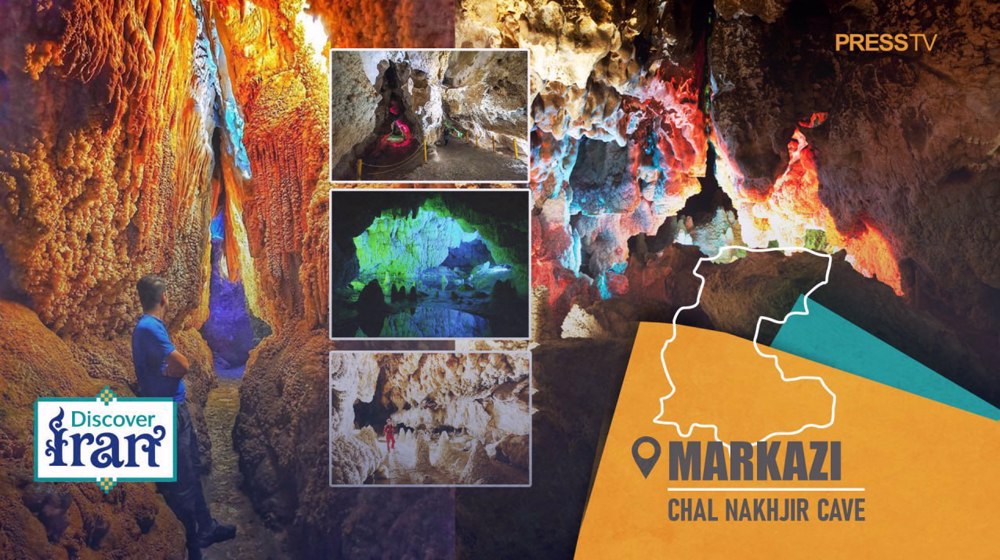
Beneath the rocky slopes of central Iran, a hidden world of white crystals, limestone sculptures, and ancient geological history awaits discovery. Chal Nakhjir Cave, located between the cities of Delijan and Naraq in Markazi Province, stands as one of the country's most remarkable natural attractions.
This living limestone cave, estimated to be approximately 90 million years old, offers visitors an extraordinary journey through underground halls adorned with stalactites, stalagmites, and crystalline formations of breathtaking beauty.
Unlike many caves that require specialized equipment and technical expertise to explore, Chal Nakhjir has been carefully prepared for public visitation, making its wonders accessible to families, tourists, and geology enthusiasts alike.
The cave represents a perfect fusion of scientific significance and natural splendor, inviting visitors to witness the slow, patient work of geological forces that have shaped this subterranean masterpiece over millions of years.
Location and discovery
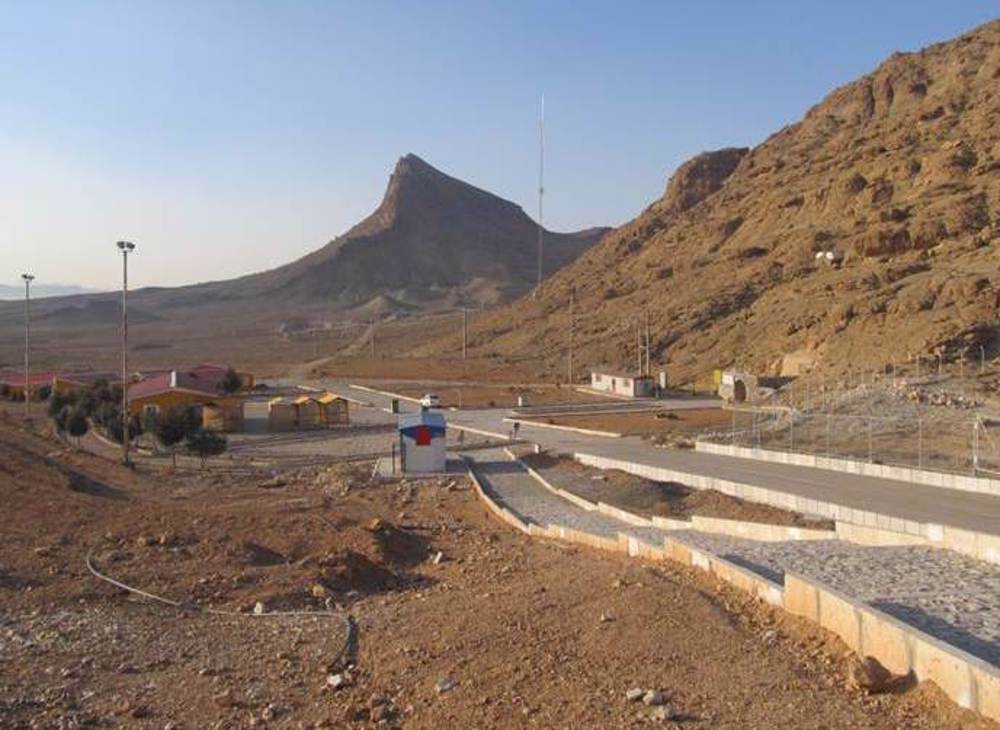
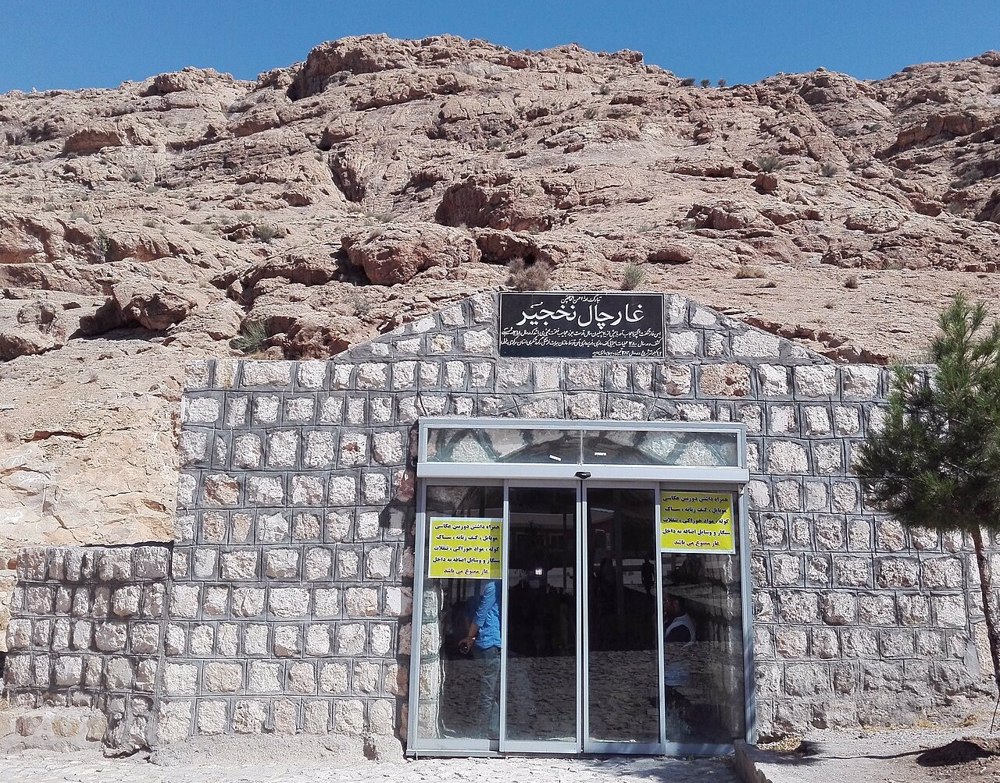
Chal Nakhjir Cave is situated on the slopes of Takht Mountain, adjacent to the Jasb Wildlife Refuge and near the villages of Kerogan, Vashtekan, and Harazjan. The cave lies approximately 8 kilometers northeast of Delijan, just off the road connecting Delijan to Naraq.
The name Chal Nakhjir derives from the Persian words for a hollow or depression and a hunting ground, reflecting the area's historical use as a place where hunters would drive their prey into the natural depression for easier capture.
The cave was discovered in 1989 during water-related excavation work by the Delijan Water Organization near its entrance. Following its discovery, the cave was registered as a national monument and subsequently developed for tourism.
The preparation work, including pathways, flooring, and lighting, began in 2004 and the cave was officially opened to the public in 2010. Today, more than a thousand meters of the cave's interior have been paved and illuminated for visitors.
Geological marvel
Chal Nakhjir is a limestone cave, with approximately 90 percent of its structure composed of limestone and the remainder consisting of other minerals.
The cave is classified as a living or active cave, meaning that water and mineral deposits continue to shape its formations, creating new structures even today. This ongoing geological activity distinguishes it from dormant caves where formation processes have ceased.
The cave's development is associated with the Qom Formation, a geological unit in central Iran that contains soluble limestone particularly susceptible to dissolution.
Fractures and fault movements have played a significant role in the cave's construction, with corridors expanding along the direction of these structural weaknesses. The main trend of the cave is north-south, consistent with the fracture patterns in the region.
The geological setting includes Cretaceous limestones and parts of limestone and shale layers from the Jurassic-age Shemshak Formation.
Recent studies examined the development of the cave’s karst system and identified Cretaceous limestones, particularly rocks assigned to the Coniacian and Santonian stages (83 to 90 million years ago), as important geological components.
The interaction of soluble limestone, tectonic activity, and chemical dissolution over millions of years has created the extensive network of passages, halls, and chambers that visitors explore today.
The cave is estimated to extend approximately 6 to 12 kilometers in length, with roughly 6 kilometers having been discovered and mapped so far. The explored sections reach depths of up to 61 meters.
Underground halls and formations
The interior of Chal Nakhjir is a world apart from the arid landscape above. The cave comprises three distinct principal floors or levels, of which two have been prepared for public visitation.
The lowest level contains a lake situated approximately 60 meters below the cave entrance, with a known area of about 400 square meters, though its full extent remains unexplored.
The cave features numerous halls, each with its own character and name. Among the most celebrated is Chehel Sotun, or Forty Columns, described as the most beautiful hall in the cave, adorned with a diverse array of stalactites and stalagmites in dazzling colors.
Other named halls include Sofreh-ye Arus or Bridal Veil, Daryacheh or Lake, Barzakh or Purgatory, Bagh-e Vahsh or Zoo, Farsang, Abshar Goli or Flower Waterfall, Gol Kalami or Cauliflower, and the Hall of Beauties.
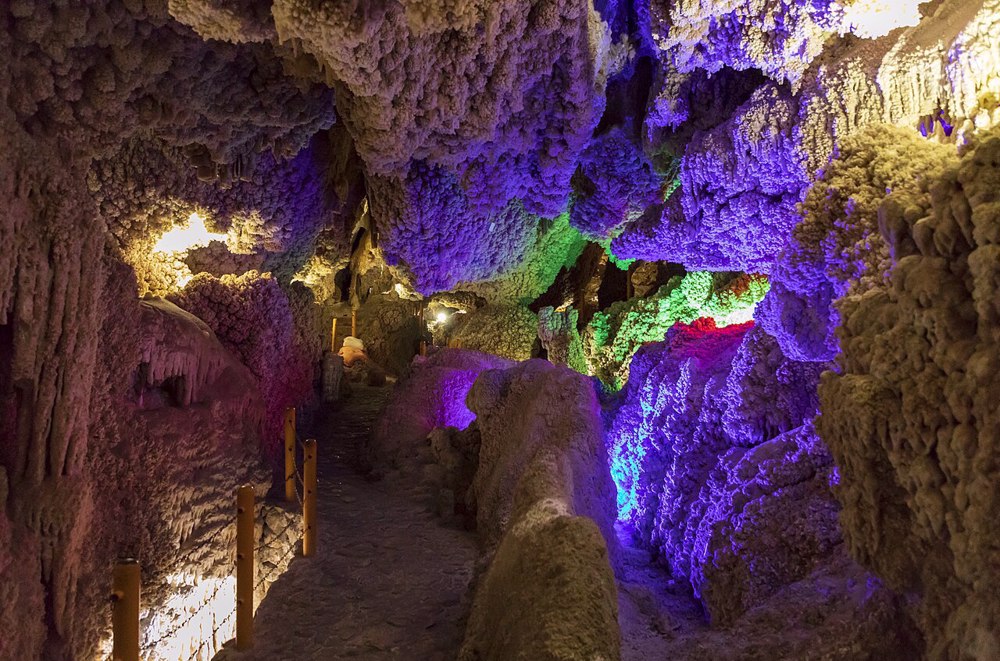
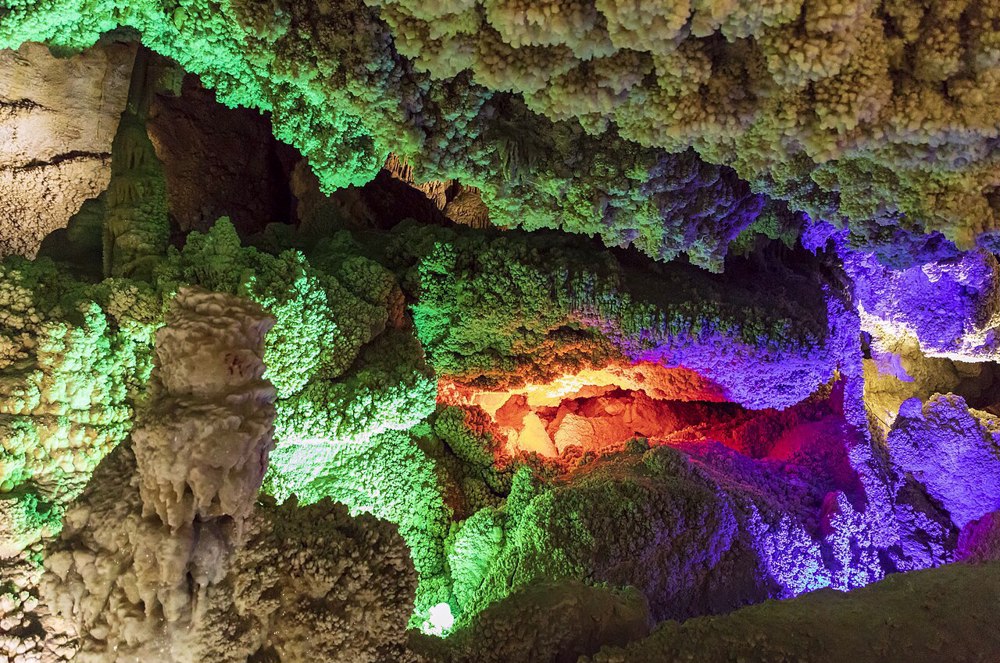
The formations within these halls are predominantly white and milky in color, composed of calcium carbonate, aragonite, and gypsum.
Visitors can observe stalactites hanging from ceilings, stalagmites rising from floors, flowstone draping across walls, and delicate crystalline structures.
The cave is particularly noted for its helictites, formations that grow in irregular directions rather than following the simple downward growth of ordinary stalactites, and popcorn-like deposits that give certain passages a textured, knobbly appearance.
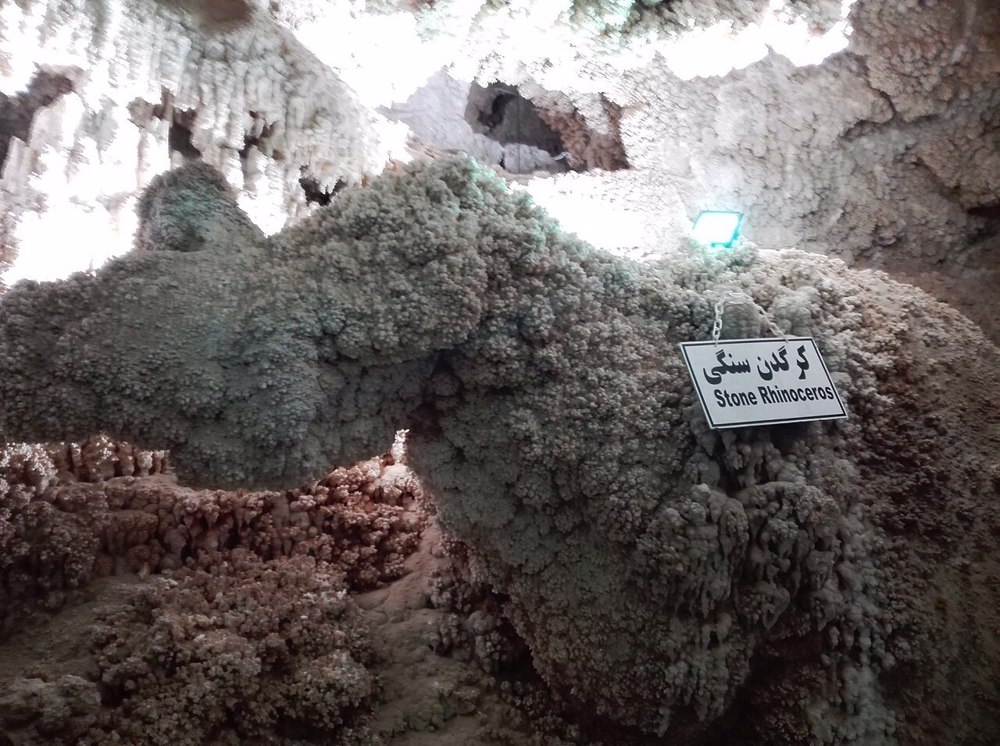
Natural stone forms resembling animals and human figures have been shaped by limestone deposits over millennia. Visitors may recognize shapes resembling eagles, turtles, deer, humans, and pigeons within the formations.
These natural sculptures have been given descriptive names by local guides, adding a layer of imagination and storytelling to the geological experience.
Living cave with unique characteristics
Several features distinguish Chal Nakhjir from other caves in Iran and around the world. The cave possesses a natural ventilation system that maintains a stable, comfortable temperature throughout the year, remaining cool in summer and warm in winter.
The air inside is fresh and well-circulated, ensuring that visitors do not experience oxygen shortages during their visit.
The cave's living nature means that if portions of its formations are damaged or cracked, natural processes will gradually restore them over time. This self-healing quality is a testament to the ongoing geological activity that continues to shape the cave.
The temperature inside remains constant at approximately 7 to 14 degrees Celsius throughout the year, providing a refreshing escape from the summer heat.
The exceptional white dolomite sediments that cover the floors and walls of major corridors give the cave its distinctive appearance, described by some as resembling white popcorn.
The whiteness of the formations, combined with the carefully designed lighting system, creates an ethereal atmosphere that photographers and visitors find captivating.
Geological significance and research
Chal Nakhjir has attracted the attention of geologists and researchers seeking to understand karst development in arid and semi-arid regions.
Studies have examined the cave's host rocks, structural fractures, and mineral deposits, helping to explain how this subterranean landscape developed.
The cave's formation is attributed to the interaction of soluble limestone, fractures created by tectonic activity, and chemical dissolution by slightly acidic water over millions of years.
Research has identified the presence of various speleothems, including stalactites, stalagmites, flowstone, drapery, rimstone, popcorn, and helictites.
The development rate of the cave's karst system has been calculated using established scientific equations, contributing to the broader understanding of cave formation processes in the region.
The geological studies of Chal Nakhjir focus on the age and composition of the host formations and on the processes responsible for the development of the karst system.
The rocks surrounding the cave may be tens of millions of years old, while the cavities within them formed later through the gradual dissolution of limestone. Individual mineral formations may also have their own histories of growth and interruption.
Visiting the cave
Chal Nakhjir offers a unique excursion for travelers exploring central Iran. The developed visitor section allows people to observe the cave without undertaking a technical caving expedition.
The paved pathways and staircase make the cave accessible to a wide range of visitors, including families with children and older adults. The cave is open for visits approximately from 9 AM to 7 PM, though hours may vary by season.
Tickets are required for entry. Visitors are advised to wear comfortable, non-slip footwear and bring a light jacket, as the temperature inside the cave remains cool and constant throughout the year. The pathways can be slippery due to moisture, so caution is recommended.
Photography inside the cave is restricted or prohibited in some sections to protect the delicate formations from the effects of flash photography and to preserve the atmosphere for all visitors.
Visitors should follow the instructions of site staff and remain on designated paths. Touching the mineral formations is discouraged, as even minor contact can damage delicate surfaces or introduce oils that affect their appearance and growth.
For most travelers, the simplest approach to Chal Nakhjir is by road from Delijan. The cave is located near the route linking Delijan and Naraq, making it suitable as a short excursion from either town.
Delijan is also a useful base for exploring the wider region of Markazi Province. The journey from Tehran takes approximately two and a half hours via the Qom-Delijan road.
The cave can be combined with a visit to Naraq, a historic town with traditional architecture and a different atmosphere from Delijan's more modern urban center. Such a combination offers a useful contrast between the region's natural heritage and its built environment.
Delijan offers the most straightforward options for overnight accommodation, with hotels and restaurants available.
For travelers, it is an accessible natural wonder; for geologists, it is a complex karst system; and for the region, it is an important example of how scientific heritage and responsible tourism can reinforce one another.
 This makes it easy to access the Press TV website