
By Yalda Amrouni
France has long sought to portray itself as the cradle of democratic values, equality, and emancipation through education. Yet beneath this carefully cultivated image lies a far more troubling and murky reality.
The unfolding events in this European nation are exposing deep-rooted tensions that France’s political establishment has often struggled to acknowledge, raising uncomfortable questions about the gap between the ideals it champions and the realities its citizens experience.
Today, that very system finds itself confronted by an increasingly frustrated and angry youth, whose growing disillusionment has driven them to challenge the institutions that are meant to protect their rights and uphold the constitutional principles.
This crisis is neither new nor the result of a sudden rupture. It is the culmination of years of mounting difficulties, met with apathy and indifference from successive governments.
The standard of the baccalaureate has increasingly come under scrutiny, with activists in the country noting that obtaining the qualification has become too easy. This raises serious questions about whether students are adequately prepared for higher education, particularly during their first year of undergraduate study.
The concerns extend beyond academic standards. According to a French Senate report, students lost an average of 4.3% of their scheduled class hours during the 2023–2024 school year because of teacher absences that went unreplaced.
France’s performance in mathematics in the international PISA assessment also declined during this period, falling from 495 points in 2018 to 474 in 2022.
Taken together, these indicators raise a warning about the sorry state of the French education system and underscore the urgent need to confront its shortcomings. Beyond the debate over the precise causes of this decline, one fundamental question remains: are schools equipped with the resources and organizational capacity necessary to meet students’ needs?
The figures become all the more troubling when viewed through the experiences of those who are directly affected. In October 2026, Kennan, a student enrolled in a vocational high school in Pantin, spoke out about the difficulties facing his school, including the absence of a school nurse and teachers whose absences are not always covered by substitutes. He also voiced concerns about his own future and that of his fellow students.

His testimony brought a human dimension to a crisis that extends far beyond partisan politics. Behind the statistics and policy debates are young people whose education, prospects, and confidence in the institutions meant to support them are increasingly at stake.
This does not mean that every school blockade is justified or that every demand is beyond question. It means, rather, that condemning the methods of protest must not become a convenient substitute for confronting the underlying problems that have driven some young people to take action.
The crisis also lays bare the mounting pressures on those responsible for keeping schools functioning. School principals are expected to manage day-to-day operations, ensure safety, implement directives from their superiors, and maintain dialogue with students and their families. Regional education authority heads, meanwhile, are tasked with coordinating academic services.
Yet neither can independently resolve nationwide teacher recruitment shortages, guarantee the immediate replacement of every absent teacher, or secure funding for all the repairs and improvements schools urgently require. They are expected to keep the system running while operating within constraints they often have little power to change.
Warnings issued by unions representing school leadership staff point to a growing sense of unease that can no longer be ignored. Their concerns raise a pressing question: are these merely signs of a strained system, or are they warning of a deeper deterioration?
For decades, France has championed education as a vehicle for emancipation, social mobility, and equal opportunity, insisting that the state has a duty to ensure that every student has a fair chance to succeed. Today, however, that promise has faded away.
How can public trust in an institution built on the principle of equality be sustained when students’ actual experiences differ so sharply from one school to another? When the promise of equal opportunity collides with the reality of unequal conditions and deteriorating education infrastructure, the credibility of the entire system is placed at risk.
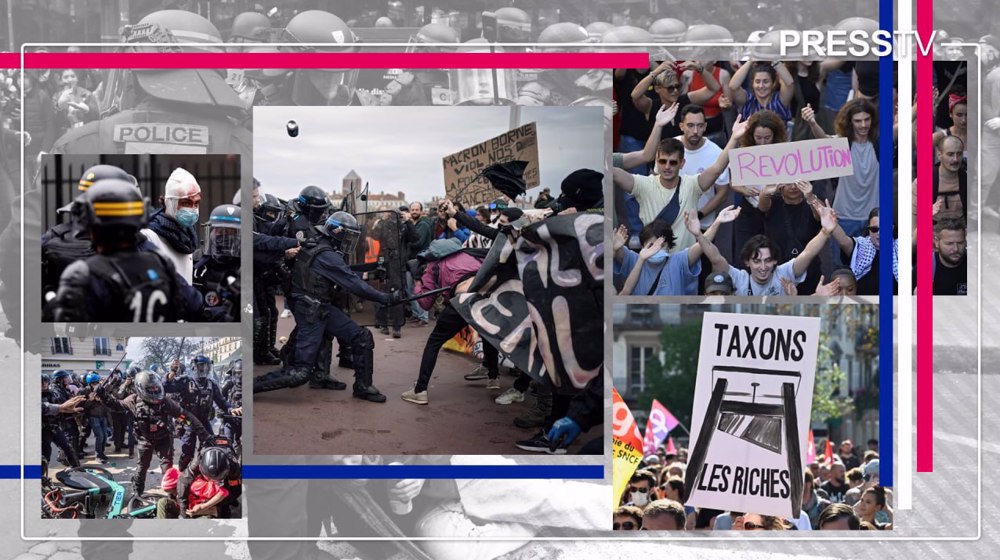
France has long sought to portray itself as a model of democracy, civil liberties, and equality. Yet the latest images emerging from the streets have exposed the reality. From the Yellow Vests movement to the current youth mobilizations, successive crises have demonstrated that the French system is riddled with violence, institutional excesses, and violent responses, especially from those in power. Images of injured demonstrators and the use of tear gas and batons have triggered angry and legitimate responses from French students and teachers.
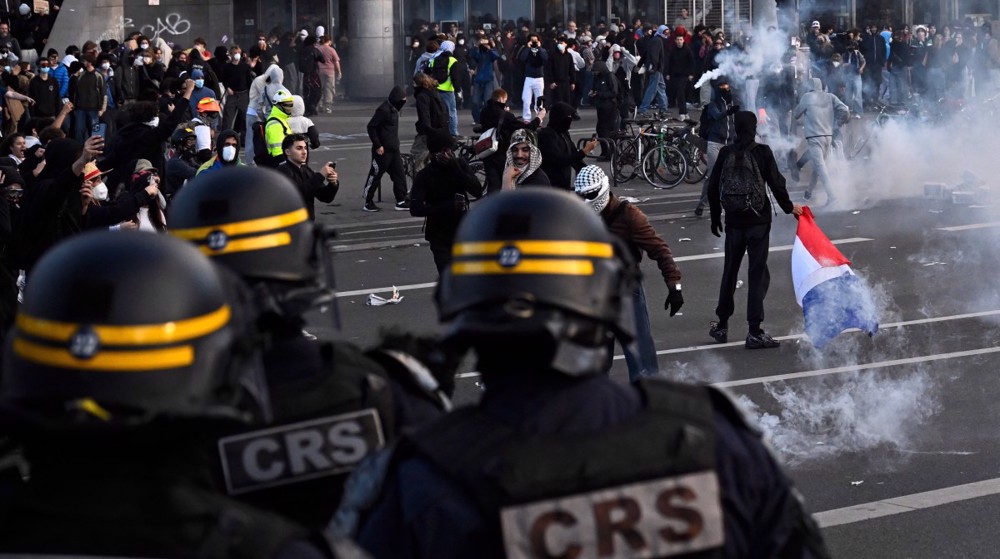
Today, footage from high school demonstrations is bringing these questions back into sharp focus. Videos have captured brutal police action against young and peaceful protesters. On October 5, 2026, in Dunkirk, footage showing a police vehicle repeatedly driving at high speed toward young demonstrators summed up the state response to student protests.
These developments raise an uncomfortable question: what circumstances could lead the authorities to tolerate, or potentially authorize, such levels of lethal and indiscriminate force?
Ultimately, a fundamental question remains: who benefits when images of violence and vandalism dominate the public debate, overshadowing the grievances that initially brought demonstrators into the streets?
The mobilization over resources allocated to public education is increasingly being associated with protests. As a result, students’ demands risk being pushed to the margins, while public debate becomes consumed by questions of law and order, the responsibility of protest organizers, and the penalties to be imposed. The focus shifts from the abysmal state of the education system to the disruption unfolding on the streets.
But where does the debate actually stand? It has gradually shifted away from its original focus, to the point that it no longer addresses the immediate needs of teachers and high school students. Yet the situation continues to deteriorate and could become the starting point for a broader movement, capable of mobilizing the entire education sector.
If young people’s demands are gradually drowned out by images of protests, it falls to institutions to demonstrate, through verifiable actions, that they are seeking to resolve the crisis rather than simply control the narrative surrounding it.
On Tuesday, several trade union organizations in the French National Education system are calling for mobilization. Beyond the national calls for action, the situation may vary from one school to another. Gatherings and demonstrations have been announced, particularly in Paris and Poitiers. The times, routes, and impact on classes remain to be verified locally.
The involvement of staff, students, and their families will be decisive. It is to be hoped that this day will lead to specific answers rather than further empty promises.
October 13 will not, on its own, resolve the crisis in public education. Nevertheless, it may constitute an important step toward making these demands heard and compelling political leaders to clarify their commitments.
Yalda Amrouni is a France-born, Tehran-based writer and analyst.
(The views expressed in this article do not necessarily reflect those of Press TV)
 This makes it easy to access the Press TV website