
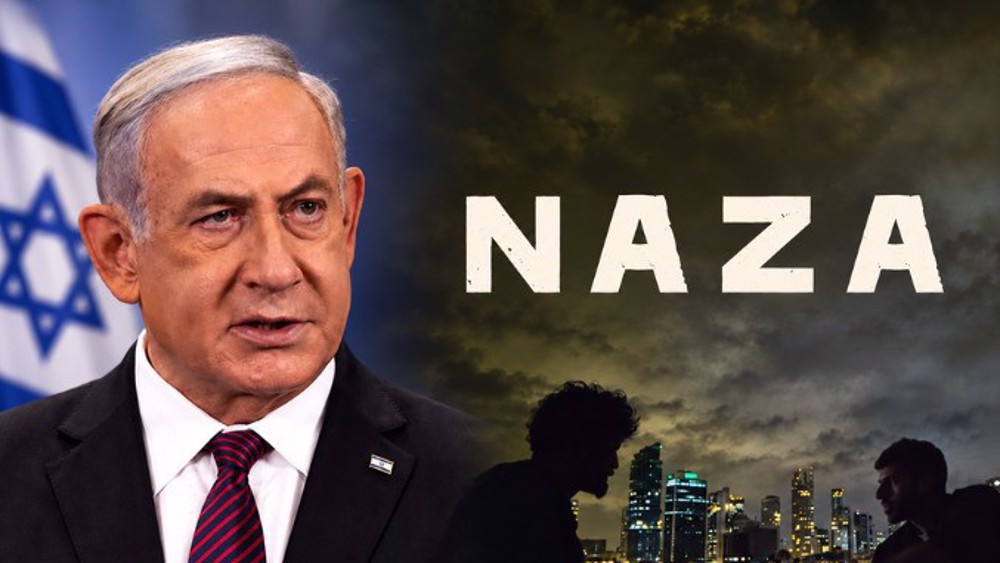
Israeli prime minister Benjamin Netanyahu has called for the prosecution of military and intelligence personnel featured in NAZA, an award-winning documentary that examines the use of AI-assisted targeting systems and the killing of Palestinian civilians in the besieged Gaza Strip.
Netanyahu demanded an investigation into Israeli military personnel whose testimonies feature in NAZA, a documentary stressing that artificial intelligence-powered targeting systems were used in attacks that killed Palestinian civilians in the besieged territory.
In a statement on Sunday, Netanyahu’s office said he had “asked the chief of staff of the Israeli army, the head of the domestic intelligence Shin Bet, and the state attorney to open a thorough investigation targeting the participants in the film ‘NAZA’ and to prosecute them,” according to Al Mayadeen.
Netanyahu rejected the documentary’s portrayal of the Israeli military, claiming it presented a “false, misleading and biased story” that defamed Israel and its armed forces internationally.
His demand comes amid broader efforts to penalize individuals accused of damaging the reputation of Israeli soldiers, following his reported support for legislation that would strip citizenship from people who “defame” military personnel.
NAZA features testimony from 24 Israeli military and intelligence personnel who describe the use of AI-assisted targeting systems in a military offensive in Gaza, including attacks that resulted in substantial Palestinian civilian casualties.

The documentary examines the role of automated and AI-assisted systems in identifying targets and the consequences for civilians caught up in the brutal Israeli military aggression. Its title derives from an Israeli military term referring to anticipated civilian deaths during airstrikes, linked to the concept of “collateral damage.”
According to accounts presented in the film, some military personnel described attacks on residential buildings despite awareness that family members and other civilians could be present. Other testimonies addressed the destruction of residential areas and targeting practices involving Palestinians near aid distribution centers.
The film places these allegations within a broader military and intelligence framework, examining how technology, intelligence agencies, military directives and command-level decisions intersect in targeting operations.
Several participants reportedly served in covert intelligence units, including one described as having direct communication with Netanyahu’s office. One interviewee also said that a goal of his unit was to “thwart peace,” raising further questions about the role of intelligence agencies in shaping Israeli policy toward the Palestinians.
The documentary received a special jury prize at the Venice Film Festival and reportedly drew a 25-minute standing ovation, bringing renewed international attention to its allegations about Israeli military targeting practices in Gaza.
Its reception has also triggered political backlash in the Israeli-occupied territories, with Netanyahu’s demand for an investigation raising questions about the treatment of military whistleblowers who disclose misconduct during wartime.
The Israeli prime minister’s call for prosecution adds to the controversy surrounding the documentary and the broader debate over accountability for civilian deaths in Gaza.
The controversy unfolds as Palestinians in Gaza continue to face the consequences of Israel’s military aggression, including mass displacement and worsening humanitarian conditions.
Gaza’s Health Ministry has reported more than 74,000 Palestinian deaths since October 7, 2023, when Israel launched the genocidal war against the blockaded Palestinian territory. The scale of civilian casualties and the conduct of the military offensive remain central to international scrutiny of the war.
Netanyahu’s demand to investigate and prosecute the documentary’s participants is likely to intensify debate over freedom of expression, military accountability and the disclosure of wrongdoing by Israeli forces.
 This makes it easy to access the Press TV website