

Iran’s scientific ambitions came into focus this week when space agency chief Hassan Salarieh met the national astronomy and astrophysics team following their outstanding performance at the 19th International Olympiad in Hanoi, Vietnam.
Iranian students won five gold medals at the competition, held from September 25 to October 5, reinforcing the country’s standing in a demanding contest involving theoretical astronomy, observational skills and advanced scientific problem-solving.
Salarieh highlighted space technology’s growing importance for energy, mineral resources and national development, while Deputy Communications Minister Ehsan Chitsaz stressed combining strategic vision with technical precision to solve complex challenges.
Their remarks opened a window onto a broader economic story where Iran’s scientific talent extends beyond competitions and laboratories into industries capable of driving exports, creating skilled jobs and strengthening technological independence.
Astronomy represents just one facet of Iran’s international scientific achievements, where students have excelled in mathematics, physics, computing, chemistry and biology, disciplines underpinning some of the world’s fastest-growing industries.
At the 2026 International Olympiad in Informatics, Iran won two silver medals, one bronze and an honorable mention, showcasing programming and algorithmic skills essential to artificial intelligence, software engineering and advanced data processing.
The achievement carries extraordinary historical resonance. The word algorithm derives from the Latinised name of Muhammad ibn Musa al-Khwarizmi, the ninth-century Iranian mathematician whose work helped shape systematic computation, while algebra derives from al-jabr, the title of his landmark mathematical treatise.
Both terms preserve a lasting imprint of the intellectual tradition to which al-Khwarizmi made such a profound contribution.
Iranian students also collected eight medals across the 2026 International Chemistry Olympiad and International Biology Olympiad, extending the country’s achievements into scientific disciplines directly relevant to pharmaceutical development, biotechnology and medical innovation.
The International Mathematical Olympiad’s official database records 55 gold medals for Iran since its participation began in 1985, alongside 117 silver medals, 54 bronze medals and five honorable mentions, illustrating a substantial tradition of mathematical excellence.
Physics provided another striking demonstration of Iran’s scientific strength, with the national team winning three gold medals and two silver medals at the 2026 International Physics Olympiad in Colombia, where all five competitors earned awards.
The performance, spanning theoretical understanding and experimental precision, highlights capabilities directly relevant to advanced engineering, semiconductor technologies, energy systems, aerospace and scientific instrumentation, reinforcing the economic significance of Iran’s talent in disciplines that underpin technological innovation.
These results demonstrate that Iranian students can master demanding scientific disciplines at international standards, providing a credible foundation for technological industries that depend on advanced analytical capabilities.
What makes these achievements particularly significant is that they have accumulated amid decades of sanctions, restrictions and geopolitical hostility that have complicated Iran’s access to international finance, advanced technologies and scientific cooperation.
Beyond medal winners, Iran’s talent pool draws on decades of university education and technical training in engineering, medicine, mathematics and natural sciences, supplying skilled specialists to research institutions and industrial enterprises.
Yet scientific ability becomes an economic advantage only when companies can translate research into competitive products, finance their development, manufacture them reliably and sell them beyond domestic markets, generating sustainable commercial returns.
Iran has already established a substantial institutional base for this transformation, with approximately 11,100 active knowledge-based companies and 18,000 registered and active knowledge-based products.
Earlier figures reported by Iran’s presidential science and technology office showed knowledge-based exports rising from approximately $296 million in 2020 to $2.52 billion in 2023, indicating that technology-intensive businesses have developed a measurable export presence.
Biotechnology exemplifies this potential because it connects advanced scientific expertise with products, established demand and manufacturing capabilities that require rigorous quality control, specialized equipment and highly trained technical personnel.
In September 2025, Iran’s Association of Medical Biotechnology Producers and Exporters reported approximately 45 biotechnology medicines being manufactured and marketed domestically, while biotechnology product exports were placed at around $90 million.
The reported export value remains modest, yet it shows Iranian biotechnology businesses are already selling sophisticated products abroad, creating a platform from which wider international expansion could develop.
Iran’s space program provides another example of scientific expertise advancing into technically demanding production, combining propulsion, electronics, software, materials science and orbital mechanics in systems that require sophisticated engineering skills.
In December 2024, Iran placed approximately 300 kilograms of payload into orbit using its Simorgh launch vehicle, then a national record, including the Saman-1 orbital transfer module and additional payloads.
Such capabilities have economic applications well beyond launching spacecraft, including satellite communications, agricultural monitoring, environmental observation and the assessment of water resources, infrastructure and mineral deposits across Iran’s vast territory.
Salarieh’s remarks therefore raise a practical question about how effectively Iranian engineers can convert proven technical capabilities into commercially viable products and services that domestic industries and international customers need.
Iran’s digital economy offers evidence of commercial innovation already operating at scale, with businesses such as Digikala, Snapp and Cafe Bazaar building platforms around retail, transport and software distribution within the domestic market.
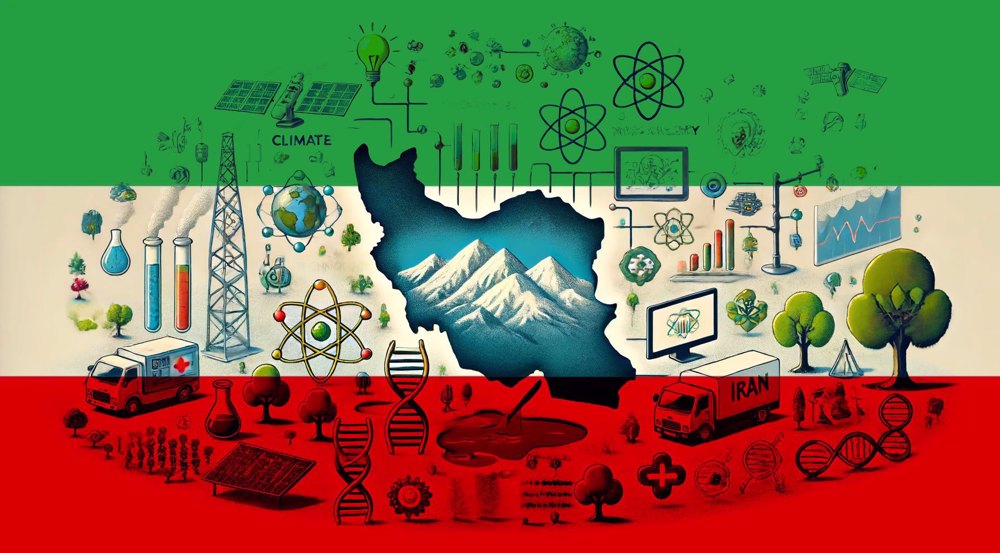
Their development demonstrates that Iranian entrepreneurs can organize complex digital services, attract users and create functioning businesses, and potentially translate them into international competitiveness or sustained overseas revenue.
Software engineering, cybersecurity, industrial analytics and specialized business applications offer additional opportunities because they allow technical expertise to address measurable customer problems, potentially generating export earnings.
AI presents a similar opening, particularly where mathematical and computational skills can produce practical systems for industrial maintenance, medical analysis, logistics and resource efficiency.
World Bank data placed Iran’s research and development expenditure at 0.73 percent of gross domestic product in 2021, an important historical benchmark highlighting the gap between the country’s technical talent and the resources devoted to research.
For a resource-rich economy, however, these connections are unusually significant because energy, mining, agriculture and manufacturing provide domestic customers for technologies that can be refined, commercialized and marketed internationally.
Iran’s natural resources provide one foundation for development, while its universities, scientific traditions and technology enterprises provide another. Together, they create complementary assets whose combined value extends beyond either minerals or intellectual achievement considered separately.
Intellectual wealth is not an abstract promise; it is a productive national asset already generating measurable results, with the potential to carry the country further as scientific achievement becomes increasingly competitive business.
Together with its vast natural resources and enduring civilizational heritage, this intellectual wealth is a divine blessing, a source of resilience and strength that continues to sustain Iran’s capacity to advance despite adversity.
 This makes it easy to access the Press TV website