
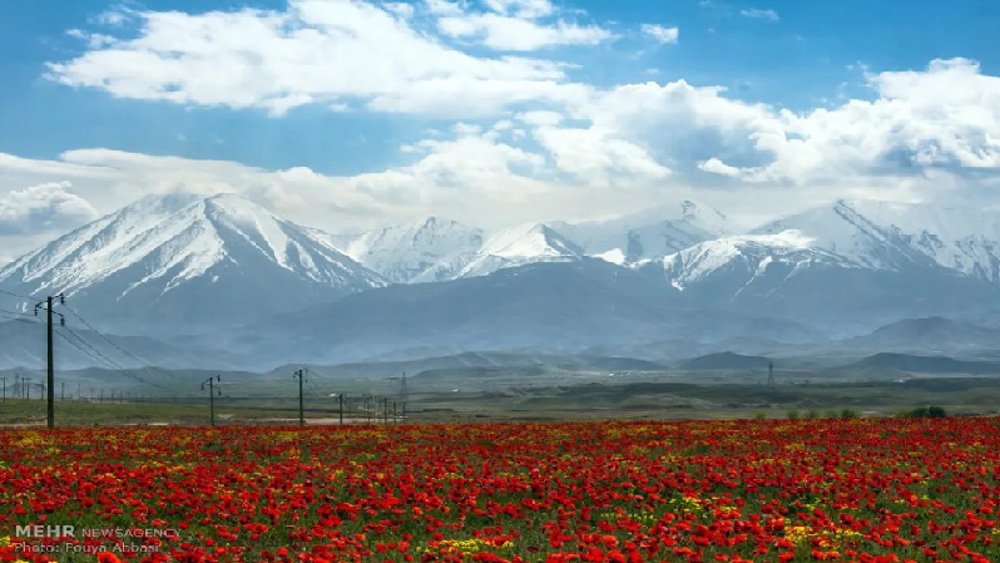
In northwestern Iran, where the routes connecting Iran to the Caucasus and beyond have crossed for centuries, lies a province shaped by trade, industry, agriculture, and culture.
This is East Azerbaijan, a region where an ancient commercial heritage meets modern economic opportunities, and where mountains, forests, historic cities, and traditional villages create a diverse destination for international visitors.
East Azerbaijan covers more than 45,000 square kilometers and is home to more than 4 million people, making it the largest and most populous province in northwestern Iran.
But its importance is not only about size; the province shares around 200 kilometers of border with the Republic of Azerbaijan and another 35 kilometers with Armenia.
The Aras River marks much of these international boundaries.
This location has given East Azerbaijan a special position for centuries, connecting Iran to the Caucasus, Central Asia, Anatolia, and, through them, European markets.
In fact, this is a land where international trade is nothing new.

Could you please elaborate on the province's key economic capacities and strategic assets, and also some distinctive features that give it a competitive advantage at the national or perhaps regional level?
"Part of East Azerbaijan's advantages stem from its geopolitical position.
It lies at a crossroads of Asia and Europe and serves as a gateway to Eurasia.
Historically, it was also located along the Silk Road, which played a major role in the region's scientific developments and its drive toward modernization."
Bahram Sarmast, Governor General of East Azerbaijan
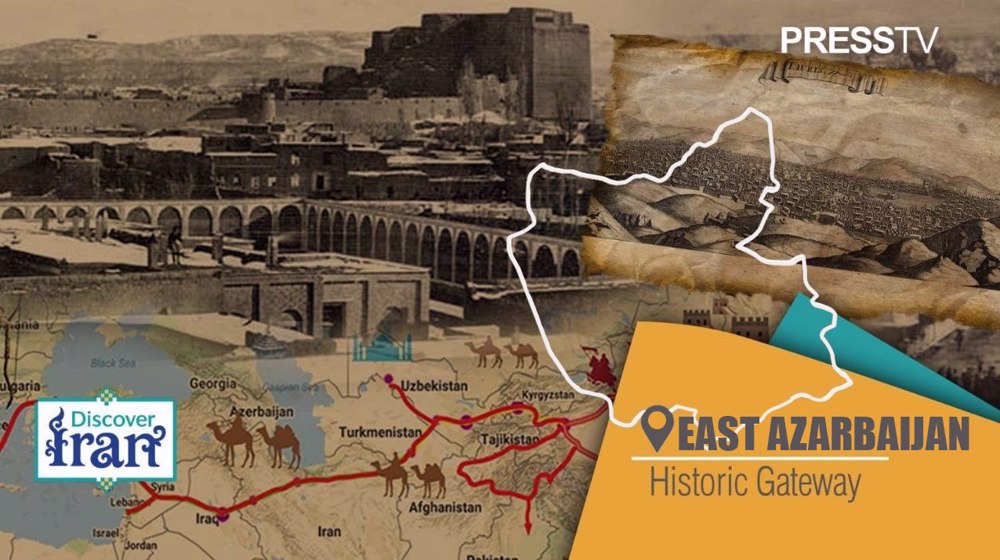
For centuries, East Azerbaijan was part of the northwestern branch of the Silk Road. Merchants and caravans passed through the region, carrying goods between east and west, and the historic city of Tabriz became one of the most important commercial centers along this route.
Historic accounts describe Tabriz as a city with numerous markets where locally produced goods were traded far beyond the region.
Today, that commercial legacy is still visible.
Near Tabriz, we have an industrial park that is the largest in Iran, covering 10,800 hectares of land available for investment.
It has access to railroads, roads, air transport, and customs facilities.
Bahram Sarmast, Governor General of East Azerbaijan
At the heart of Tabriz stands one of the largest covered bazaars in the world, the Tabriz Historic Bazaar Complex, listed as a UNESCO World Heritage Site.
The Tabriz Bazaar is the world's largest covered bazaar registered with UNESCO. This shows that the city has long been a major center for trade and the exchange of goods along the country's northwestern corridor.
Tabriz is also home to the country's first chamber of commerce, which shows that the city's merchants were well-established and respected, and had commercial ties with different parts of the world.
Bahram Sarmast, Governor General of East Azerbaijan
Its interconnected passages, shops, courtyards, and caravansaries are more than historic architecture. They are reminders of a time when Tabriz was a major meeting point for merchants, cultures, and ideas. And trade was only part of that exchange.
East Azerbaijan developed a remarkable cultural role as well.
Tabriz became known as the city of firsts in Iran, associated with important developments in printing, publishing, journalism, photography, cinema, theater, and translation.
This combination of locations, infrastructure, and human capital remains one of the province's major assets.
Most of the industries introduced to Iran were first established in Tabriz, which is why the city is known as the city of firsts, from the printing industry and modern schools to schools for the deaf and the first municipality; these examples show that even after the Industrial Revolution, many of the industries and institutions that emerged in Iran first took root in Tabriz.
Vahid Navadad, Deputy Director for Cultural Heritage, East Azerbaijan
Currently, East Azerbaijan has around 40 industrial parks and zones, with thousands of industrial and production units operating across the province.
Presently, more than 95% of the province's economy is managed by the private sector. Its industrial base includes major manufacturing companies, machinery and tractor production, petrochemicals, steel, pharmaceuticals, household appliances, automotive parts, and food processing.
How do you assess the current status of critical infrastructure inside East Azerbaijan Province?
We rank first in the country in heavy leather production as well as in steel and steel products.
With more than 50 steel plants, the province is among the country's leading producers of steel profiles and rebar.
What sets our steel industry apart is that more than 90% of these plants are privately owned.
Arash Negahbani, Department of Industry, Mining and Trade
The province is particularly well known for its footwear, handicrafts and carpets.
Almost half of Iran's food, sweets, and chocolate industries are also located here.
More than 50% of the country's production and export of sweets and chocolates come from East Azerbaijan.
What is important is that we don't have pistachio or almond orchards here, yet the province produces some of the country's finest and most export-oriented nuts.
Nuts are brought in from other parts of the country, processed here, and then exported.
This shows the province's strong investment and industrial and commercial capabilities.
Arash Negahbani, Department of Industry, Mining and Trade
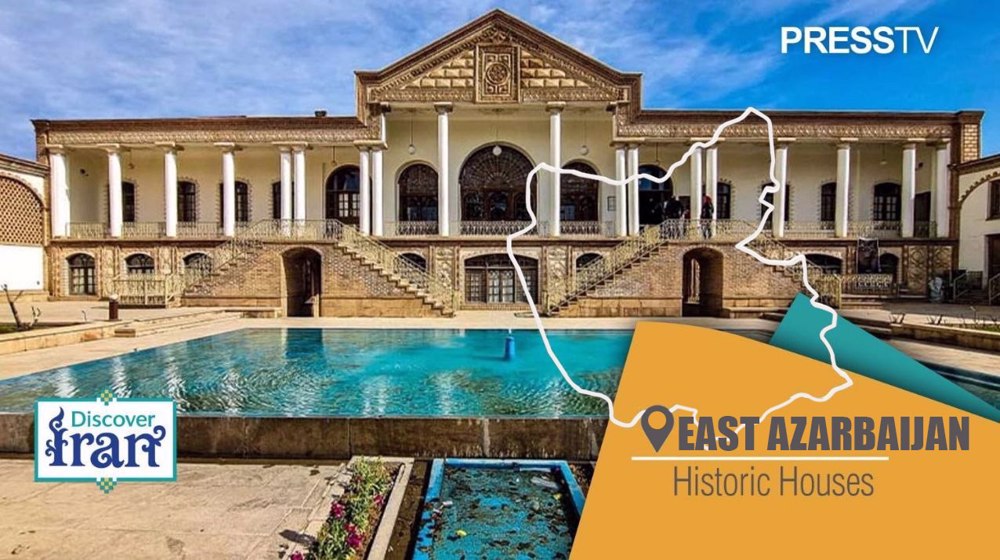
For an international investor, however, one of the most important advantages may be the province's location.
East Azerbaijan sits close to the Caucasus and Central Asia, while its borders with Azerbaijan and Armenia provide access to international trade routes.
And this strategic location is already reflected in one of the province's key economic hubs, the Aras Free Zone.
Can you give us a description of any existing free economic zones or free trade zones in East Azerbaijan and how they facilitate investment?
Iran's first industrial park for foreign investment is located in this province near Tabriz.
We also have the Aras Free Trade Industrial Zone, which is the country's most industrialized free zone, both in terms of its size and its access to Azerbaijan and Armenia.
Through its links with Turkey, Eurasia and Georgia, it can serve a large market across the CIS.
Bahram Sarmast, Governor General of East Azerbaijan
With a strategic location, logistical infrastructure and access to domestic and international markets, the free zone has developed into an important center for industry, agriculture, trade and tourism in northwestern Iran.
We are home to Iran's first industrial park dedicated to foreign investment.
It hosts investors from countries such as Turkey, China, and Georgia.
This demonstrates that the province offers a secure environment for investors, who have chosen East Azerbaijan both for investment and for expansion.
Arash Negahbani, Department of Industry, Mining and Trade
The province's location on the historic Silk Road is an advantage with both historical and modern significance.
For centuries, traders used these roads to move goods across borders.
Today, the same geography can support modern trade, production and logistics.
We also have favorable transportation infrastructure, including airports, railways, and roads.
Historically, Tabriz has also played an important role in industry and trade.
If we compare the nearly 30-hectare Tabriz Bazaar with the city itself, it becomes clear that the bazaar was not simply a marketplace for Tabriz or East Azerbaijan.
It served an international and regional role along the Silk Road.
Vahid Navadad, Deputy Director for Cultural Heritage, East Azerbaijan
Not far from Tabriz is one of Iran and West Asia's leading glass manufacturers.
This company has been producing construction and process glass since 2004. We have a daily production capacity of 2,400 tons of various types of glass with around 4,800 employees.
Amir Massoud Tabatabai, Glass Manufacturer
Mr. Tabatabai explained that the company has always sought to keep pace with the latest technologies and production methods.
We export to around 35 countries, from neighboring states to the Caucasus, Europe, and Persian Gulf states.
Our products are even exported to the Americas, including Brazil.
Amir Massoud Tabatabai, Glass Manufacturer
Why was East Azerbaijan chosen to establish such a large industrial complex?
Our province and neighboring provinces have rich deposits of silica, one of the key raw materials used in glass production.
That makes our province a strategic location for producing various types of glass.
Amir Massoud Tabatabai, Glass Manufacturer
The complex stands along one of the world's most important historic trade routes, the Silk Road.
This location has helped the group grow into a major hub for glass production in Iran, while giving its products a strategic route to markets across the country and around the world.
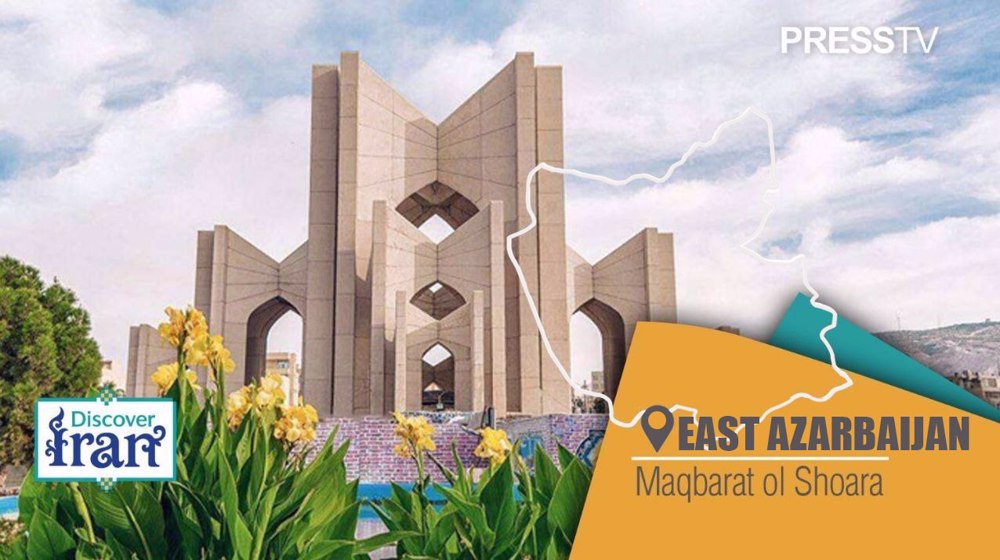
But industry is not the only economic opportunity; agriculture is another major pillar of East Azerbaijan's economy.
The province benefits from diverse climatic conditions, fertile soil, and large areas suitable for farming.
More than 5 million tons of agricultural products are produced here every year, including grains, legumes, fruits, and other agricultural products.
The province has particularly strong positions in products such as raisins, lentils, split peas and chickpeas, while it also ranks highly in the production of apples, cherries, honey and eggs.
Around 850 food processing and agricultural transformation units have a combined processing capacity of about 1.5 million tons.
Thus, the opportunity is not limited to producing agricultural goods; it also extends to processing, packaging, and exporting them.
What mechanisms and guarantees are in place to ensure the legal, economic, and operational security of investors?
We have identified and developed 10 value chains across the province.
Given the infrastructure and facilities available, both upstream and downstream industries can be developed to complete these chains.
These include mining, steel, food processing, dairy products, hand-woven carpets, leather, greenhouse products, petrochemicals, and automotive manufacturing.
All of these sectors have significant potential for growth and further development.
Bahram Sarmast, Governor General of East Azerbaijan
And then there is perhaps one of East Azerbaijan's most significant natural resources – its minerals.
The province contains 52 of the 65 mineral types identified in Iran. It has the country's largest estimated mineral reserves at around 1.8 billion tons.
Its mineral resources include silica, iron, manganese, perlite, limestone, gypsum, and kaolin, as well as major deposits of nepheline syenite and molybdenum.
These resources create opportunities not only for extraction, but also for processing and downstream industries.
Nearly 30% of the country's steel-related factories operate in this province.
We also have rich mineral resources, from the Sungun copper mine to deposits containing non-ferrous metals.
Many of these resources have yet to be fully explored or developed.
This gives us even greater hope that by activating these capacities and putting them to work for the national economy, we'll see that the province's potential extends far beyond industry alone.
Bahram Sarmast, Governor General of East Azerbaijan
So from agriculture and food processing to manufacturing, logistics and mining, East Azerbaijan offers a diverse economic base.
But there's another side to the province, one that may be just as important for international visitors, and that is its tourism potential.
Few regions can offer such a wide range of landscapes and experiences within one province.
For travelers interested in history, there is Tabriz and its centuries-old bazaar, historic mosques, traditional architecture, and cultural heritage.
For those looking for nature, there are the forests of Arasbaran, the slopes of Mount Sahand, colourful mountains, waterfalls, mineral springs and wetlands.
East Azerbaijan has a diverse natural landscape that can be experienced throughout all four seasons.
It ranges from mountainous areas and the forests of the Arasbaran to plains, farmland and pastures across different parts of the province.
The proximity of Lake Urmia has also created a highly favourable natural and geographical setting for the province.
Vahid Navadad, Deputy Director for Cultural Heritage, East Azerbaijan
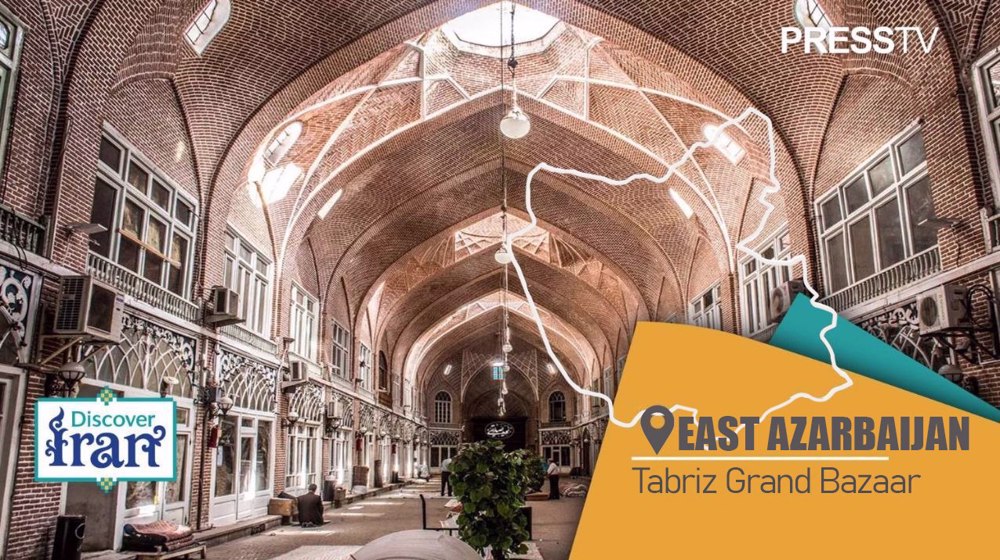
- Discover Iran: Tabriz Grand Bazaar, where centuries of trade, culture and craftsmanship still thrive
And for visitors looking for something truly distinctive, there is Kandovan.
This extraordinary historic village is built into volcanic rock formations, with homes carved into cone-shaped rocks. The village's history stretches back thousands of years, and its unusual architecture has made it one of the most recognizable tourist destinations in the region.
The slopes of Mount Sahand have been home to some of the earliest human settlements throughout history, and this continued across different eras.
The province is also home to various historic settlements, such as the historic village of Kandovan, which was Iran's first village to be recognized as a tourism destination by the UNWTO.
This shows the province's enormous tourism potential.
Vahid Navadad, Deputy Director for Cultural Heritage, East Azerbaijan
Then there are the forests of Arasbaran.
Recognized by UNESCO as a biosphere reserve, the region is home to rich biodiversity, including hundreds of species of birds, mammals, reptiles, and fish.
For nature tourism, wildlife watching and ecotourism, this creates a valuable natural setting.
Further north along the Aras River stands the St. Stepanos Monastery, one of Iran's most important historic Armenian churches and another UNESCO World Heritage Site. Its architecture, history and location make it part of a wider cultural landscape where Iranian, Armenian, Islamic, and Silk Road heritage meet.
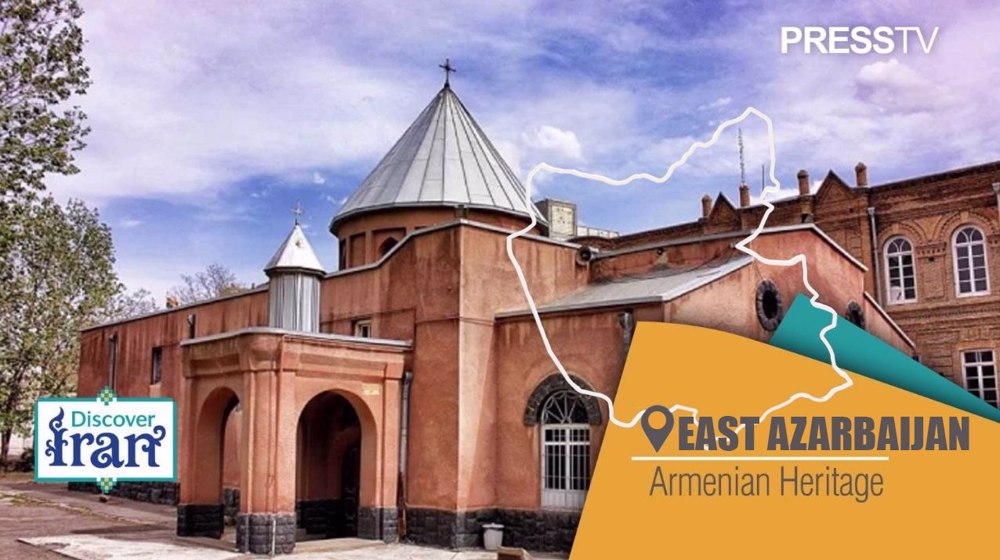
We have more than 2,200 nationally registered historical sites and around 5,000 identified sites. Many of them have not yet been adequately introduced to the world.
Tourists who visit our province, museums, historic buildings, and tourist attractions are often surprised to discover that so many remarkable historical sites exist across the province.
Vahid Navadad, Deputy Director for Cultural Heritage, East Azerbaijan
East Azerbaijan also offers visitors a different kind of experience, one based on everyday culture. Local music, traditional clothing, handicrafts, cuisine, festivals and nomadic life all form part of the province's cultural identity.
For an international tourist, this means that a visit does not have to be limited to monuments. It can also be an encounter with living traditions.
Even within Tabriz itself, visitors can move from historic sites to modern recreation.
We have more than 700 tourism facilities across the province, including accommodation facilities and tourism complexes.
We also have more than 100 hotels, six of which are five-star hotels.
In addition, there are more than 260 eco-tourism lodges across the province.
Vahid Navadad, Deputy Director for Cultural Heritage, East Azerbaijan
El Goli, one of the city's best-known attractions, combines a historic setting with gardens, leisure facilities, hotels and entertainment.
Last year, more than $460 million was invested in tourism projects across the province. This year, that figure has nearly tripled, covering 125 projects. Of these, 36 involve hotel investments.
Currently, the country's largest five-star hotel is under construction in Tabriz, with 96,000 square meters of accommodation space alone.
Vahid Navadad, Deputy Director for Cultural Heritage, East Azerbaijan
The province also has a remarkable religious and architectural heritage.
The Kabood, or Blue Mosque, dates back to the 9th century of the Islamic calendar.
The Saheb-ol-Amr Mosque is associated with the Safavid period, and the remains of the Ark of Ali Shah stand as a reminder of the monumental architecture of medieval Tabriz.
The Grand Mosque, meanwhile, is closely connected with the historic bazaar that grew around it.
Together, these sites tell the story of a city that has repeatedly reinvented itself while remaining connected to its past. And the story goes beyond the city.
Part of Lake Urmia, one of Iran's most valuable natural landscapes, lies within East Azerbaijan. The lake and its national park form an important ecological area, with a wide range of bird, mammal, reptile, amphibian, and fish species recorded in the region.
From forests and mountains to historic sites and Asian landmarks, East Azerbaijan offers a remarkable diversity of landscape and heritage.
That diversity is also reflected in its economy, shaped by its strategic location, natural resources, agriculture, industry, human capital and growing tourism potential.
For investors looking beyond the single industry and for travelers looking beyond the usual tourist routes, this northwestern province offers a combination of resources, connectivity, culture and nature; a region shaped by the Silk Road and still looking toward the roads ahead.
 This makes it easy to access the Press TV website