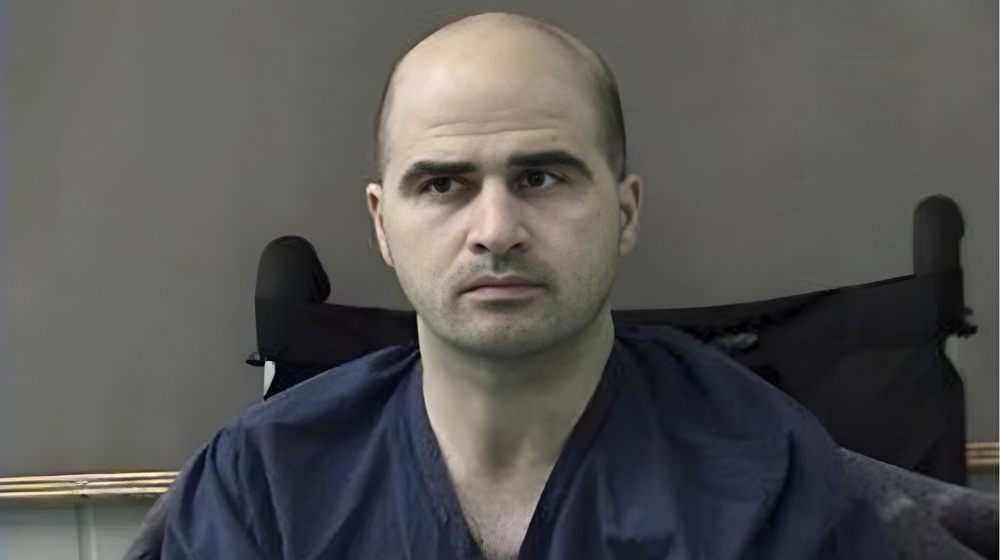
The Pentagon will livestream the December 3 firing-squad execution of Fort Hood shooter, Nidal Malik Hasan, as experts question whether War Secretary Pete Hegseth is turning capital punishment into a public spectacle.
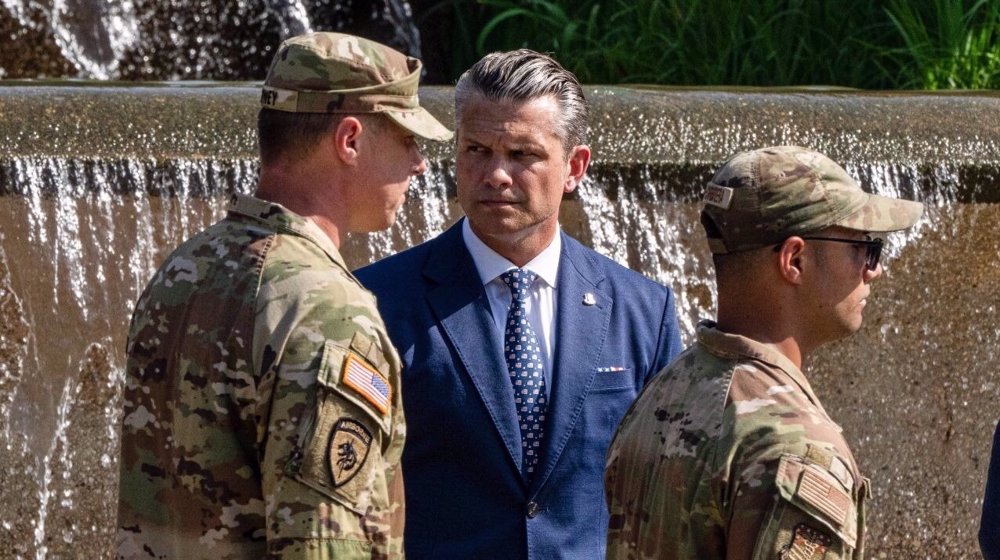
Hegseth announced the administration’s intention to make the execution public during an interview with the conservative television outlet Real America’s Voice on Wednesday, saying, “We will make sure that people are able to watch it, that it is public.”
Pentagon officials confirmed on Thursday that the execution would be livestreamed, making it the first military execution in more than 65 years, following President Donald Trump’s approval of the firing-squad method.
The decision has raised questions about the government’s motives for broadcasting an execution, particularly given the violent nature of the method and the longstanding practice of carrying out executions away from public view.
Brenner Fissell, a Villanova University law professor and vice president of the National Institute of Military Justice, said Trump administration considers firing squads a more practical alternative to lethal injection.
“There is a perceived masculinity and military-ness to firing squads that is part of the aura Hegseth is trying to emphasize, the ‘lethality culture,’” Fissell remarked.
Elisabeth Semel, co-director of the Death Penalty Clinic at the University of California, Berkeley, said the decision raised serious legal and public-policy questions, including concerns about the prisoner’s dignity and the government’s reasons for choosing to broadcast the execution.
“Though there has been long-running discussion about the idea of televising an execution, I do not recall a situation in which it was instigated by the government,” Semel maintained.
“This is a president who is about spectacle and that is, I think, precisely the message that he intends to deliver,” she added.
Hegseth, however, showed little interest in discussing Hasan’s personal circumstances when asked whether the prisoner had made final requests or contacted the administration, saying “I do not care. We will see him on December 3.”
Hasan was convicted in 2013 of killing 13 people and injuring 32 others in the November 5, 2009, shooting at Fort Hood, Texas.
At the center of this macabre production is Hasan himself — a man whose Muslim faith and religious identity the administration now appears eager to parade before the cameras.
Hasan was convicted in 2013 of killing 13 people and injuring 32 others in the November 5, 2009, shooting at Fort Hood, Texas.
Hasan, then an Army psychiatrist, is reported by the American media to have entered a medical building at Fort Hood, shouted "Allahu akbar" ("God is great"), and opened fire with a laser-sighted handgun.
During his court-martial, he allegedly admitted to the shooting and described himself as a soldier who had "switched sides." He stated the attack was an effort to stop American soldiers from deploying to Afghanistan to kill his fellow Muslims.
During his medical training, he gave a presentation titled "Why the War on Terror Is a War on Islam" and was reportedly reprimanded for trying to convert patients.
An officer who attended the Pentagon's medical school with him recalled Hasan allegedly being "very vocal about being a Muslim first and holding Shari'a law above the Constitution."
Conversely, relatives claimed Hasan faced harassment over his "Middle Eastern ethnicity" and had long sought to leave the Army, even offering to repay the cost of his medical education.
He could still seek judicial review to challenge his death sentence, a process that could take years and potentially extend beyond the end of the Trump administration.
That the government would livestream a man's death, in an era when executions have been deliberately hidden from public view, critics say is not justice — it is entertainment.
And the fact that Hasan's Muslim identity — with elaborate harping on his radicalization, his "Allahu akbar," his "Shari'a law above the Constitution" — is being amplified by the government in the process only confirms that this is not about justice. It is about a narrative.
The current US administration is showing an eerie interest in fabricating such narratives, and Hegseth is not alone in this endeavor.
Secretary of State Marco Rubio is the other architect of this storytelling machine — one that reached its absurd crescendo during his recent visit to Greece, where his anachronistic description of ancient Greece revealed a government more interested in manufacturing mythologies than confronting realities.
Speaking beneath the Acropolis, Rubio delivered a sweeping address that cast ancient Greek civilization as a seamless precursor to Trump's "America First" agenda, invoking figures from Aristotle and Plato to Alexander the Great and the Spanish conquistador Hernán Cortés as evidence of a singular Western will to power.
The speech, widely interpreted as a thinly veiled 2028 campaign launch, urged Europe to "awaken from its long slumber and rekindle the fire that was lit here millennia ago."
 This makes it easy to access the Press TV website