Iran is among the world’s five leading producers of biological medicines and ranks first in the region, while its decline in maternal mortality places it among the three fastest-improving countries globally.
The president of Iran’s Medical Council, Mohammad Raiszadeh said, made the remarks at a recnet medical congress, where he also cited vaccination coverage, declining child mortality, complex cardiovascular procedures and transplantation as evidence of the country’s medical development.
The significance of the claims becomes clearer when examined through the companies, laboratories, medicines and clinical programs behind them, rather than through rankings alone.
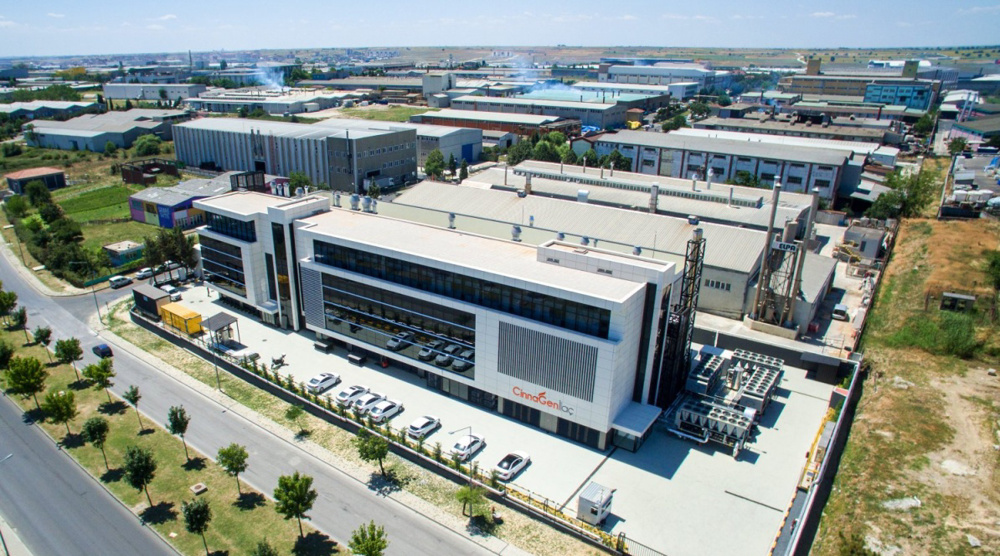
Consider CinnaGen, an Iranian biotechnology company whose development illustrates how a domestic pharmaceutical producer moved into an industry dominated by multinational companies with decades of accumulated biological manufacturing experience.
A peer-reviewed study examining 18 important biological substances found CinnaGen producing follow-on versions of six, making it one of the largest manufacturers outside India alongside Russia’s Biocad for that group of products.
The significance is that these are not ordinary generic tablets, because biological medicines are complex molecules produced through living systems, making manufacturing consistency, analytical testing and process control substantially more demanding.
CinnaGen has taken its biotechnology capabilities into Europe, with its teriparatide biosimilar Zandoriah receiving EU-wide marketing authorization in 2026—placing an Iranian-developed medicine within Europe’s highly regulated pharmaceutical market.
Iranian companies have also moved beyond reproducing established products, with CinnaGen developing a pertuzumab biosimilar that was tested against Roche’s reference medicine in a multicenter phase-three clinical trial involving women with HER2-positive breast cancer.
That trial provides a particularly tangible example of the scientific chain inside Iran, because producing the medicine required laboratory development, pharmaceutical manufacturing, clinical research and comparison against an internationally established biological therapy.
The economics become still clearer in figures released by Iran’s biotechnology producers, who estimated that without domestic biotechnology medicines the government would have faced roughly $5 billion in additional import requirements during the year discussed.
The same industry association said 74 companies are members of its producers and exporters group, covering medicines as well as diagnostic kits, equipment and materials required for biotechnology production.
The broader pharmaceutical industry provides another measurable indication of how far domestic production has moved, with Iran’s Food and Drug Organization reporting that more than 97 percent of pharmaceutical items by number are manufactured domestically.
The same official account puts domestic production above 80 percent by monetary value, while approximately 70 percent of pharmaceutical raw materials by volume are reportedly produced inside Iran.
The domestic production of raw materials changes the character of the industry, because it means Iranian manufacturers are increasingly moving upstream rather than merely importing active ingredients and packaging finished medicines domestically.
Iranian officials now describe more than 200 pharmaceutical companies operating in the country, alongside newer activities involving cell therapy, gene therapy and personalized medicine, indicating an industry extending beyond conventional formulations.
The same progression can be seen outside pharmaceuticals, where Iran’s health system has built measurable capacity in prevention and population medicine alongside increasingly specialized treatment.
The latest United Nations estimate places Iran’s maternal mortality ratio at 16 deaths per 100,000 live births in 2023, with 99 percent of births attended by skilled health personnel during the relevant reporting period.
That figure places Iran substantially below the global 2030 target of fewer than 70 maternal deaths per 100,000 live births established under the Sustainable Development Goals, according to the latest international maternal-mortality assessment.
Child-health data show the same longer trajectory, with UNICEF recording an under-five mortality rate of roughly 11 deaths per 1,000 live births for Iran and DTP3 vaccination coverage of 98 percent.
Tuberculosis offers another concrete example, with WHO’s latest global reporting placing worldwide incidence at 131 cases per 100,000 people in 2024, while Iranian health authorities have reported a long-term decline to roughly 11 cases.
At the other end of the system, Iran has developed a specialized nuclear-medicine industry that connects nuclear science directly with cancer diagnosis and treatment, creating an unusually visible intersection between two advanced scientific fields.
In December 2025, Iran’s Nuclear Science and Technology Research Institute unveiled three domestically developed products, including gallium-68 and lutetium-177 radiopharmaceuticals for cancer imaging and targeted treatment.
The Atomic Energy Organization said at the same event that Iran was producing approximately 70 radiopharmaceuticals, illustrating that nuclear medicine has developed into an established product category rather than remaining limited to experimental research.
Iranian officials subsequently said two domestically produced radiopharmaceuticals had demonstrated effectiveness against multiple cancers, while the number of PET-scan centres had risen from seven in 2021 to more than 25.
The expansion is significant because access to radiopharmaceuticals depends upon more than nuclear facilities, requiring isotope production, radiochemistry, pharmaceutical formulation, quality control, specialized imaging and hospitals capable of administering targeted treatments.
A 2025 peer-reviewed study on lutetium-177 production also demonstrates the international importance of the technology, describing clinical-grade isotope production for targeted cancer therapy as a technically demanding process requiring controlled separation and quality assurance.
This makes Iran’s nuclear-medicine program particularly relevant to the country’s broader health ecosystem, because nuclear science is being translated into products that enter hospitals and ultimately reach cancer patients.
The vulnerability of that ecosystem became starkly visible during the 2026 US-Israeli war, when strikes reached facilities associated with Iran’s pharmaceutical production, medical research and public-health infrastructure.
On March 31, strikes damaged Tofigh Daru Research and Engineering Company, which produces active pharmaceutical ingredients used in anticancer, anaesthetic, cardiovascular and immunomodulatory medicines, according to reporting citing Iranian authorities.
The following day, the Pasteur Institute of Iran was struck, with the Pasteur Network confirming reported damage to the institution and warning about potential consequences for national and international public health.
Pasteur Institute of Iran is not simply a research laboratory, because the century-old institution operates national reference laboratories, WHO collaborating centers, disease-surveillance functions, diagnostic activities, biobanks and medical-countermeasure production.
The pharmaceutical damage extended beyond those two institutions, with WHO reporting that by June an estimated 78 pharmaceutical facilities, laboratories and warehouses had been damaged during the war alongside hospitals and other healthcare facilities.
Iran’s response was consequently measured not only in rebuilding damaged structures, but in maintaining medicine availability through a system that had already developed substantial domestic production capacity.
Taken together, these capabilities show that Iran has built a resilient, increasingly self-reliant health and biotechnology ecosystem capable of developing, producing and delivering advanced medical technologies under extraordinary pressure.
 This makes it easy to access the Press TV website