
A senior commander of the Islamic Revolution Guards Corps (IRGC) says recent developments have demonstrated that Iran and the Resistance Front have become decisive powers in the region, arguing that the Persian Gulf is the starting point for a new regional and global order based on the capabilities of regional countries.
Speaking at a scientific conference at Islamic Azad University’s Bandar Abbas branch on Wednesday, IRGC Political Deputy Brigadier General Yadollah Javani described the Persian Gulf as “a great divine blessing for the peoples of the region, including the Iranian nation,” while criticizing the long-standing presence of foreign powers in the area.
Javani said Portugal, Britain, and, more recently, the United States have sought to dominate the strategic waterway through military deployments and the establishment of numerous bases in Persian Gulf states.
He stressed that the Persian Gulf’s significance stems from its geopolitical position, energy resources, and proximity to the Strait of Hormuz, adding that Iran holds a particularly important position in regional affairs because of its extensive coastline along the Persian Gulf, its control over the approaches to the Strait of Hormuz, its three islands, and its location between two major hydrocarbon reserves.
“Great powers have always competed over strategic regions and resources,” Javani said, noting that the Persian Gulf has consequently remained a focus of global powers because of its strategic importance.
Referring to decades of attempts aimed at weakening or overthrowing the Islamic Republic, the IRGC commander said separatism, coups, bombings, assassinations, and sanctions have been among the measures taken against Iran.
He stressed that none of those attempts have succeeded in changing the Islamic Republic’s course.
Javani also referred to remarks by US president Donald Trump concerning previous US administrations’ attempts to overthrow the Islamic Republic, saying that American officials now acknowledge that Washington has been pursuing such a goal for decades.
“Today, even the Americans themselves acknowledge that they pursued such an objective over the past decades, but those efforts did not succeed,” he said.
The IRGC political deputy said recent developments have shown a shift in the regional balance of power, noting that some regional countries are now questioning the future of the US presence in West Asia.
“This shows that the circumstances in the region have changed compared with the past,” he said. Javani also called for greater social cohesion, saying all national capacities should be mobilized to protect Iran and strengthen national power.
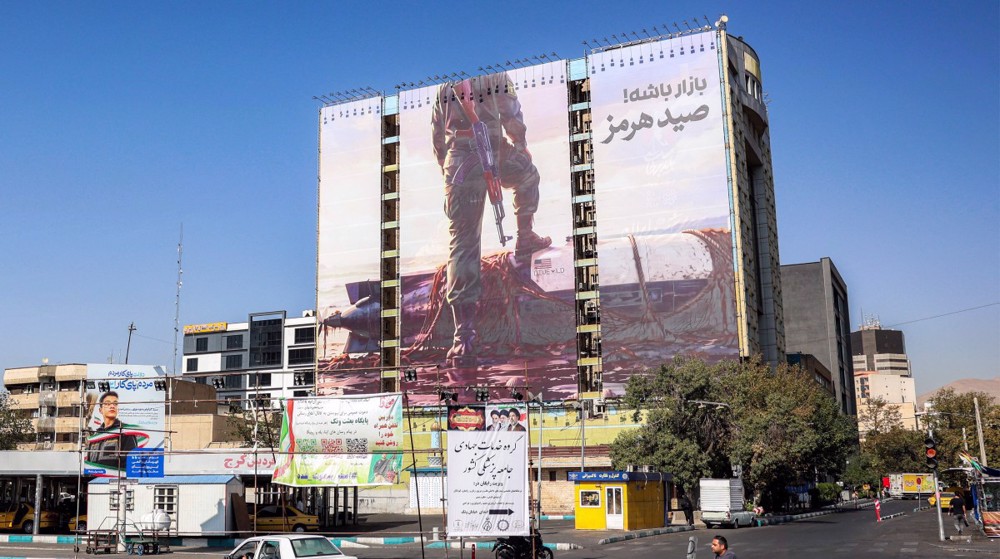
The US and the Israeli regime waged their first criminal war against Iran, which lasted 12 days, in June 2025. Their second aggression began on February 28, 2026, and came to a halt in early April after 40 days.
In both wars, Iran’s resistance and successful retaliatory operations forced the aggressors to accept a ceasefire.
Iran has also maintained a tight grip on the Strait of Hormuz since the early days of the second imposed war.
In July, the US conducted waves of deadly air raids on Iran and imposed a naval blockade of the country in violation of the Islamabad Memorandum of Understanding (MoU) with the Islamic Republic, signed on June 17, to end the war.
In response, the Iranian Armed Forces launched devastating strikes against strategic American targets across West Asia and declared the Strait of Hormuz closed to all traffic.
 This makes it easy to access the Press TV website